
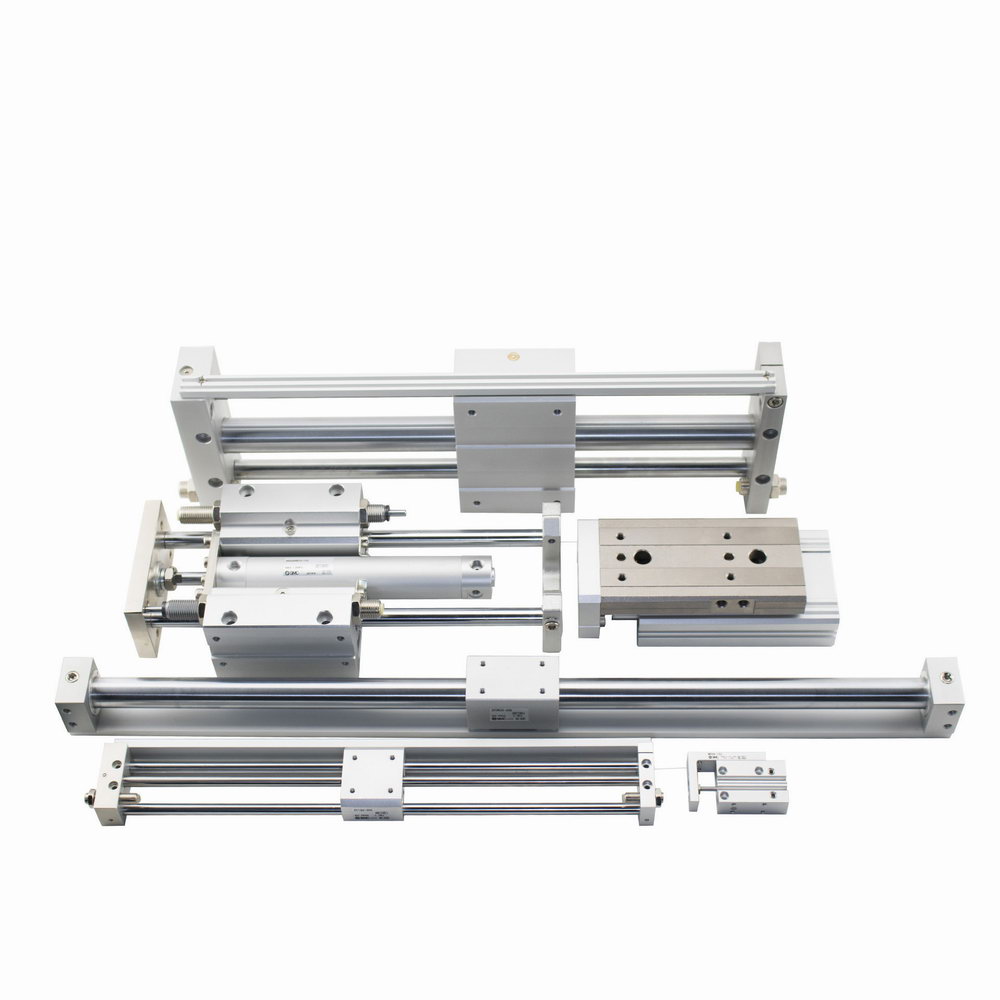
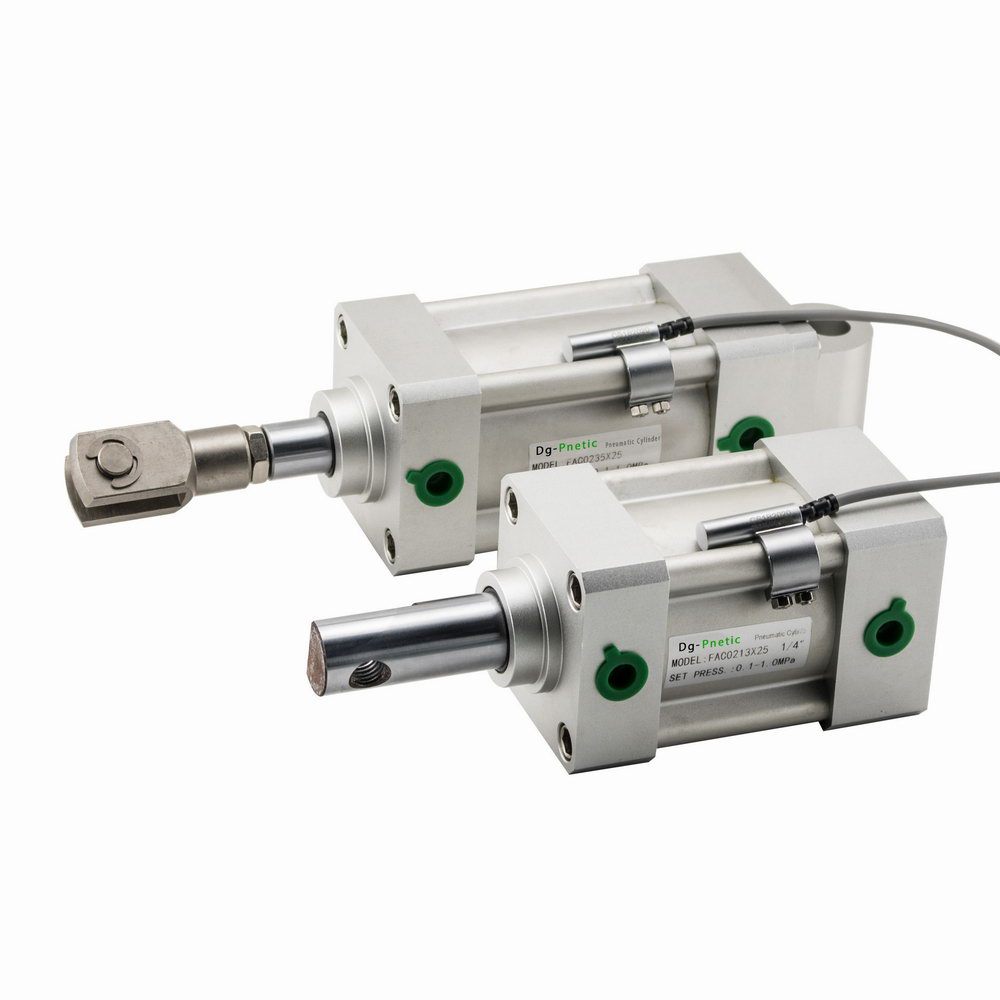
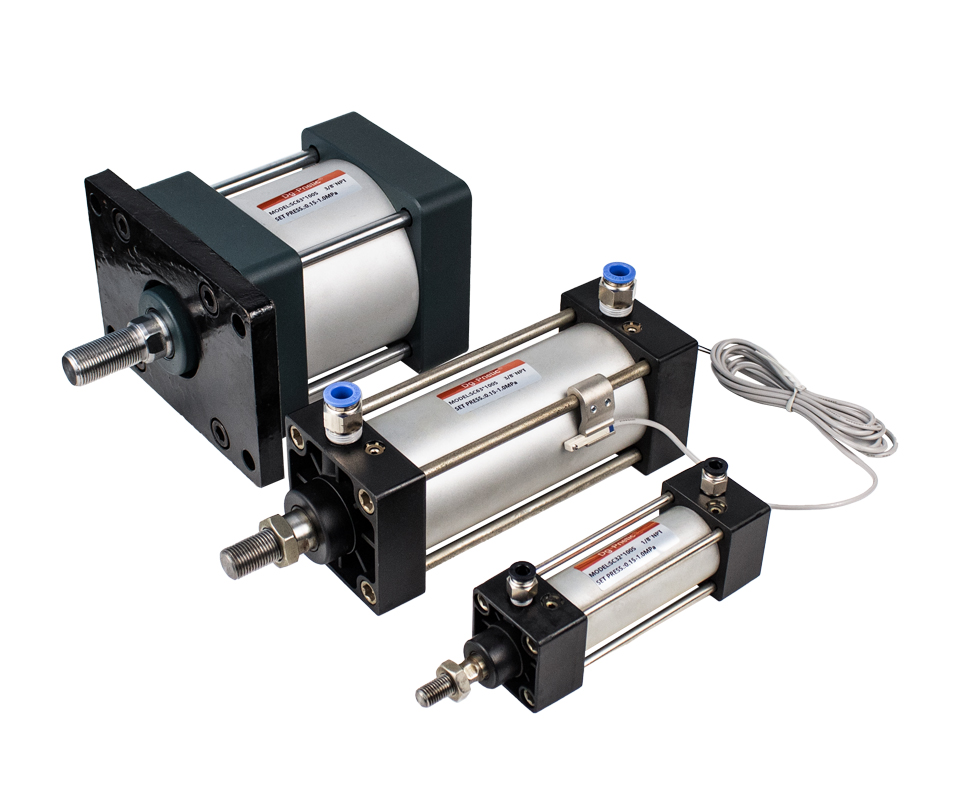
A tie rod cylinder is a type of pneumatic or hydraulic actuator where the front cap, barrel, and rear cap are securely fastened together using threaded tie rods. One of its distinguishing features is its round barrel construction, which is common across most tie rod cylinder designs.
These cylinders are widely used in industrial machinery and dust collection systems, and they are well-suited for customization. Depending on customer requirements, various bore sizes can be produced—including large-bore cylinders with diameters up to 500 mm.
 What’s The Single-Acting Tie Rod Cylinder
While most tie rod cylinders are double-acting, single-acting models are also available for specific applications. In a single-acting design, compressed air (or hydraulic fluid) is applied to only one side of the piston, with a spring or external force used to return it to its original position.
 Key Features:
Simplified control system — requires only a 3/2-way solenoid valve
Spring return or spring extend configuration depending on use case
Lower air consumption compared to double-acting models
Ideal for applications where the return stroke does not require force
Compact and cost-effective in systems with limited space or control complexity
 What’s the Double-Acting Cylinder
Nearly all tie rod cylinders are double-acting, meaning they use air or hydraulic pressure for both the extension and retraction strokes. Most models come with:
A special bi-directional sealing structure ensures both tight sealing and oil storage functionality. These cylinders are typically controlled by a 5/2-way solenoid valve.
Bore Size(mm): 32~320
Action: Double Acting / Single Acting
Working Pressure:
 0.15~1.0 Mpa (20Psi~140Psi) (1.5~10Bar)
Working Temperature ℃: -20~70℃. (No Freezing)
Cushion Type: Adjustable Air Cushion
Proof Pressure: 1.5Mpa (215Psi)(15Bar)
Stroke Tolerance:
Stroke 0-250: 0-1.0mm; 251-1000: 0-1.4mm; 1001-… : 0-2.0mm.
Piston Speed: 30~800mm/s
Standard Stroke(mm): 25 50 100 150 … 1000mm
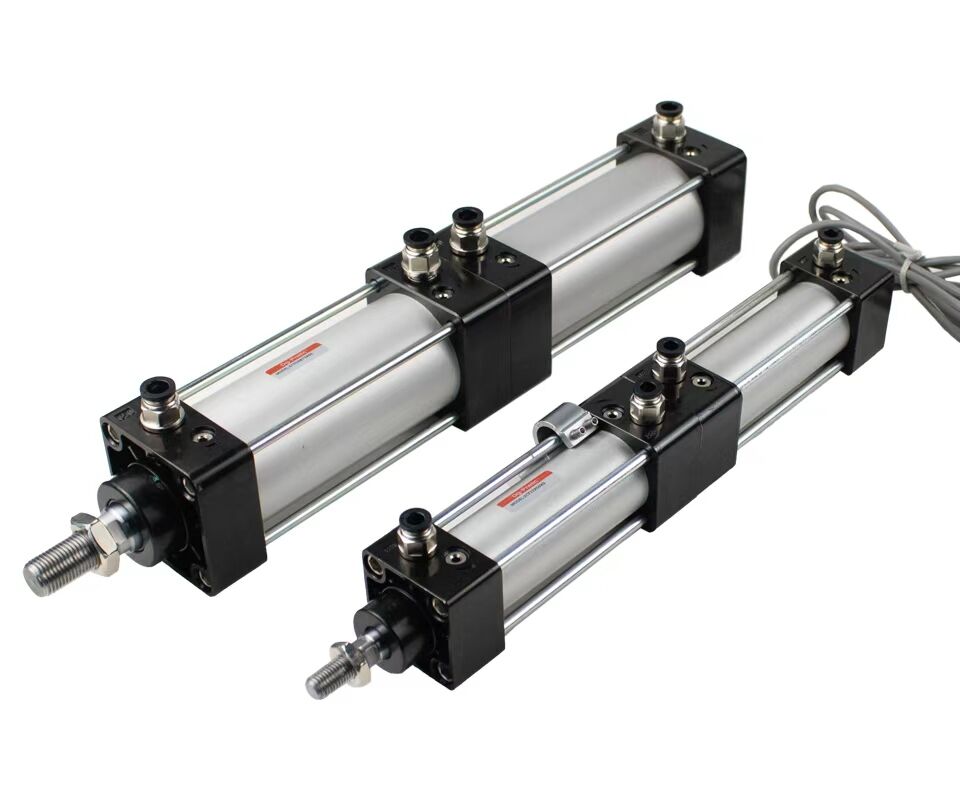
Bore Size(mm): 32 40 50 63 80 100
Action: Double Acting
Working Pressure:
0.15~1.0 Mpa (20Psi~140Psi) (1.5~10Bar)
Working Temperature ℃: -20~70℃. (No Freezing)
Cushion Type: Adjustable Air Cushion
Proof Pressure: 1.5Mpa (215Psi)(15Bar)
Stroke Tolerance:
Stroke 0-250: 0-1.0mm; 251-1000: 0-1.4mm; 1001-… : 0-2.0mm.
Piston Speed: 30~800mm/s
Standard Stroke(mm): 25 50 100 150 … 500mm
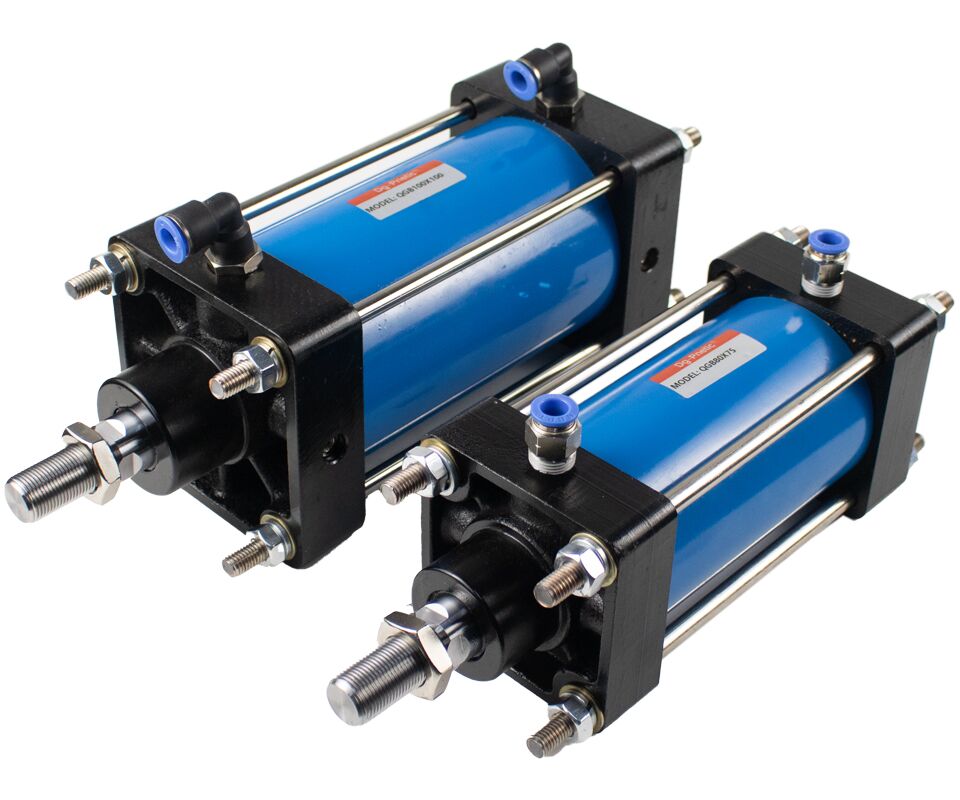
Bore Size(mm): 63 80 100 125 160 200 250 320 400
Action: Double Acting
Working Pressure:
0.15~1.0 Mpa (20Psi~140Psi) (1.5~10Bar)
Working Temperature ℃: -20~70℃. (No Freezing)
Cushion Type: Adjustable Air Cushion
Proof Pressure: 1.5Mpa (215Psi)(15Bar)
Stroke Tolerance:
Stroke 0-250: 0-1.0mm; 251-1000: 0-1.4mm; 1001-… : 0-2.0mm.
Piston Speed: 50~700mm/s
Standard Stroke(mm): 25 50 100 150 … 2000mm
 Profile Cylinder Structure & Corrosion Resistance
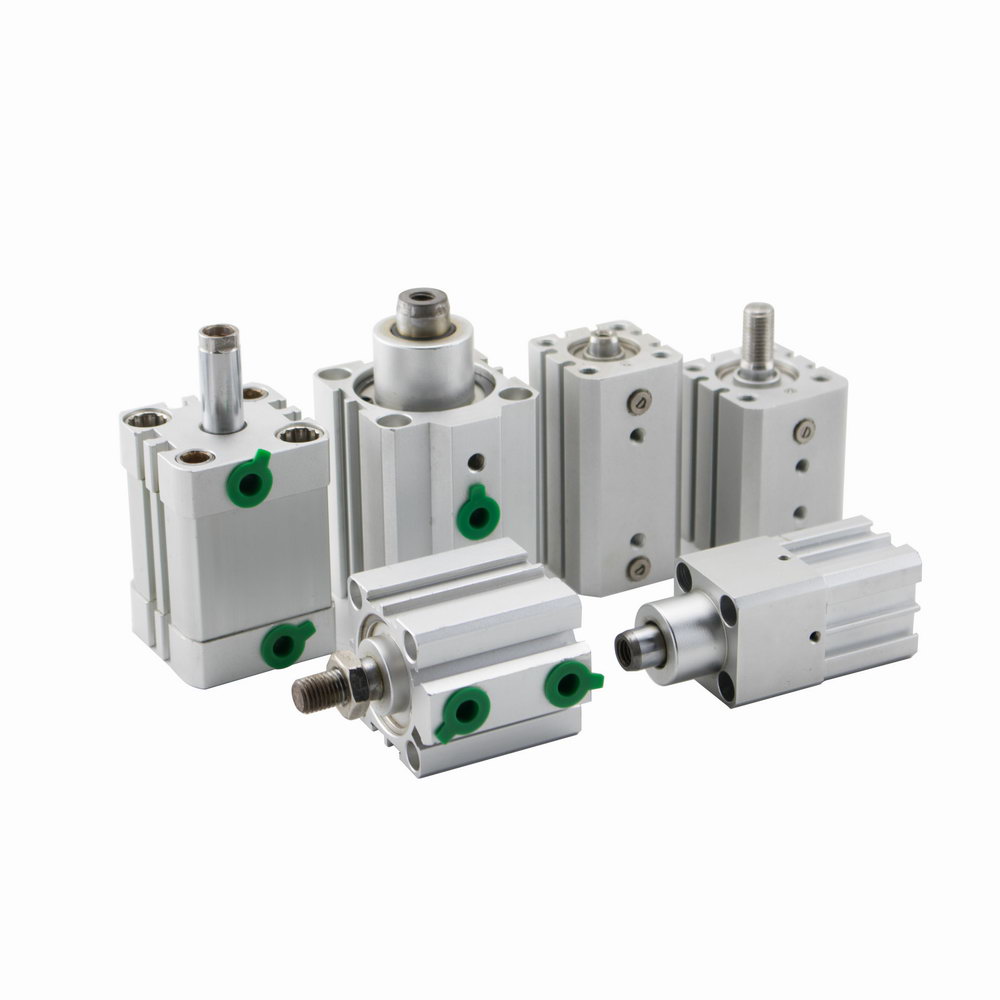
Profile cylinders differ from traditional tie-rod cylinders by using a square or profiled aluminum barrel that encases the tie rods within the cylinder body. This design not only improves aesthetics but also enhances durability in demanding environments.
 Superior Corrosion Resistance
The primary advantage of profile cylinders is their exceptional corrosion resistance. Since the tie rods are embedded inside the anodized aluminum barrel, they are fully shielded from moisture, chemicals, and environmental exposure. This construction prevents corrosion of the tie rods and extends the overall service life of the cylinder, making profile cylinders ideal for:
In addition to their sleek appearance, profile cylinders offer a cleaner and more compact design, which is often preferred in modern automated systems.
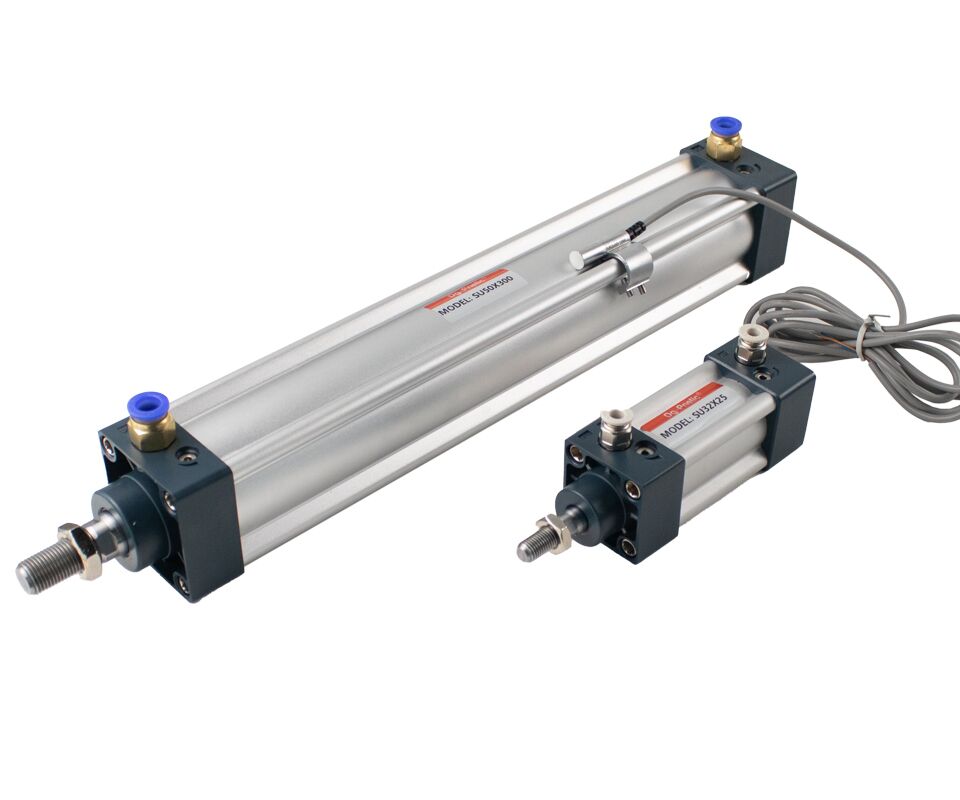
Bore Size(mm): 32~320
Action: Double Acting / Single Acting
Working Pressure:
0.15~1.0 Mpa (20Psi~140Psi) (1.5~10Bar)
Working Temperature ℃: -20~70℃. (No Freezing)
Cushion Type: Adjustable Air Cushion
Proof Pressure: 1.5Mpa (215Psi)(15Bar)
Stroke Tolerance:
Stroke 0-250: 0-1.0mm; 251-1000: 0-1.4mm; 1001-… : 0-2.0mm.
Piston Speed: 30~800mm/s
Standard Stroke(mm): 25 50 100 150 … 1000mm
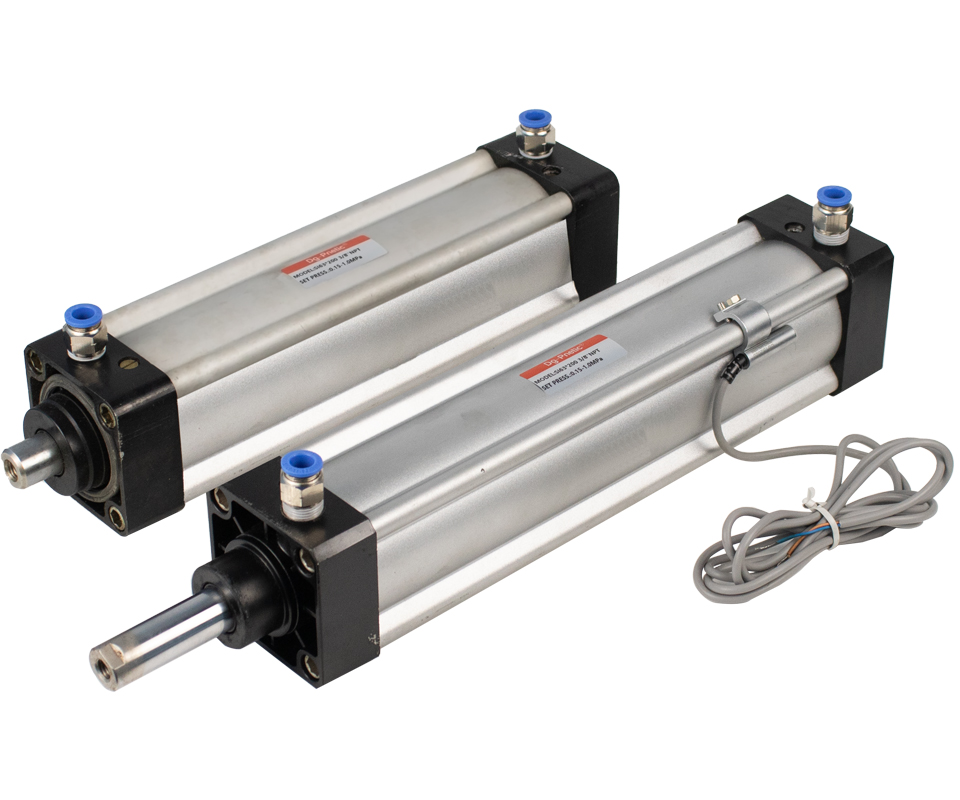
Bore Size(mm): 32~200
Action: Double Acting / Single Acting
Working Pressure:
0.15~1.0 Mpa (20Psi~140Psi) (1.5~10Bar)
Working Temperature ℃: -20~70℃. (No Freezing)
Cushion Type: Adjustable Air Cushion
Proof Pressure: 1.5Mpa (215Psi)(15Bar)
Stroke Tolerance:
Stroke 0-250: 0-1.0mm; 251-1000: 0-1.4mm; 1001-… : 0-2.0mm.
Piston Speed: 30~500mm/s
Standard Stroke(mm): 25 50 100 150 … 1000mm
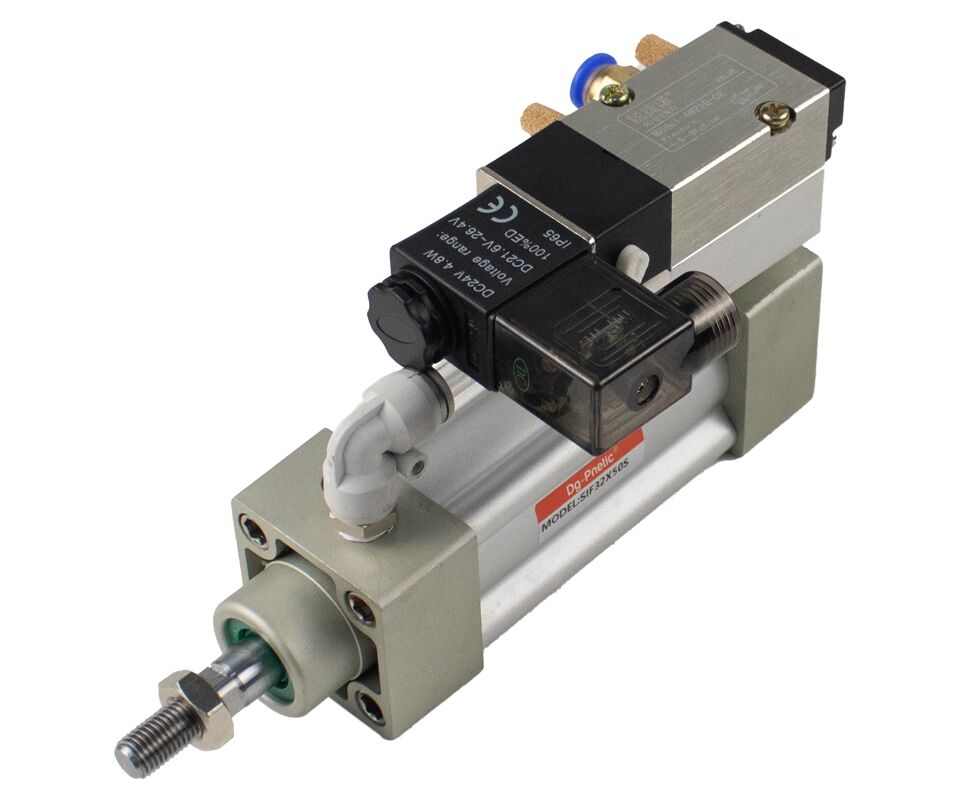
Bore Size(mm): 32~200
Action: Double Acting / Single Acting
Working Pressure:
0.15~1.0 Mpa (20Psi~140Psi) (1.5~10Bar)
Working Temperature ℃: -20~70℃. (No Freezing)
Cushion Type: Adjustable Air Cushion
Proof Pressure: 1.5Mpa (215Psi)(15Bar)
Stroke Tolerance:
Stroke 0-250: 0-1.0mm; 251-1000: 0-1.4mm; 1001-… : 0-2.0mm.
Piston Speed: 30~500mm/s
Standard Stroke(mm): 25 50 100 150 … 1000mm
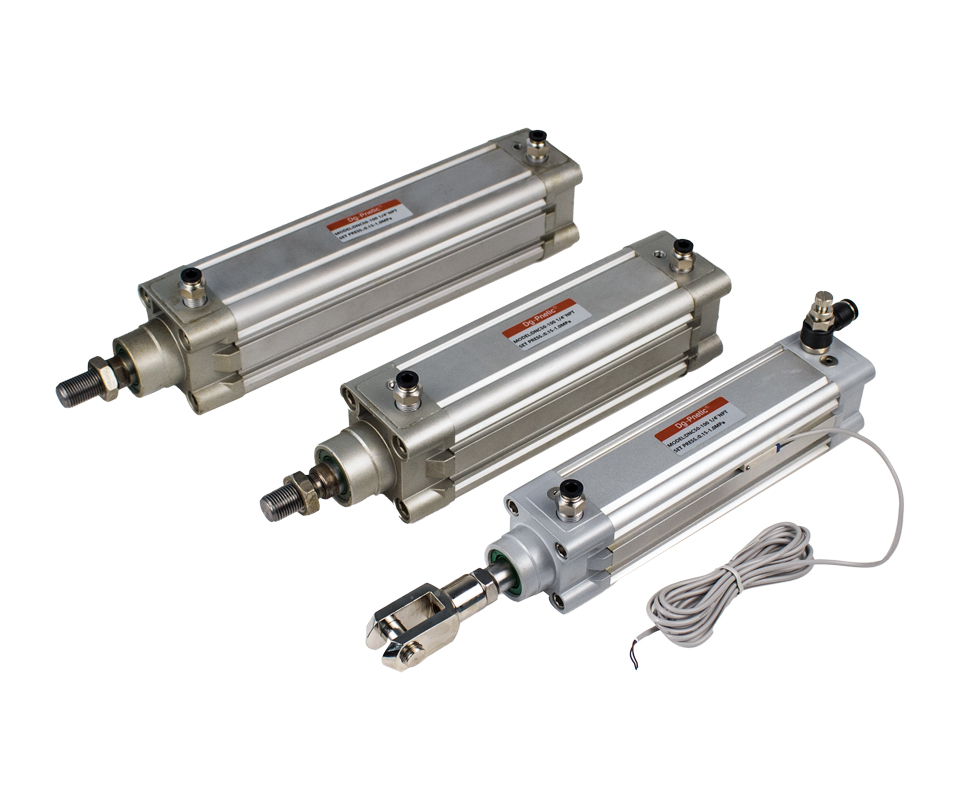
Bore Size(mm): 32~125
Action: Double Acting / Single Acting
Working Pressure:
0.15~1.0 Mpa (20Psi~140Psi) (1.5~10Bar)
Working Temperature ℃: -20~70℃. (No Freezing)
Cushion Type: Adjustable Air Cushion
Proof Pressure: 1.5Mpa (215Psi)(15Bar)
Stroke Tolerance:
Stroke 0-250: 0-1.0mm; 251-1000: 0-1.4mm; 1001-… : 0-2.0mm.
Piston Speed: 30~500mm/s
Standard Stroke(mm): 25 50 100 150 … 2000mm
 Understanding Units and Force Calculation in Pneumatic Cylinders
Before calculating cylinder force, it’s essential to understand the relationship between pressure, piston surface area, and force. This relationship is fundamental in pneumatic and hydraulic system design.
 Basic Formula
The force output of a cylinder is calculated using the formula:
 F = A × P
Where:
F = Force in Newtons (N)
A = Piston surface area in square millimeters (mm²)
P = Working pressure in megapascals (MPa)
 Common Unit Conversions for Pressure
| Unit | Conversion to N/mm² |
|---|---|
| 1 MPa | = 1 N/mm² |
| 1 Bar | = 0.1 N/mm² |
| 1 kPa | = 0.001 N/mm² |
| 1 psi | ≈ 0.00689 N/mm² |
 Example: Calculating Cylinder Force
Question:
What is the output force of a cylinder with a 32 mm bore size when the applied pressure is 1 MPa?
Bore = 32 mm → Radius r = 32 / 2 = 16 mm
Use the formula for the area of a circle:
A = π × r²
A = 3.14 × 16² = 3.14 × 256 = 803.84 mm²
F = A × P = 803.84 × 1 = 803.84 N
 Result: The output force is 803.84 Newtons