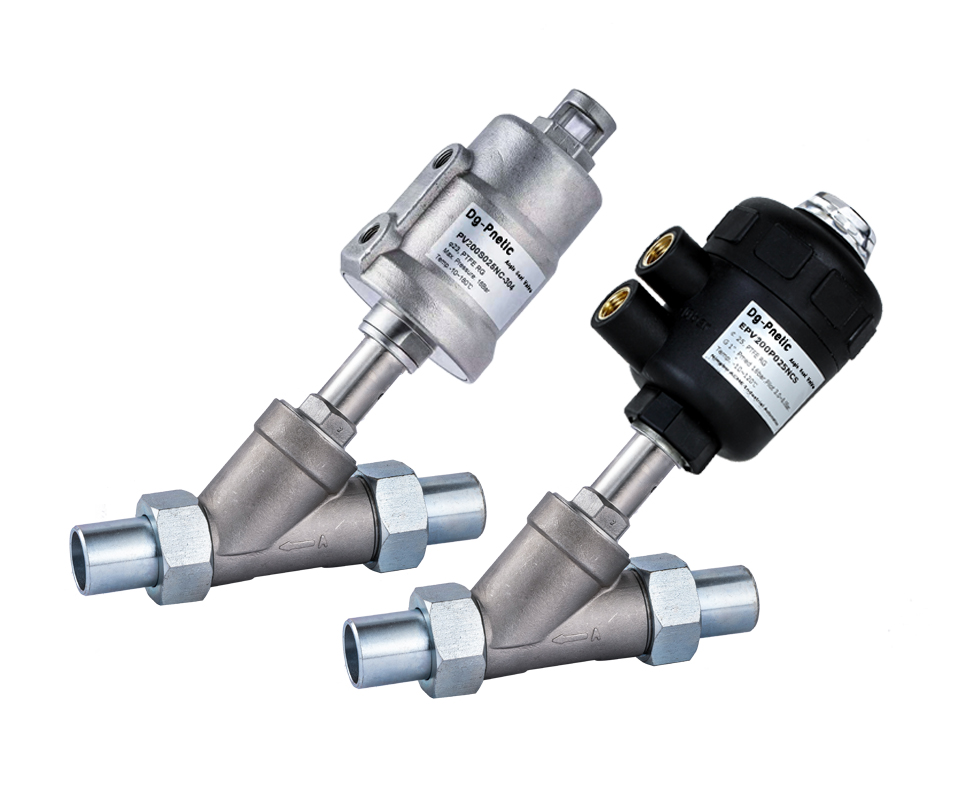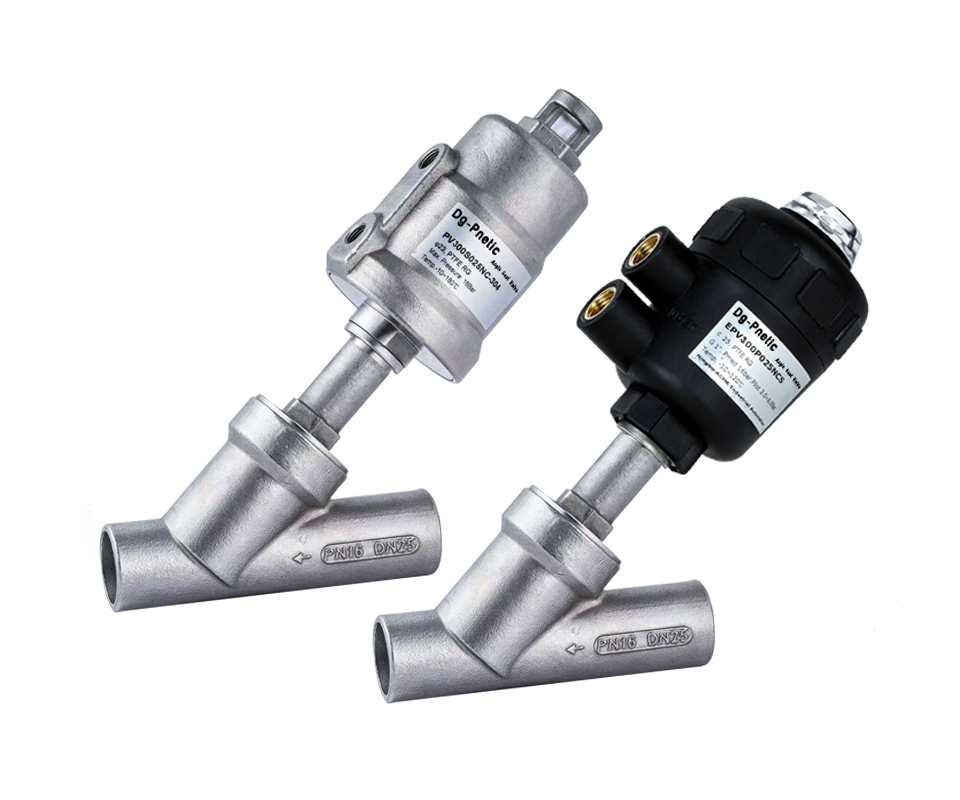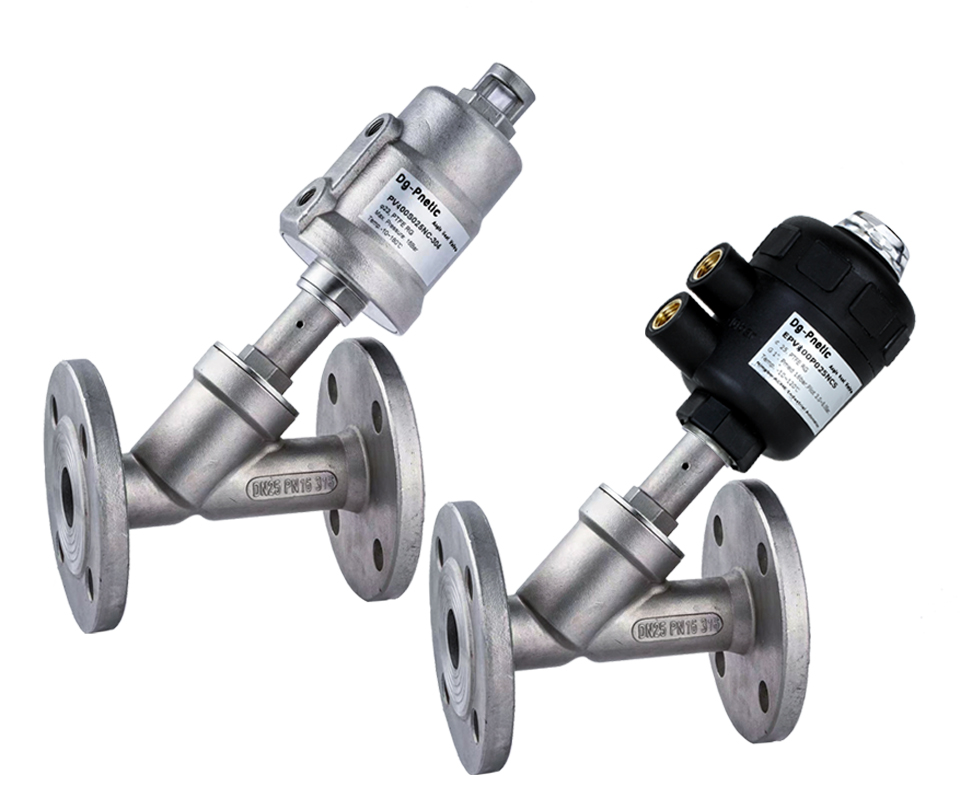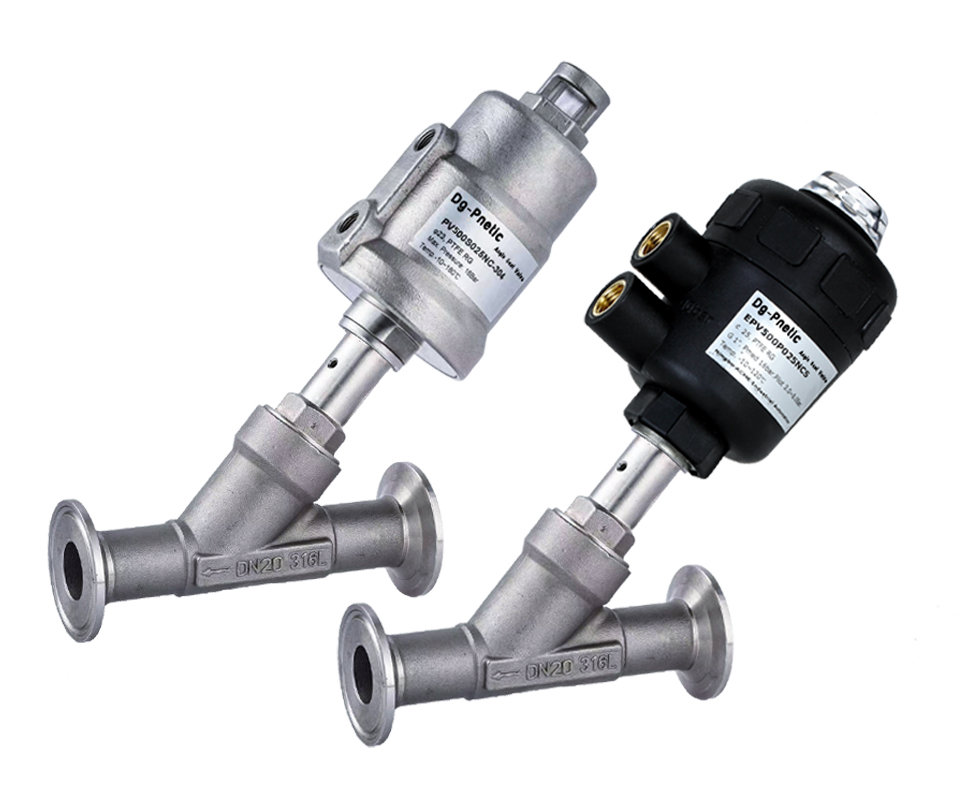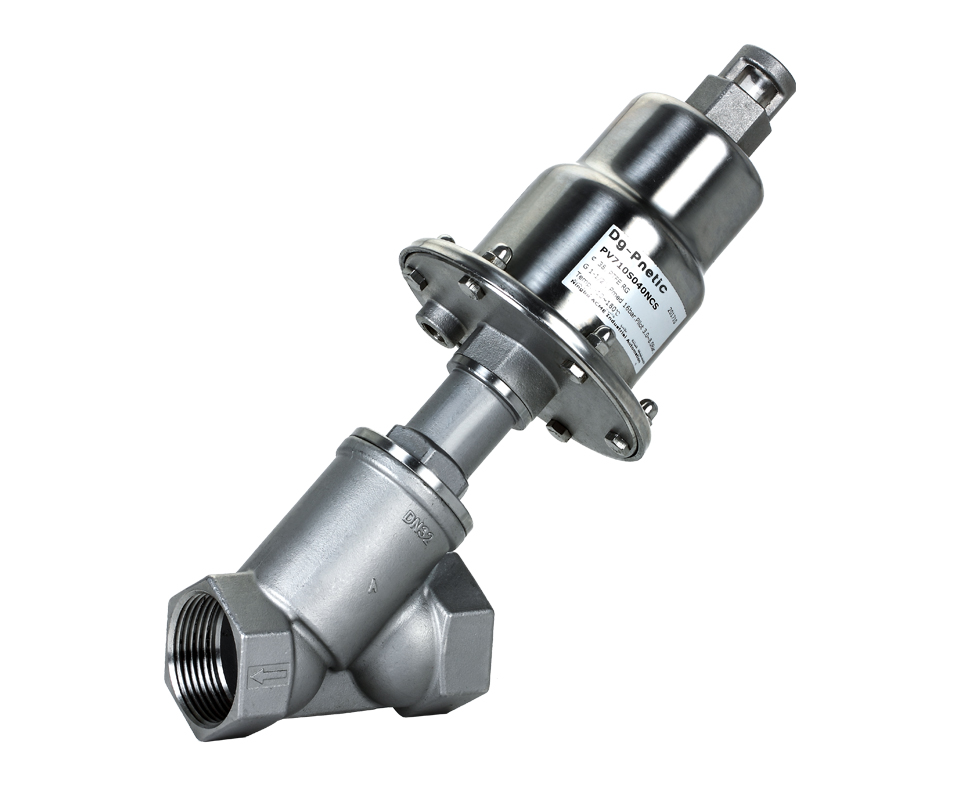
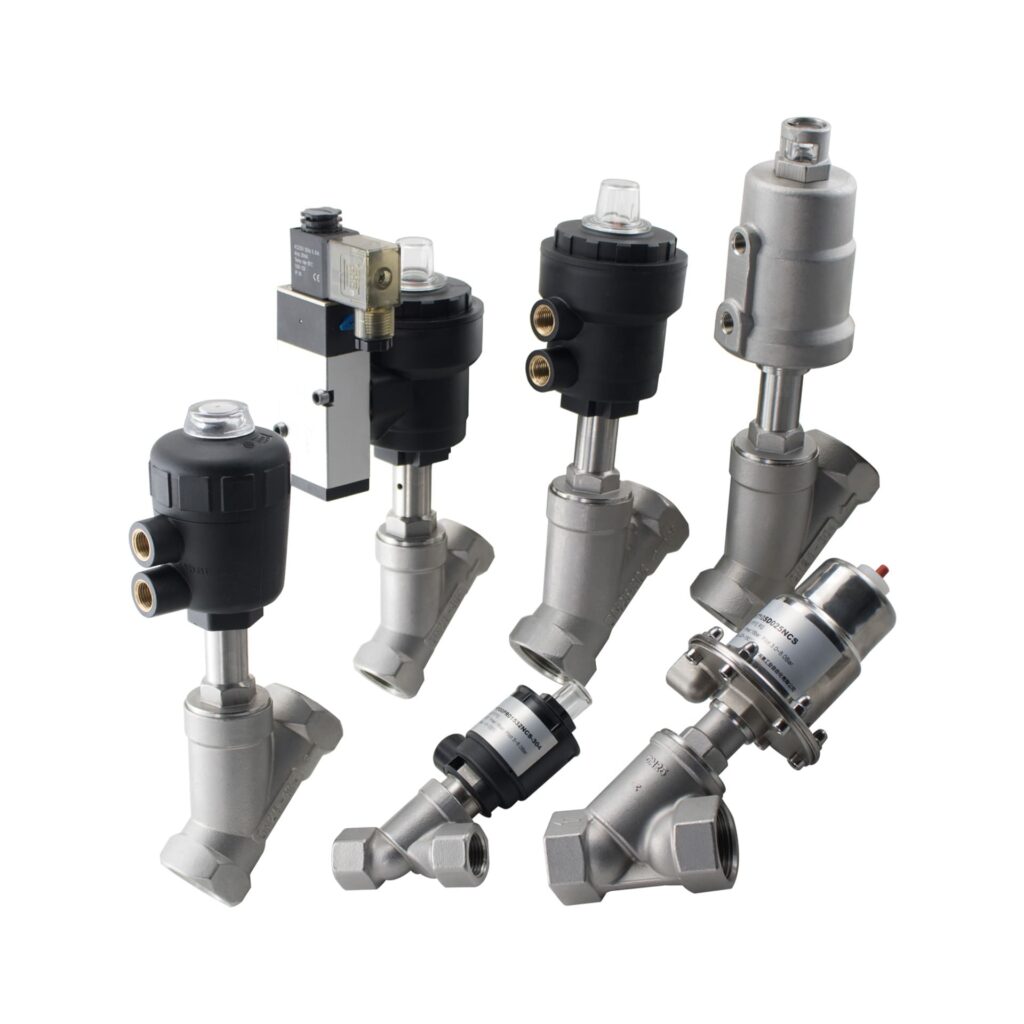
An angle seat valve is a 2/2-way, pneumatically operated valve.
It is designed to control the on/off flow of fluids, especially in applications requiring high cycle life, fast switching, and minimal flow restriction.
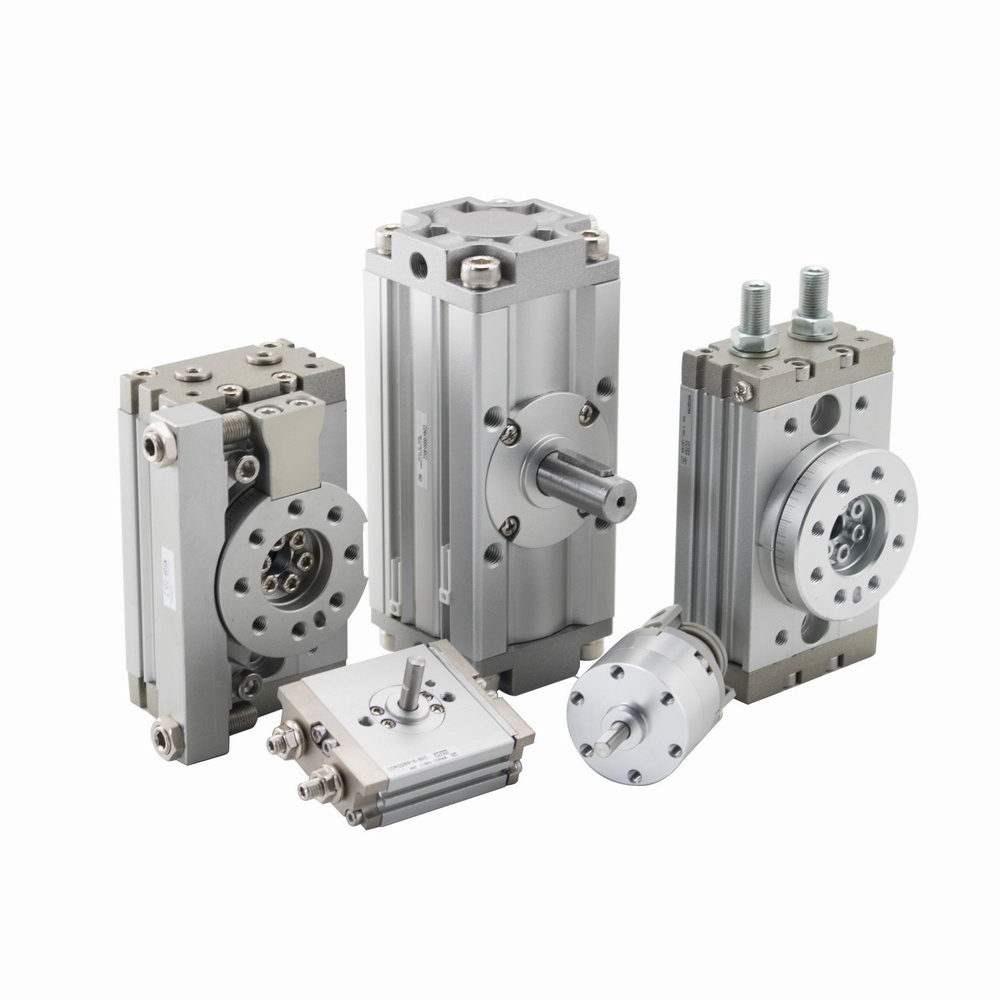
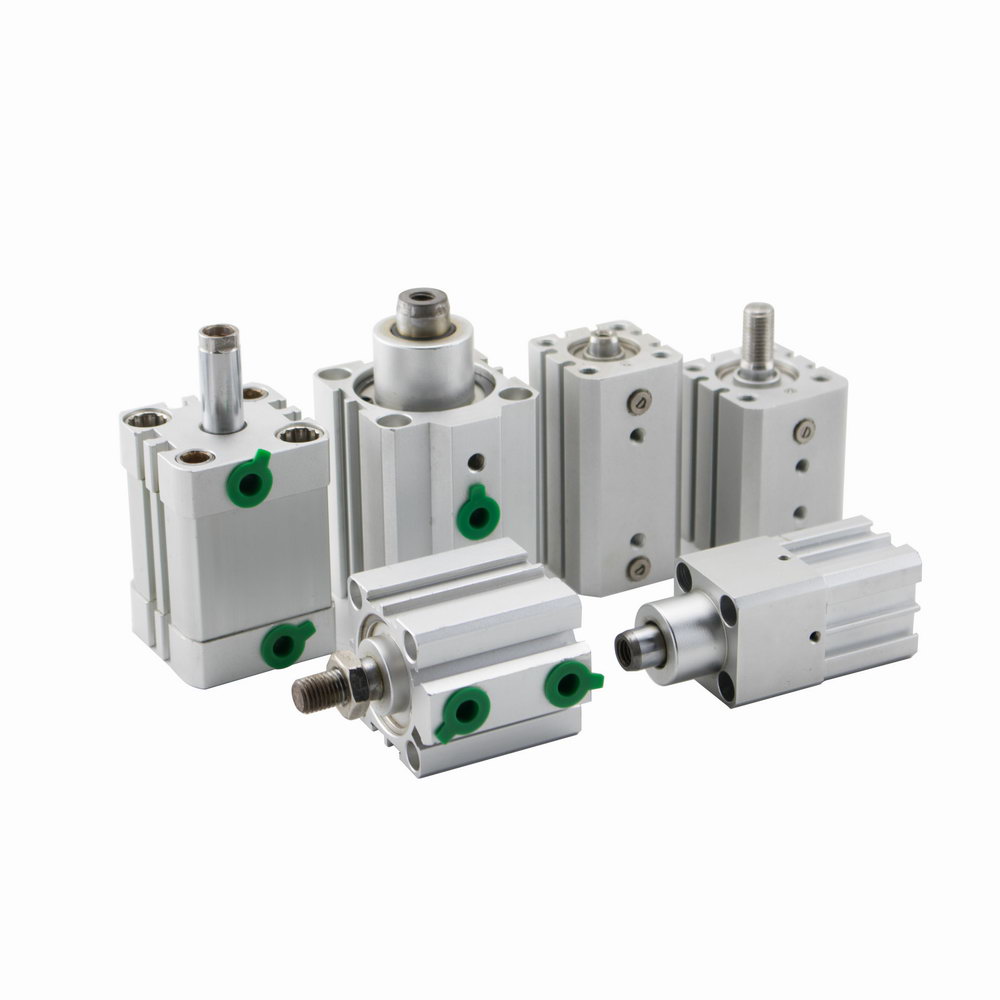
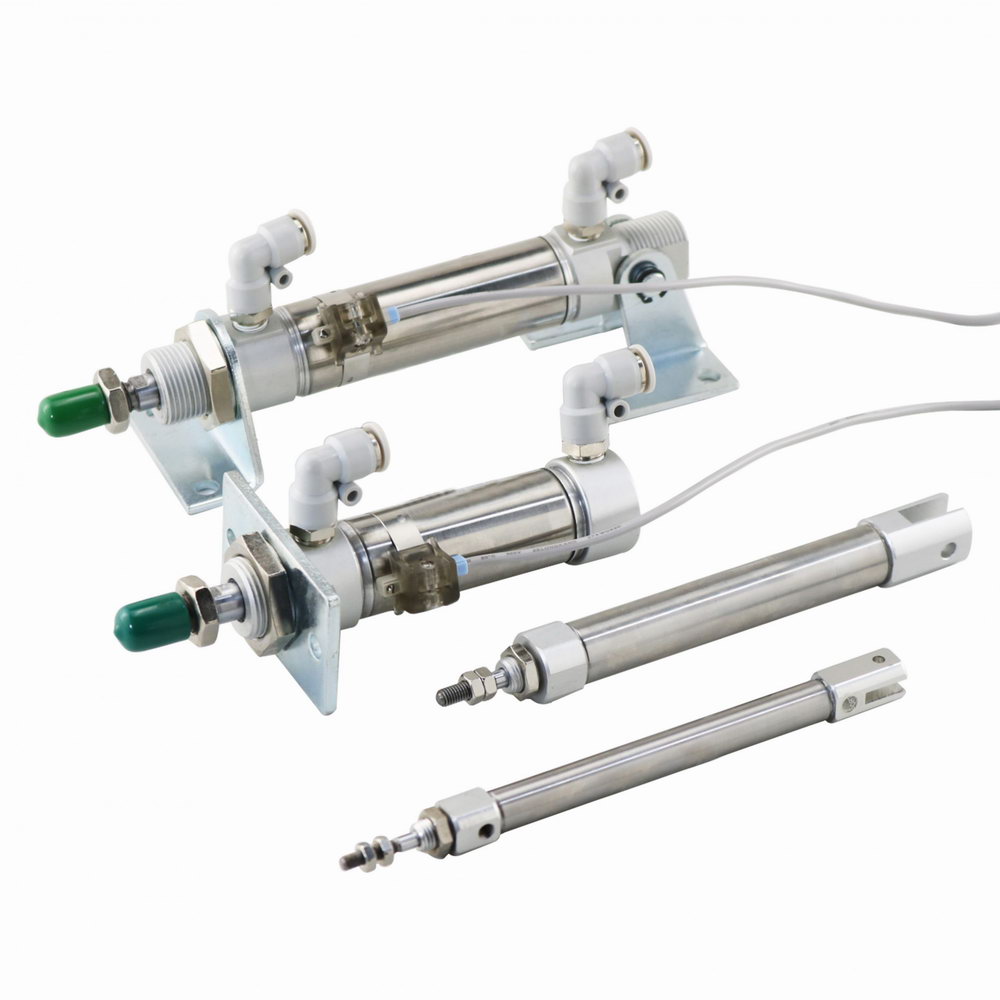
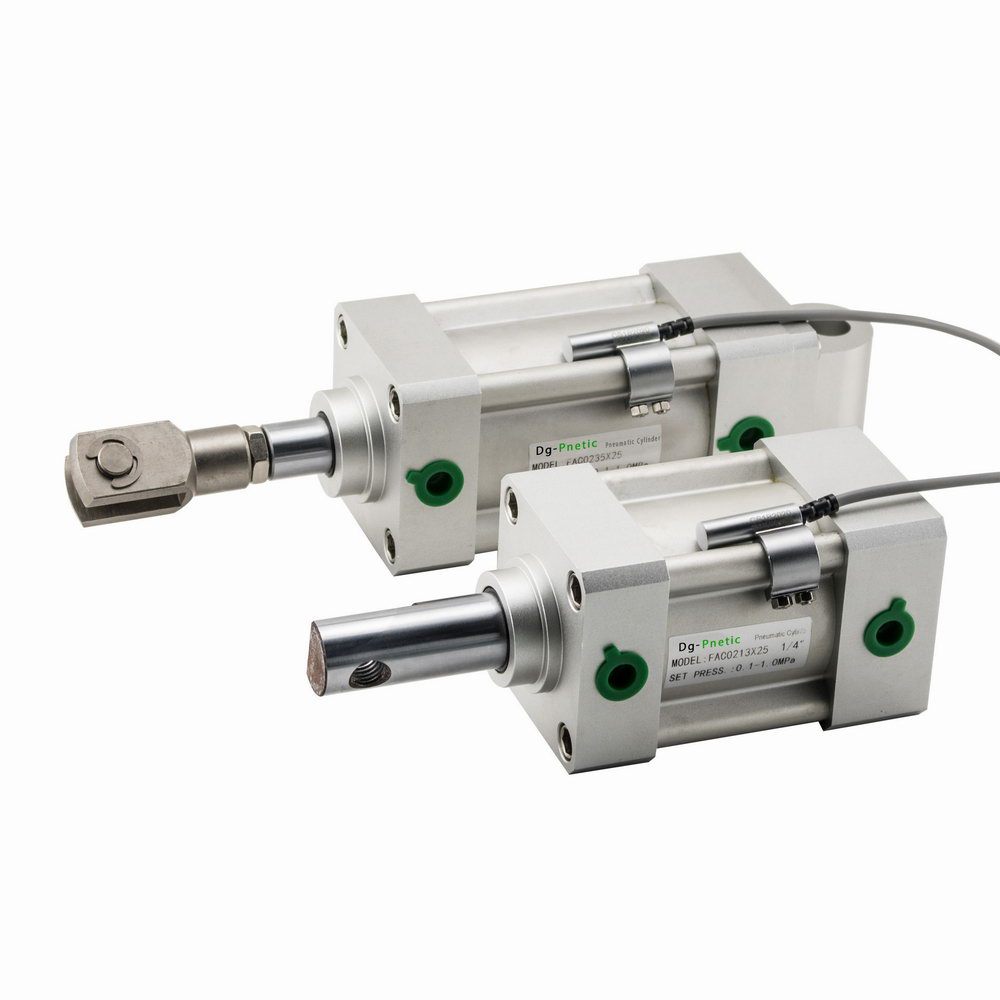
The actuator of an angle seat valve is structurally similar to a pneumatic air cylinder.
Key components include:
Inlet and outlet ports: Allow compressed air to enter and exit.
Sealed piston: Positioned at the rod end.
Stem: Functions as the piston rod, transmitting motion to the valve’s sealing disc.
Compressed air enters the actuator.
The piston moves upward or downward depending on the air supply.
This motion is transmitted through the stem, which opens or closes the valve’s sealing disc.
Equipped with a built-in return spring.
Compressed air drives the piston in one direction (typically to open the valve).
When air pressure is released, the spring returns the piston to its original position (typically to close the valve).
Benefits:
Simpler control.
Fail-safe design (returns to default state on air loss).
No return spring is used.
Compressed air controls both opening and closing movements.
Offers:
Greater control precision.
Suitable for applications requiring bi-directional force and fine-tuned positioning.
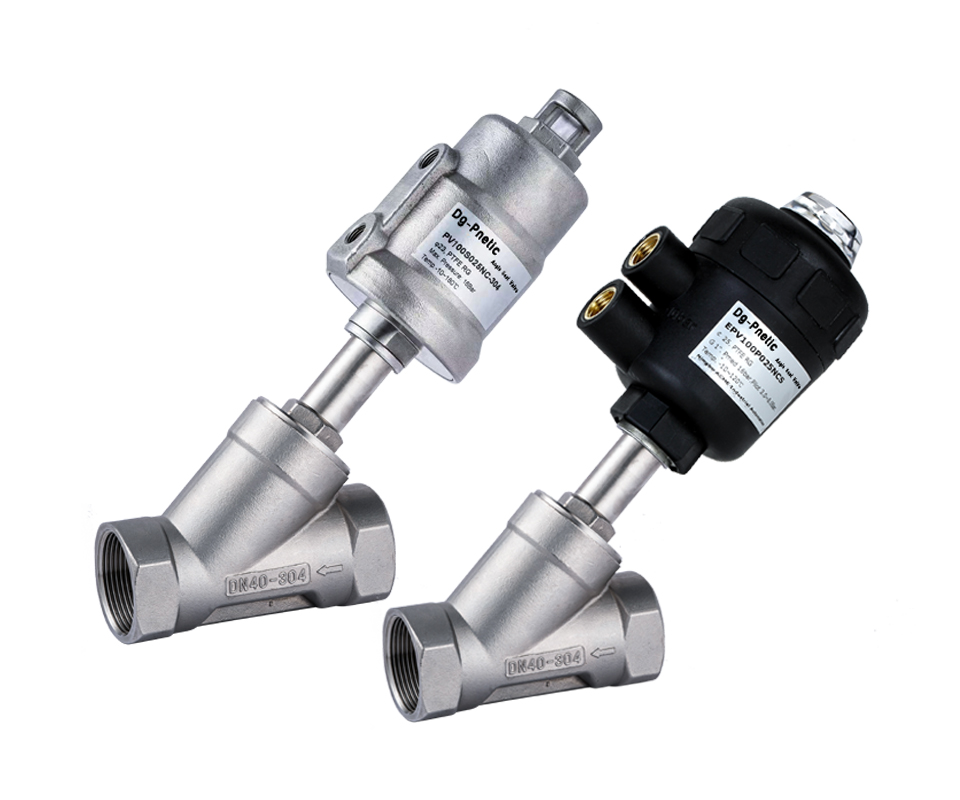
Key Features:
Valve Model: 2/2-way
Thread Types: PT, G, NPT
Working Pressure: 0-1.0 Mpa/142Psi
Fast Delivery & Competitive Pricing: Short lead times and excellent value.
Key Features:
Valve Model: 2/2-way
Thread Types: PT, G, NPT
Working Pressure: 0-1.0 Mpa/142Psi
Fast Delivery & Competitive Pricing: Short lead times and excellent value.
Key Features:
Valve Model: 2/2-way
Thread Types: PT, G, NPT
Working Pressure: 0-1.0 Mpa/142Psi
Fast Delivery & Competitive Pricing: Short lead times and excellent value.
Key Features:
Valve Model: 2/2-way
Thread Types: PT, G, NPT
Working Pressure: 0-1.0 Mpa/142Psi
Fast Delivery & Competitive Pricing: Short lead times and excellent value.
Key Features:
Valve Model: 2/2-way
Thread Types: PT, G, NPT
Working Pressure: 0-1.0 Mpa/142Psi
Fast Delivery & Competitive Pricing: Short lead times and excellent value.
Key Features:
Valve Model: 2/2-way
Thread Types: PT, G, NPT
Working Pressure: 0-1.0 Mpa/142Psi
Fast Delivery & Competitive Pricing: Short lead times and excellent value.
Determine whether you need a normally closed (NC) or normally open (NO) valve based on the desired default state when no air is applied. NC valves are more common for safety reasons.
Make sure the valve materials (body and seals) are suitable for your process fluid—such as water, air, steam, or chemicals. Stainless steel valves are ideal for high temperatures and aggressive media.
Confirm the working pressure and proof pressure of the valve meet your system’s demands. Typical values include 0–1.0 MPa operating pressure and 1.5 MPa proof pressure.
Choose the correct port size (DN10–DN50) and thread type (PT, G, or NPT) according to your piping system and flow requirements. Proper sizing ensures smooth operation and minimal pressure drop.
Use single-acting actuators for simpler installations and fail-safe return with a spring.
Use double-acting actuators for applications requiring precise control in both directions.
Angle seat valves require space above the pipeline for the actuator. Verify you have enough vertical or angled clearance based on the installation layout.
For high-cycle or automated systems, choose a valve with a long service life and low maintenance requirements. Look for specifications related to cycle durability.
If the valve is used in regulated environments (e.g., food, pharma, steam), make sure it complies with standards such as FDA, CE, or ISO certifications.