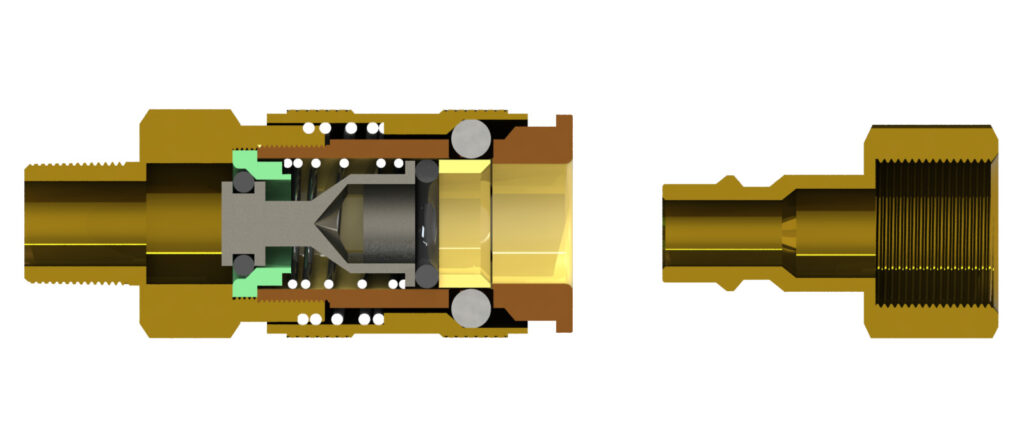
What’s the air couplers?
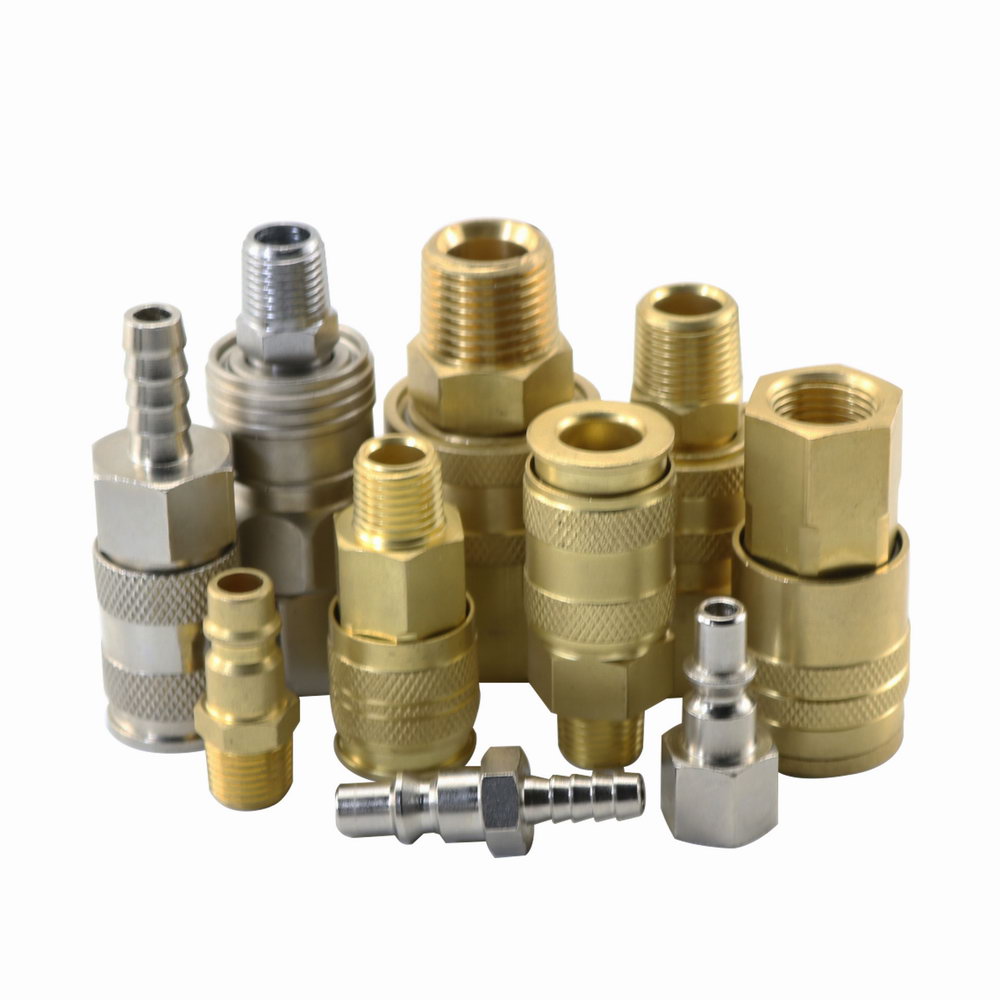
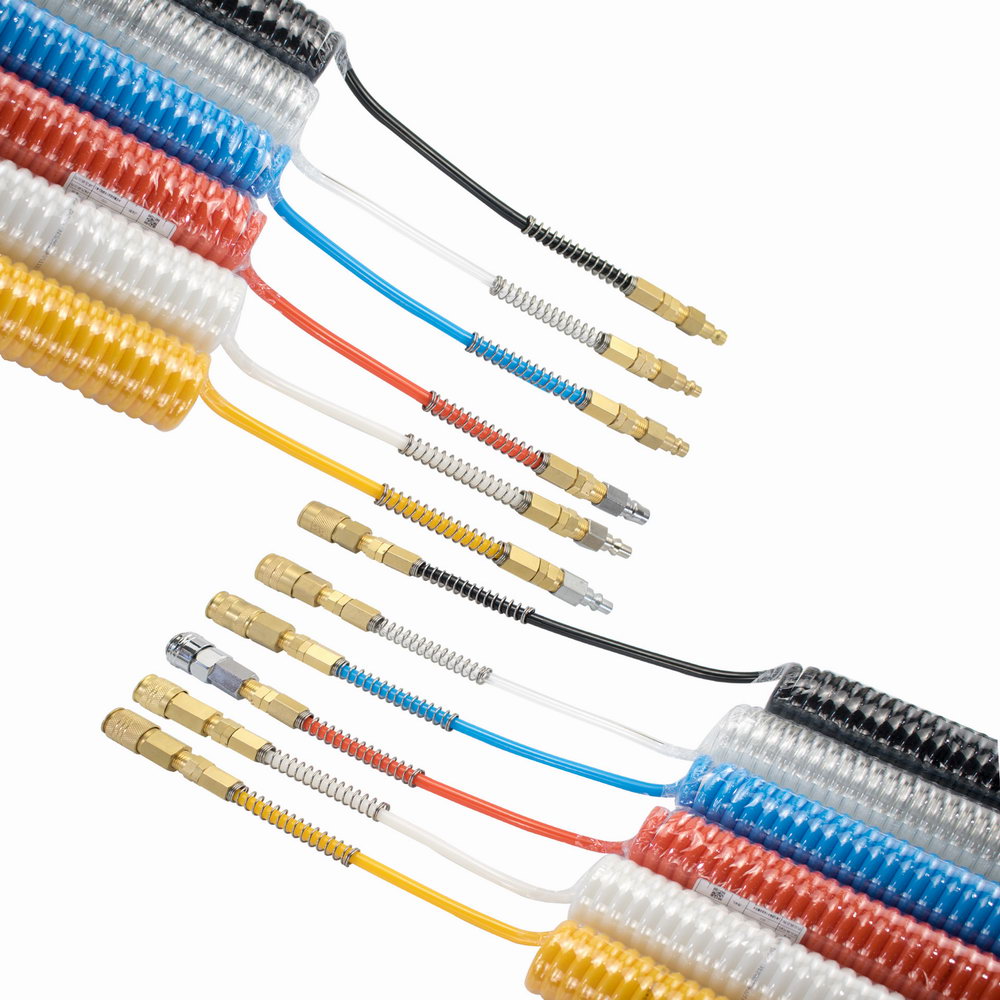
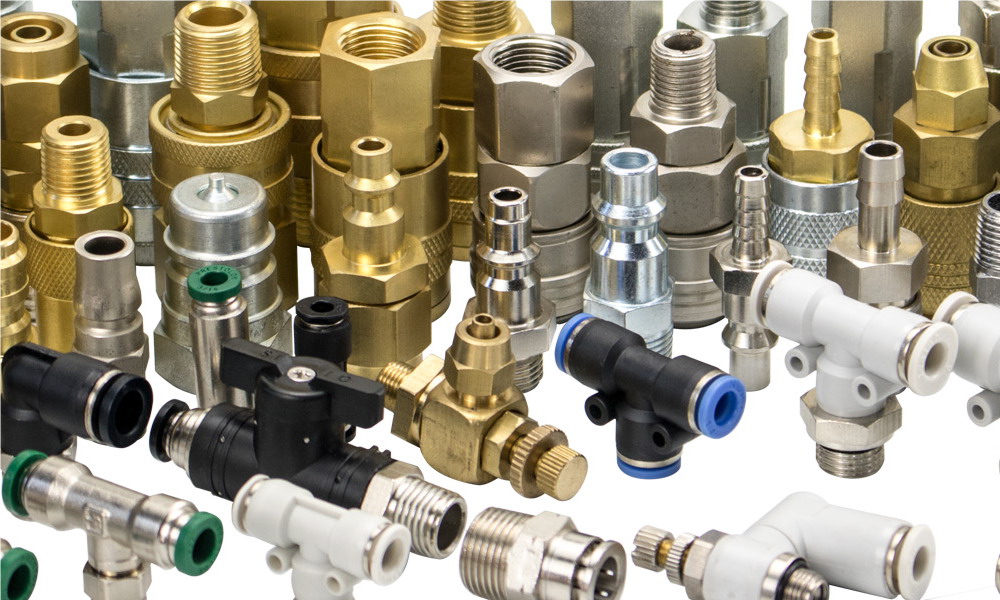
Air couplers are couplings and plugs used to mate air lines with equipment that requires repeated connections and disconnections. Air couplers can be connected and disconnected easily as they are compact but very robust and sturdy in their application. They are highly reliable as they provide unswerving service for the transfer of air for pneumatic and vacuum systems.
Their design is simple: a male or female end plug—is inserted into a female or male threaded socket with leak-tight seal. They are sometimes called push-to-connect because connecting them requires only a quick push.
Air couplers’ structures
Air couplers are usually used in combination with two parts, one called plug and one called the joint or socket. Both could be with thread desgin, or with the barb to connect the air hose. Normally there are three type of structures.
1.Open Type Air Coupling
Open Type Air Coupling-Coupled
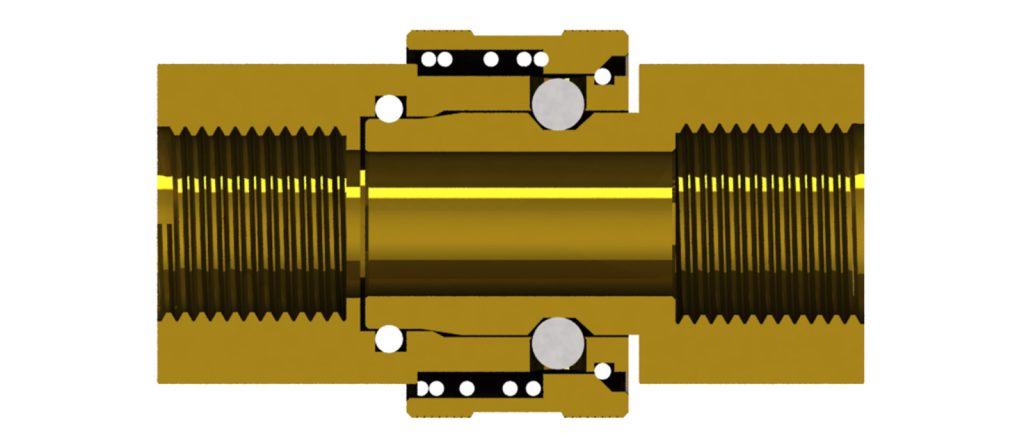
Open Type Air Coupling-Disconnected
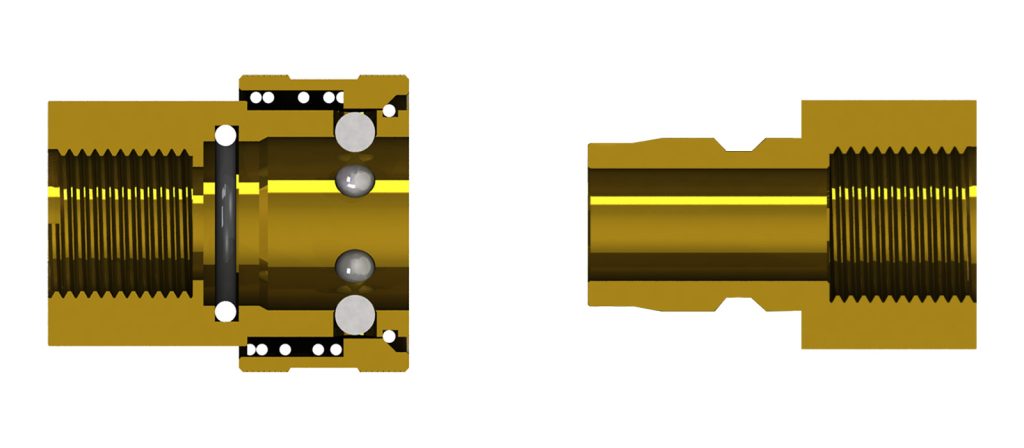
There are no shut off mechanism on both of the socket and the plug.
That means there is no a floating valve to close automatically when the couplings are disconnected and hence the medium spill from the system. But this kind of couplings are few used in the compressed air supply system.
According to different application and design,the working pressure are different.
2. Single Shut Off Air Couplers
Single Shut Off Air Couplers-coupled
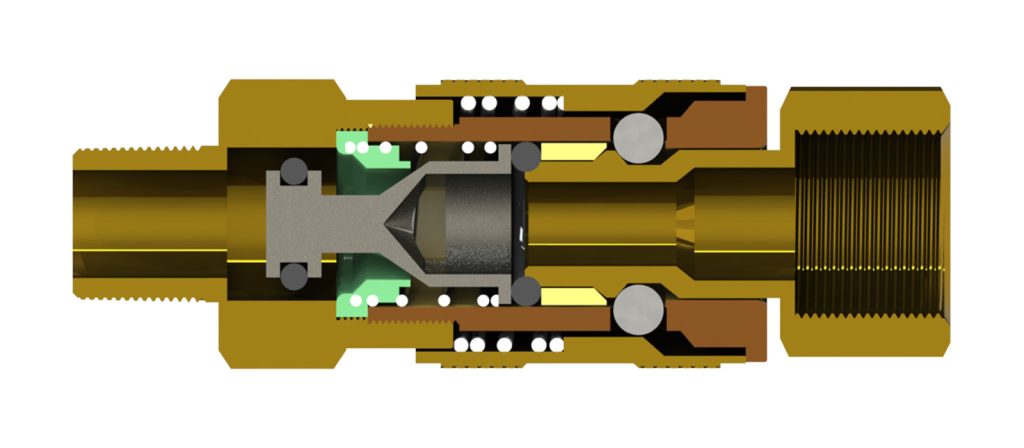
Single Shut Off Air Couplers-Disconnected
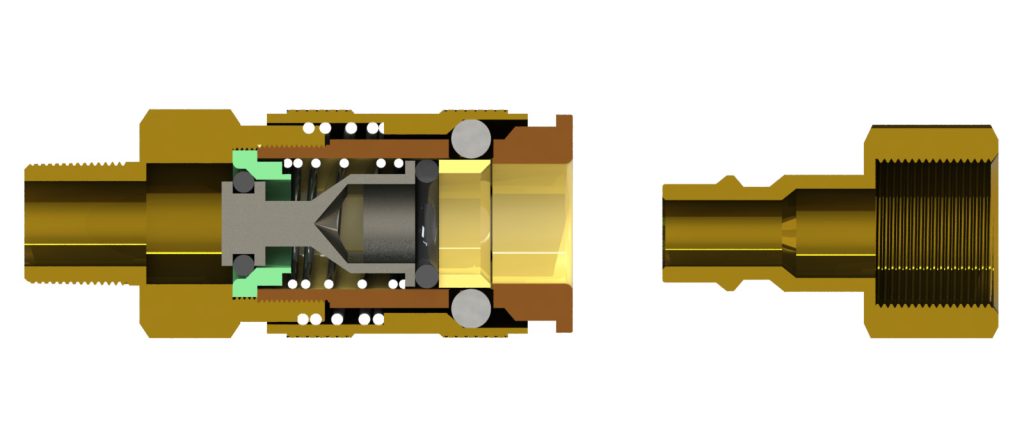
As the name suggests, these couplings shut off only one side of the set, mainly the socket side and hence prevent the leakage of the fluid.
These couplings are low-pressure couplings used mainly for air supply with a maximum pressure of 20 bars. This is an advantage when filling or releasing pressure from a chamber or portable device and then disconnecting the fill line. Because of possible injury from energized fluid or exposure to the fluid, users are cautioned to wear eye protection during these procedures with single shut-off connectors.
3. Double Shut Off Coupler
Double Shut Off Coupler-Coupled
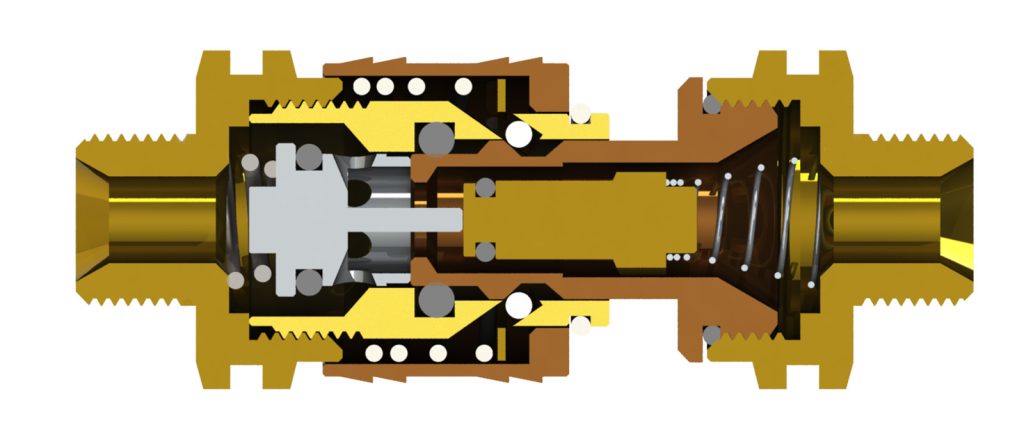
Double Shut Off Coupler-Disconnected
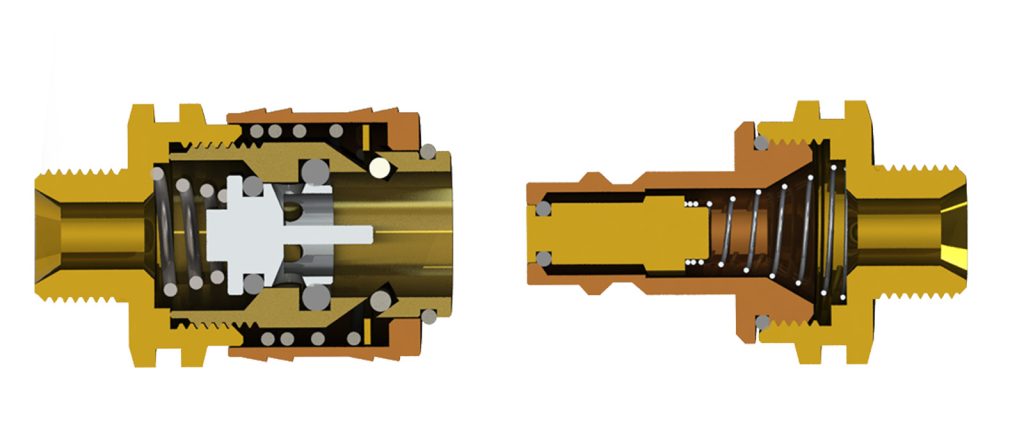
This type of couplings shut off both (instantaneously) the socket and the plug upon disconnection. They can be of brass, stainless steel or steel with different pressure ranges, sizes and applications of fluid. Due to the shut-off valves in their both ends, so they retain pressure in both fluid lines when an assembly is connected or disconnected. They are ideal for minimizing leaks.
Double-end shut off couplers are used in standard pressure applications according to the coupling design.
How do we connect the hose to a coupler or plug?
1.Hose Barb and hose clamp
Barbed coupler end are widepsread design for all kinds of flexible tubing connection. It is suitable for the low pressure system. Normally, if without the hose clamp, the advisable function pressure should not exceed 30Psi.
But for the safety considertation, we commend that all of the normal connection based on the hose barb should be assembled with a hose clamp. To add a hose clamp will increase only a little cost, and easy to operated.And with the hose clamp, the advised working pressure should not more than 140Psi.
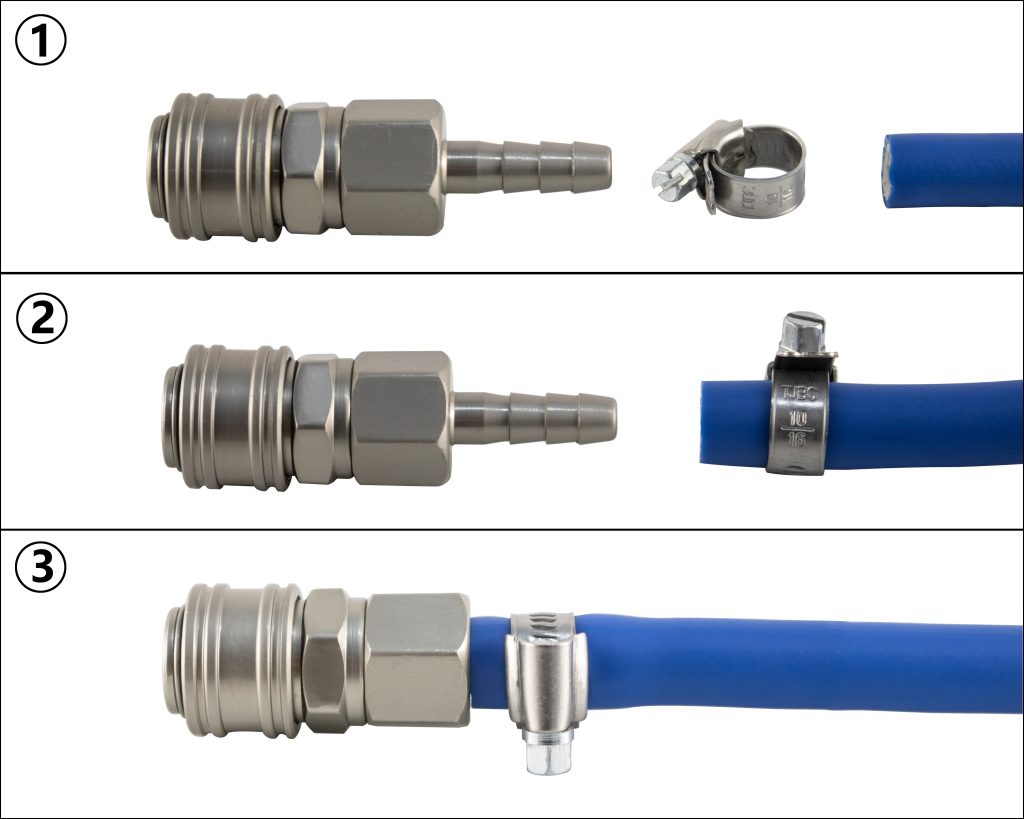
How to assemble the hose clamp?
Slide the hose clamp over the tubing and tighten it with a screwdriver. Slip the ring over the end of the fitting until it’s sitting on the end of the tubing, about in the middle of where the barbs are inside of the tubing. Hold the ring in place and use a screwdriver to turn the fastening screw clockwise until it’s as tight as you can get it.
2.Hose Barb with the locking thread nut
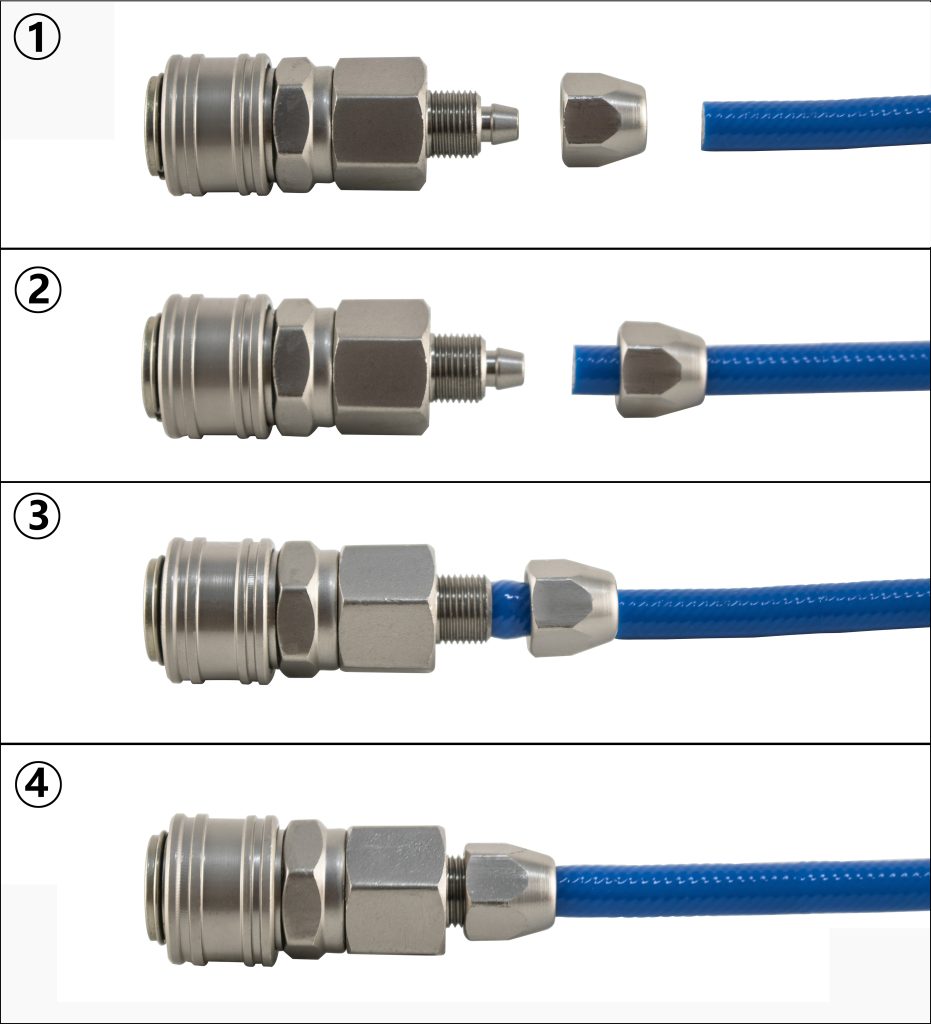
In the left figure, it shows another type hose connection. At the coupling end, there is still a short hose barb. But after the hose is pushed on the barb, it is locked by a threaded nut which there is taper machining inner it.
It fixes the hose by the friction between the taper structure and the intumescent hose end which inserted by the barb.
It’s a reasonable connect pattern compared with the fixing hose by a clamp. So could work in the higher pressure system. Normally the suggested working pressure should not exceed 400Psi if the hose could suffer such higher pressure.
Hose Bard and the Plumbing Ferrule
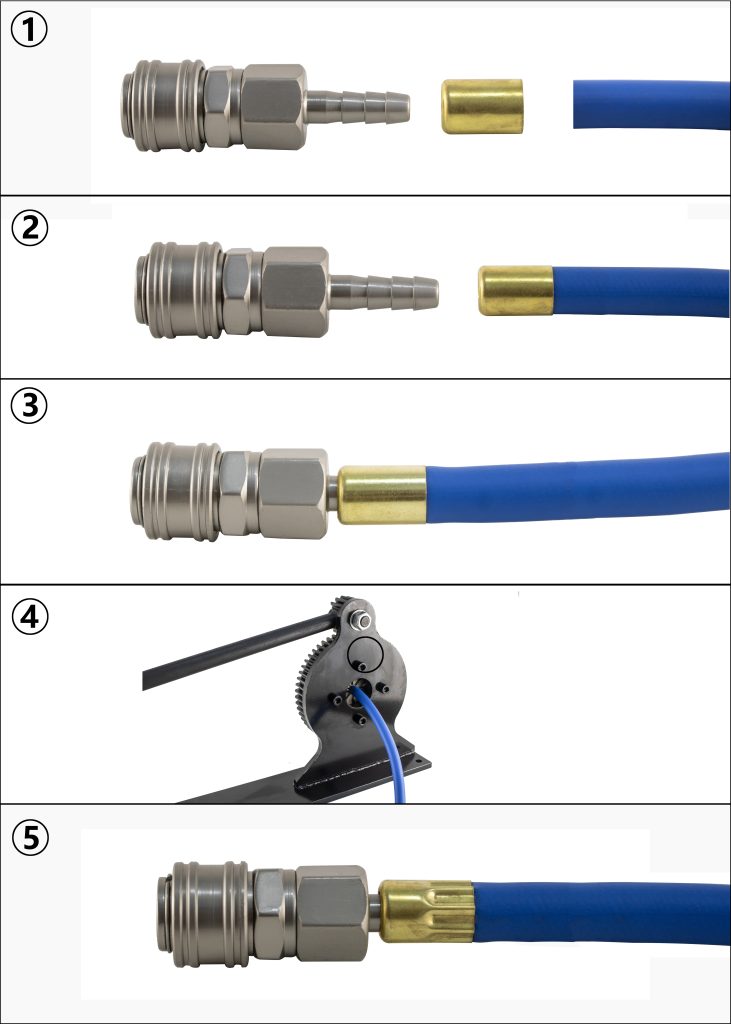
Ferrules are the elements used to assemble the hydraulic fittings on hydraulic hoses for high pressure. But we also adopt the same fixation with the air hose connection. Ferrules are assembled with the fittings and hose, then compressed by the crimping machines for a permanent connection.
Normally , the ferrules are made of normal steel or brass.
For the high pressure hydraulic system, they always adopt the steel or stainless steel ferrule. Regarding to the brass ferrule, always be used in the low pressure system, such pneumatic pipe system, garden irrigation etc.
How to choose the air quick coupling
To know what’s kind of coupling are Commonly used in your region?
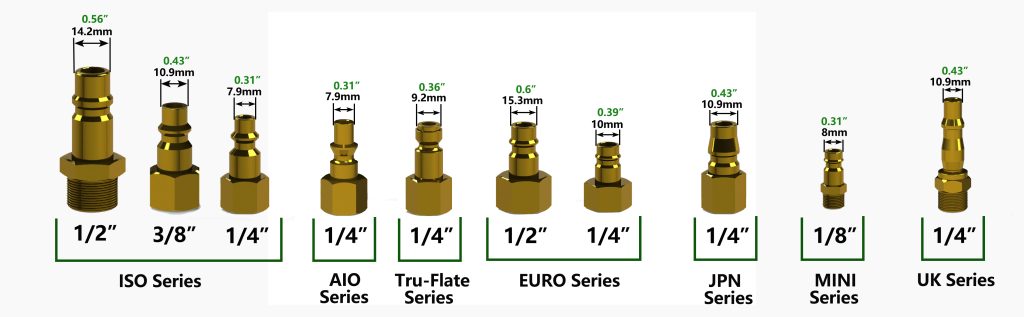
Normally, there seven models coupling and plug are commonly used in the world.
ISO, ARO and Tru-plate couplings and plugs are used in the North and South America. But in the Brazil and Argentina, the people prefer to the JPN models.
EURO models are famous in the Europe market!
UK series mostly used the England market!
JPN(Japan’s Nitto Model) could find in almost all of the Asia market!
MINI series coupling and plug are most found in the Medical treatment, or Chemistry application.
Flow rating
The effective orifice rating is a major factor in applications with high flow requirements. Manufacturers offer quick couplings with a range of orifice sizes to meet effective orifice rating requirements. Predictably, the fitting’s gets larger as the effective orifice rating increases.
Working pressure
Pressure rating should also be considered to ensure the quick couplings has an adequate pressure rating for the application. However, for the single shut off or double shut off air couplers, they can be more difficult to connect at these higher pressures, as users must overcome the air forces acting on the shutoff mechanism and the forces generated by the shutoff springs.
Frequency of connection/disconnection
Consider the frequency of connection/disconnection
The connection/disconnection frequency of the coupler plays an important part in the choice of the fitting. If you must disconnect the fitting several times a day, you will opt for an automatic coupler (more practical than a manual quick release coupling).
Automatic quick coupler
Insert the plug into the coupler without having to activate the sliding sleeve manually (must be activated for disconnection).
Manual quick coupler
Manually retract the sleeve to connect or disconnect the plug.
Working conditions
- Considering the working environment when select a quick release coupler. Environmental and working conditions sometimes require the use of stronger or non-corroding fittings. That depend on the type of industry feild.
- Other issure is to consider the standards related to the different country.
The medium of though the coupling
When the fliud which come though the coupling is corrosive, the material of the coupling and sealing element should be choosed serously.
For instance , refrigerating fluid may dissolution the normal NBR o-ring, and lead to the failure of sealing.