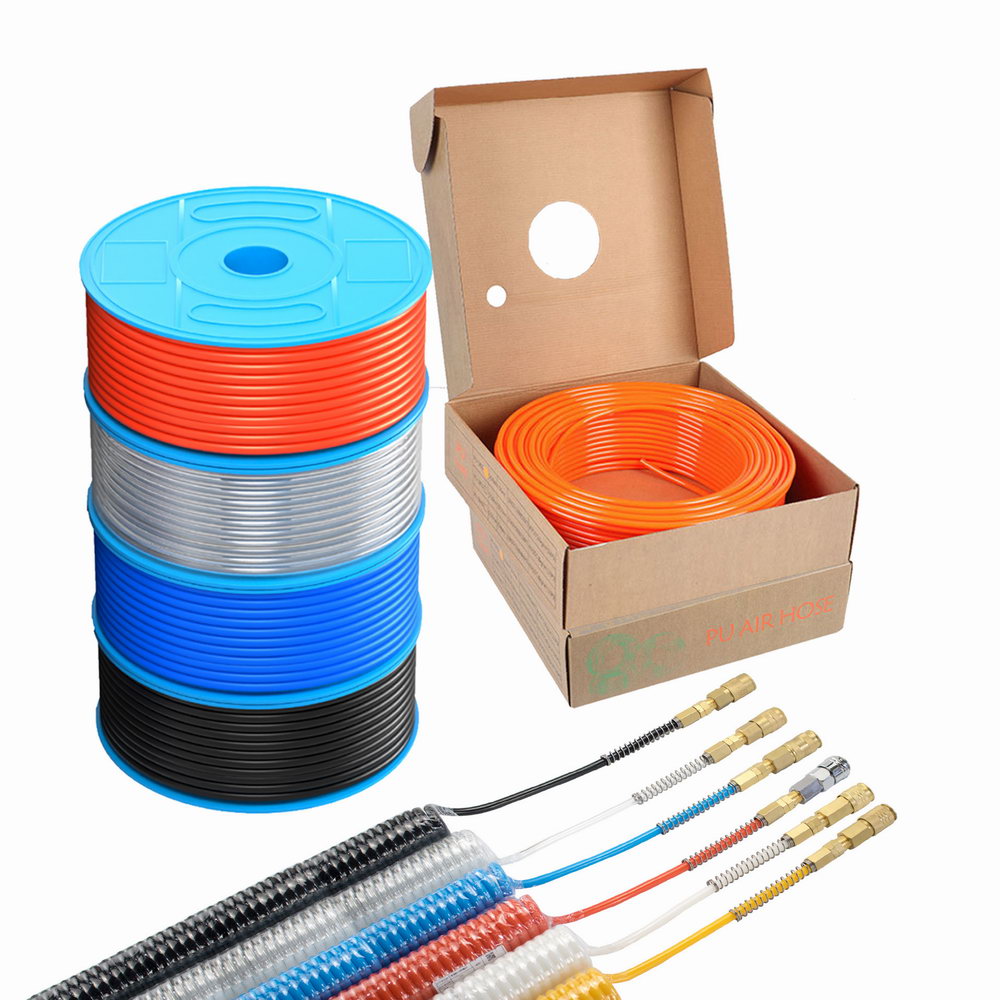
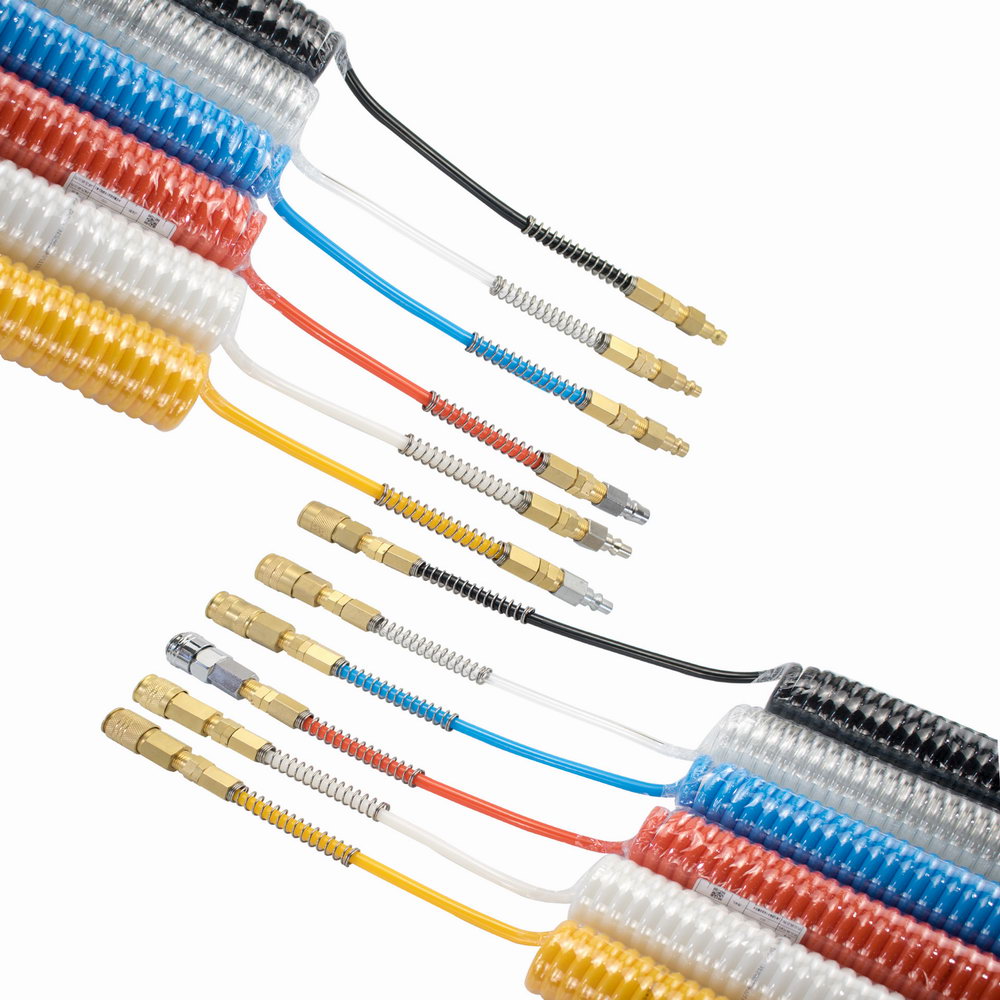
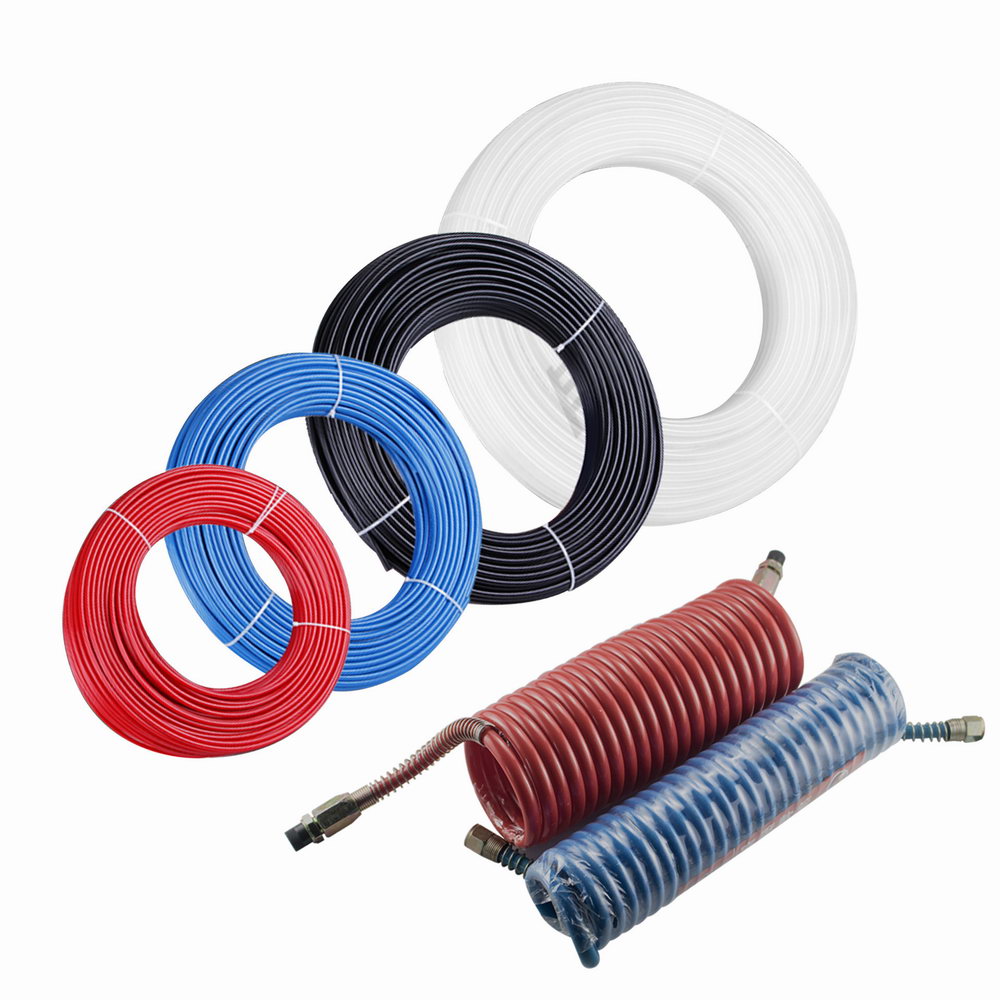
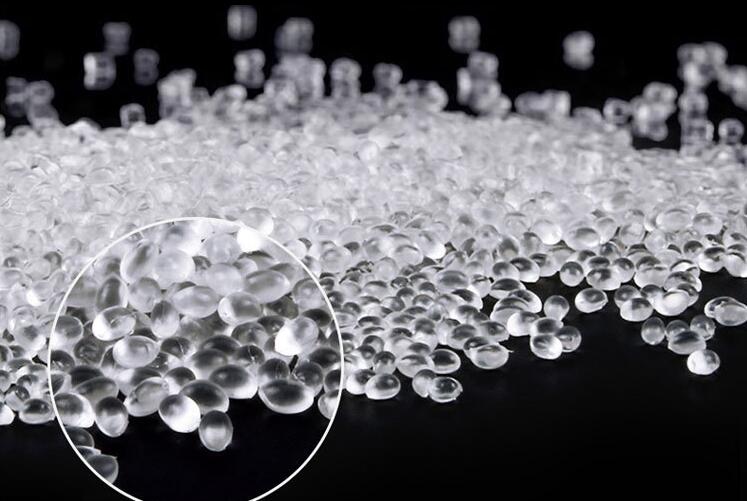
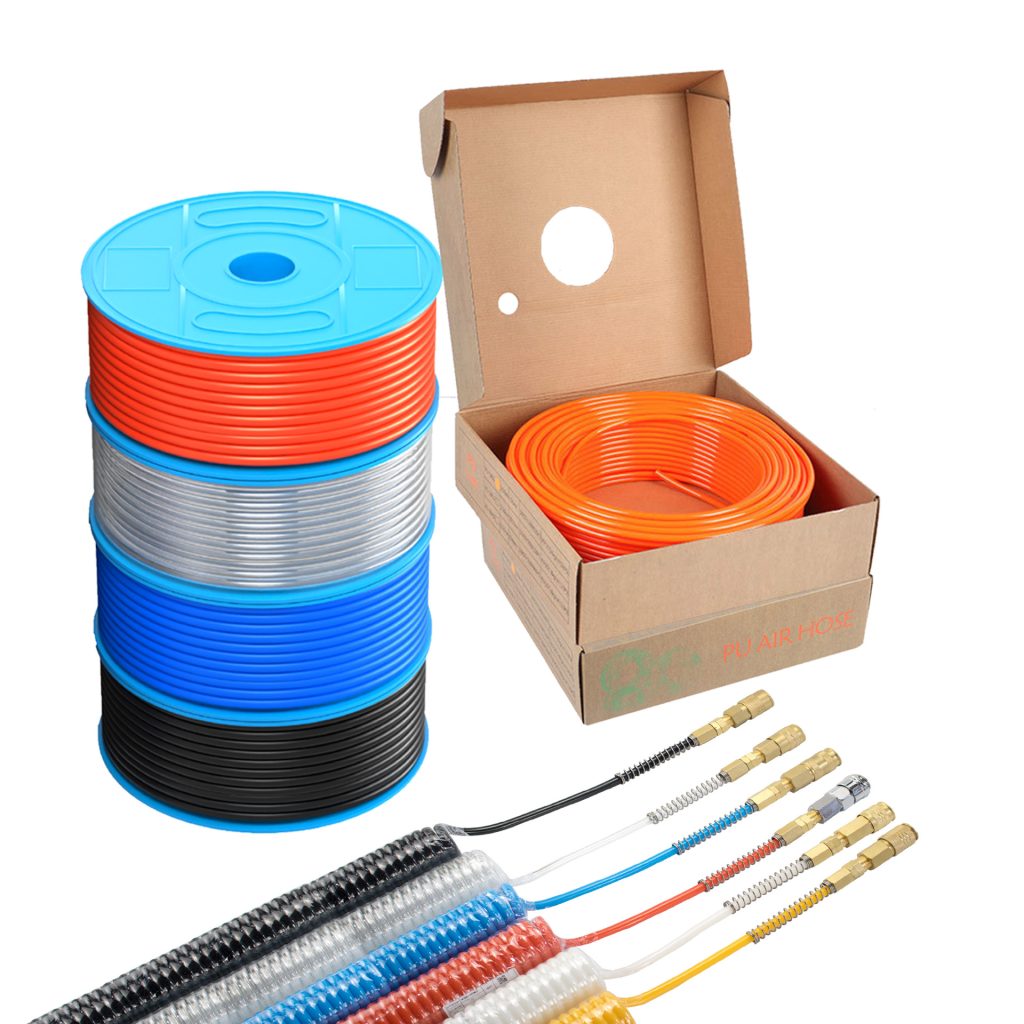
Polyurethane Tubing, commonly known as PU hose, is made from thermoplastic polyurethane (PU). The terms “PU hose” and “PU tube” refer to the same product.
We widely use it in pneumatic systems, industrial automation, semiconductor manufacturing, and various medical and laboratory applications for the transmission of compressed air or fluids. PU hoses are known for their toughness, flexibility, and abrasion resistance. Special-purpose PU hoses also offer resistance to contact with fuels and oils.
TPU-The Material Of Pu Hose?
Properties of TPU
Elastic and Flexible: TPU offers excellent elasticity and flexibility, making it highly suitable for various applications.
Durability: It resists abrasion, impact, and weather conditions, enhancing the overall durability of the product.
Customization: We could color the material and fabricated in a variety of methods, increasing its versatility for different applications.
Processing Capabilities
Melt-Processable: Like all thermoplastic elastomers, TPU is elastic and can be processed by melting.
Processing Methods: TPU can be processed using extrusion, injection molding, blow molding, and compression molding. It can also be vacuum-formed or solution-coated.
Types of TPU Used in PU Hoses
Ester-Based TPU:
Cost-Effective: It is less expensive than ether-based TPU.
Higher Strength: Generally offers higher tensile strength, making it suitable for applications requiring strength.
Limitations: Best used in environments with consistent low temperatures and where high flexibility over extended periods is not critical.
Ether-Based TPU:
Moisture Resistance: This type of TPU does not break down or degrade when exposed to moisture.
Flexibility at Low Temperatures: It remains flexible even in colder environments.
Durable: Excellent elongation and recovery properties, making it ideal for long-term use in machinery.
Hardness and Flexibility
Hardness Options: PU hoses come in various hardness levels, including 95A, 98A, 90A, and 64D. These hardness levels provide good bend resistance.
Flexibility: PU hoses have higher flexibility than nylon, especially at low temperatures.
When to Use PU Hose?
Versatility and Key Features
Wide Range of Uses: Polyurethane tubing is highly versatile and can be manufactured for various applications.
Flexibility: Known for its excellent flexibility, polyurethane tubing is ideal when you need a material that stretches and adapts to different configurations.
Durability: It is resistant to heat, cracking, and punctures, making it suitable for use in harsh conditions.
When to Use Polyurethane Tubing
Outdoor Applications: Polyurethane tubing is ideal for outdoor systems as it doesn’t crack in cold temperatures and is resistant to mold and chemicals.
Welding Industry: Due to its flame-resistant properties, polyurethane hoses are also commonly used in the welding industry for safety and durability.
Our PU Hose Products
US98A, UE95A PU Hose
Type: Both US98A and UE95A PU hoses are made from high-quality polyurethane (PU), known for its superior flexibility, abrasion resistance, and durability in various applications.
Material: US98A and UE95A Temperature range :
US98A: -20℃ to +70℃
UE95A: -40℃ to +70℃ Max. working pressure: 145Psi.
Durability: PU hoses are known for their superior abrasion resistance, making them suitable for demanding environments.
Tear Resistance: A robust PU hose will resist tearing, even under mechanical stress.
4. Chemical and Oil Resistance
Chemical Compatibility: Ensure the hose is resistant to the specific chemicals it will encounter in your application.
Oil Resistance: High-quality PU hoses resist oil degradation, maintaining integrity over time.
5. Pressure and Temperature Ratings
Pressure Tolerance: Verify that the hose can handle the operating pressures of your system.
Temperature Range: Quality PU hoses operate effectively across a broad temperature spectrum, typically from -40°F to 165°F.
6. Transparency and Color Options
Transparency: Some PU hoses are transparent, allowing visual inspection of the contents.
Color Coding: Color options can be used for system organization and safety.
7. Compliance and Certifications
Standards Compliance: For applications involving food, beverages, or pharmaceuticals, ensure the hose meets relevant standards such as FDA or NSF certifications.