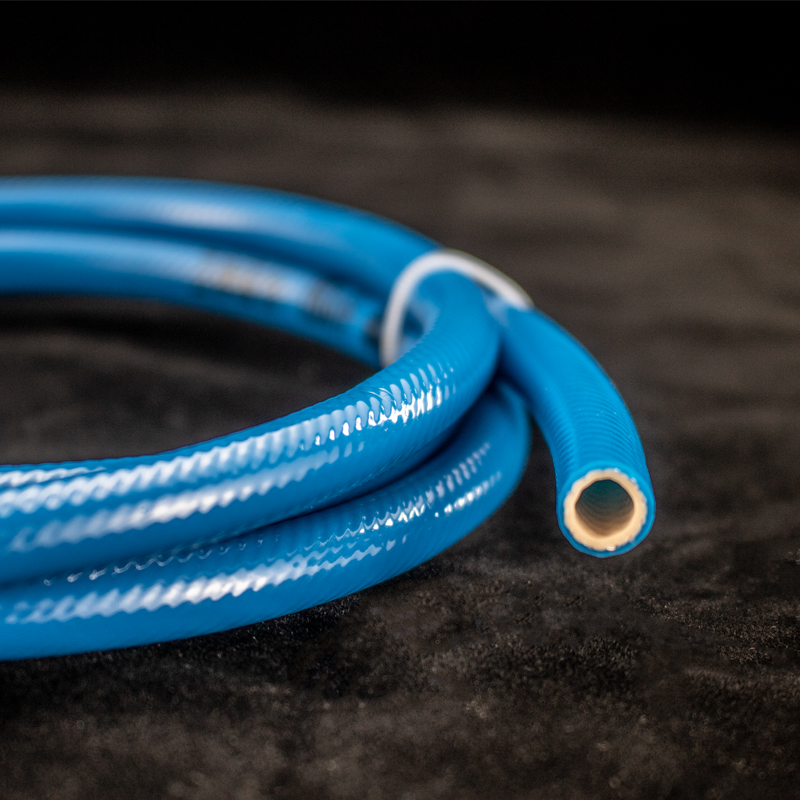
What’s the compressed air hose?
Compressed air hoses refer to various tubes and hybrid hoses specifically designed to transfer compressed air in different environments. To meet diverse application needs, manufacturers have developed a wide range of air hoses—such as PU tubes, which are widely used in industrial settings, offering durability, cost-effectiveness, and compatibility with most use cases.
These hoses serve as the primary means of supplying compressed air to end-use tools and equipment, including cylinders, vacuum pumps, jackhammers, staplers, and impact tools, among others
How many types compressed air hose there are?
Over the past ten years, we have developed eight core product lines of compressed air hoses, each manufactured from a distinct material or a composite of multiple materials.
Polyurethane (PU) – the most versatile hose series. These hoses integrate flexibility with robust chemical resistance, delivering a comprehensive suite of performance-specific properties.
Rubber Compressor Hoses – constructed from heavy-duty rubber to enhance abrasion resistance and weather durability, ensuring reliable operation in harsh working environments.
Polyethylene (PE) compressed air hose – PE materials inherently resist most common industrial chemicals; combined with an outstanding price-performance ratio, they are the preferred choice for food and beverage manufacturers, where FDA compliance is mandatory.
Hybrid Hoses – integrate rubber and PVC substrates with a nylon wire mesh interlayer, enabling a maximum working pressure rating of 3.0 Mpa.
Polyamide Hose (Nylon-PA) – Nylon is a family of synthetic polymers widely used in apparel and consumer goods, but nylon hoses excel in withstanding higher operating pressures and temperature ranges.
High Pressure Air Hose (Max 30 Mpa) – features an outer PVC layer, an inner rubber liner, and an intermediate braided steel wire reinforcement layer for superior pressure-bearing capacity.
PTFE (Polytetrafluoroethylene) Hose – commonly known as Teflon, a well-established material in industrial and household equipment. PTFE hoses maintain stable chemical and physical properties even under elevated temperature conditions.
PFA (Perfluoroalkoxy) Hose – fabricated from fluoropolymer resin, these hoses are engineered for a broad spectrum of corrosion-resistant applications and exhibit excellent performance in extreme temperature ranges (-300°F to 500°F).
Fluororubber Spray Hose – manufactured from fluororubber with a polyester fabric protective sheath, providing organic solvent resistance and antistatic functionality.
Instruction of the different materials compressed air hose.
Polyurethane (PU) Hose
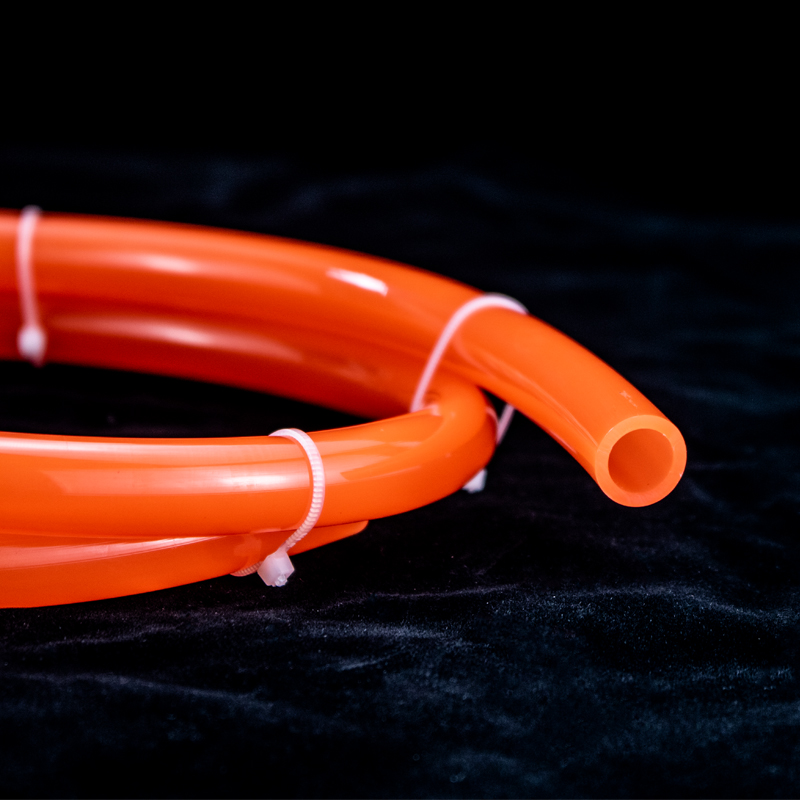
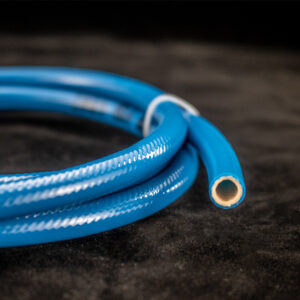
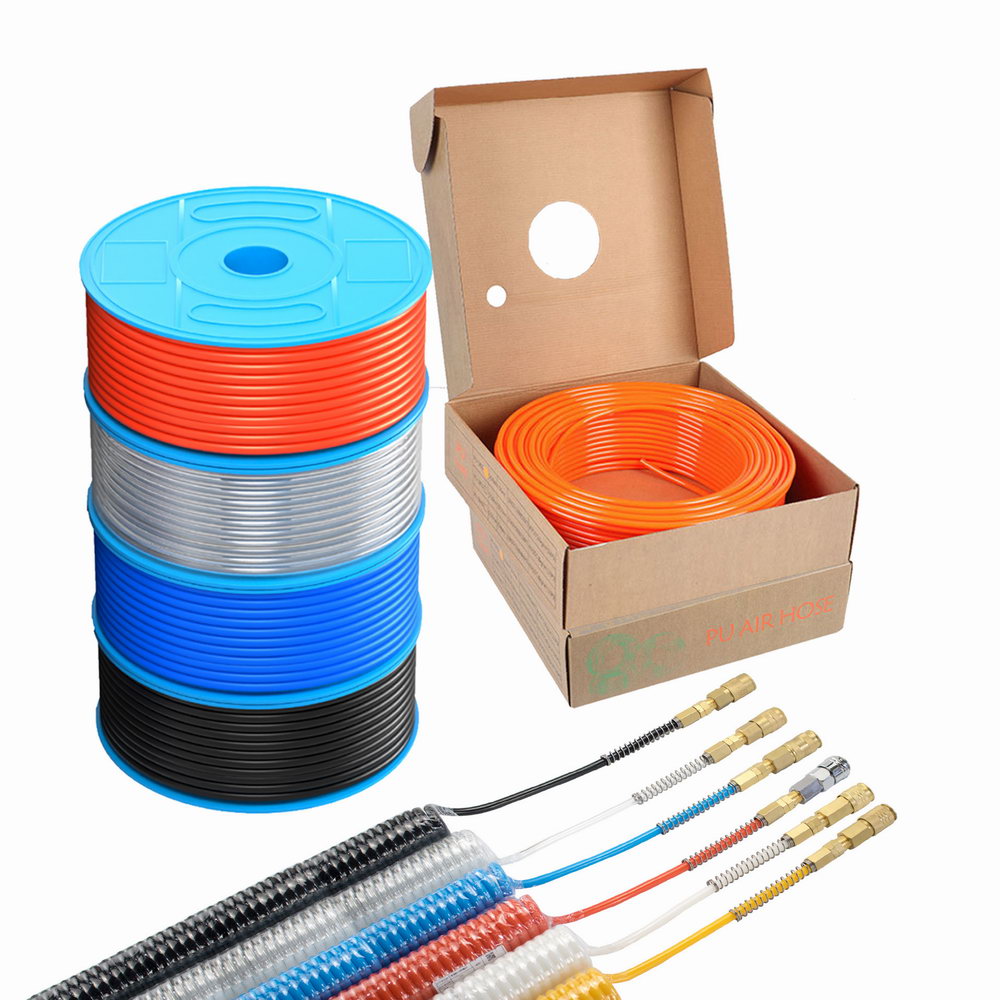
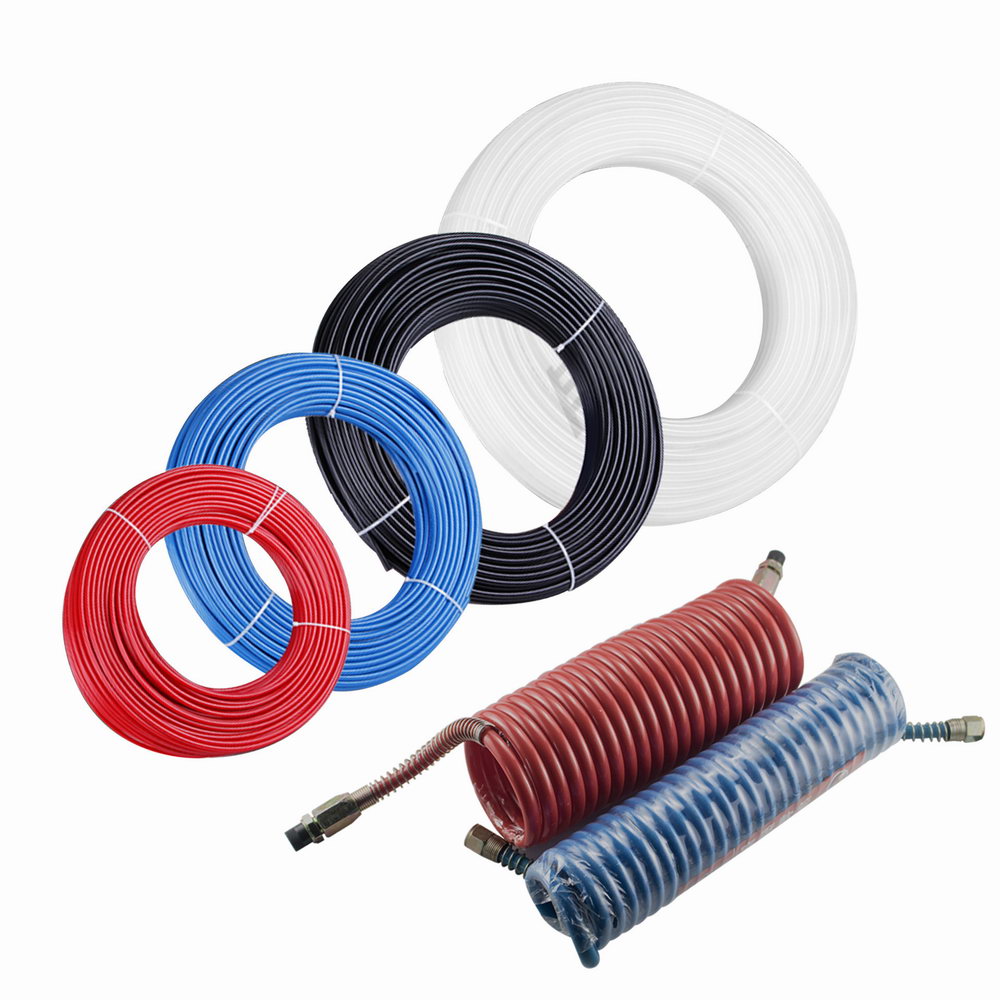
PU Hose in rolls
PU hose is the most common air hose. They are ideal for a wide range of applications. It offers kink resistance, with minimum kink memory. The environment temperature range : 55°C to minus 40°C . For most of the automatic system, the factories and workshops, it’s the best choice to transport the low pressure air (0-100 Psi).
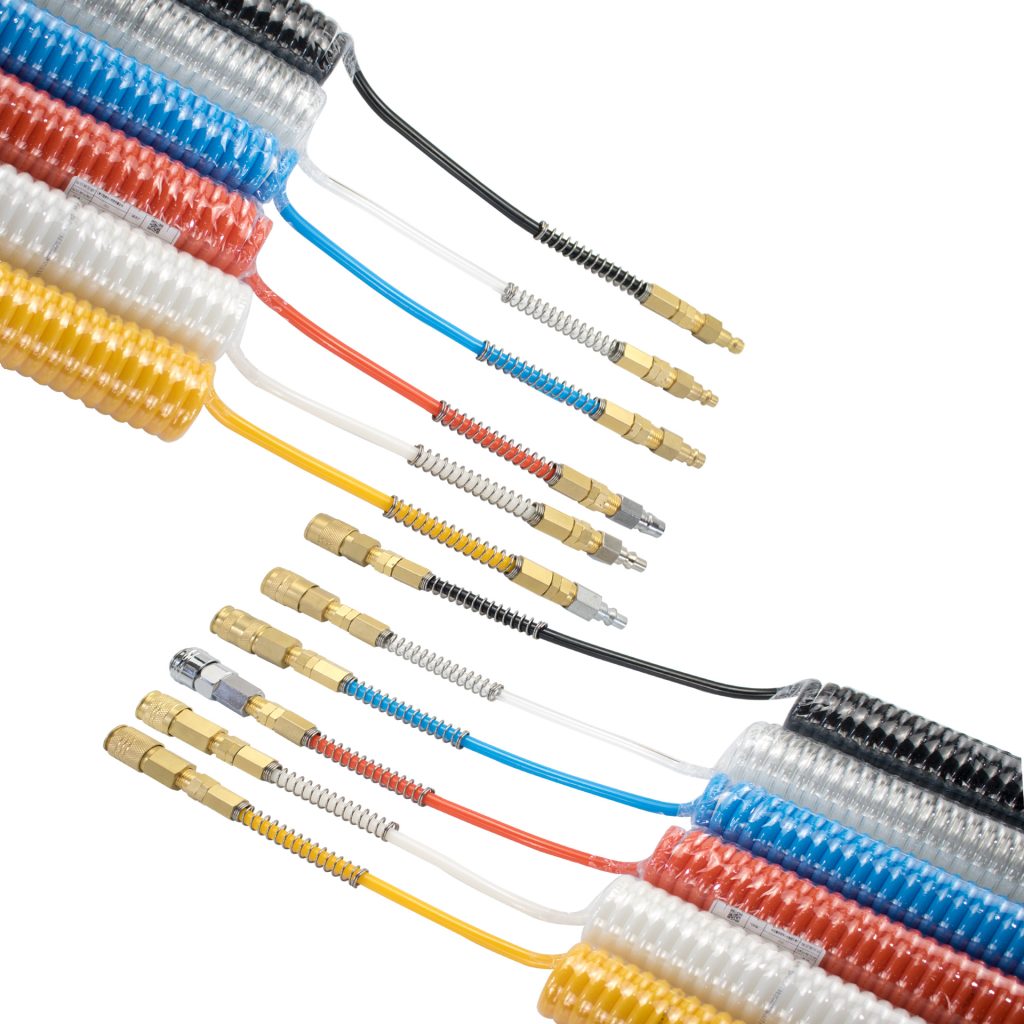
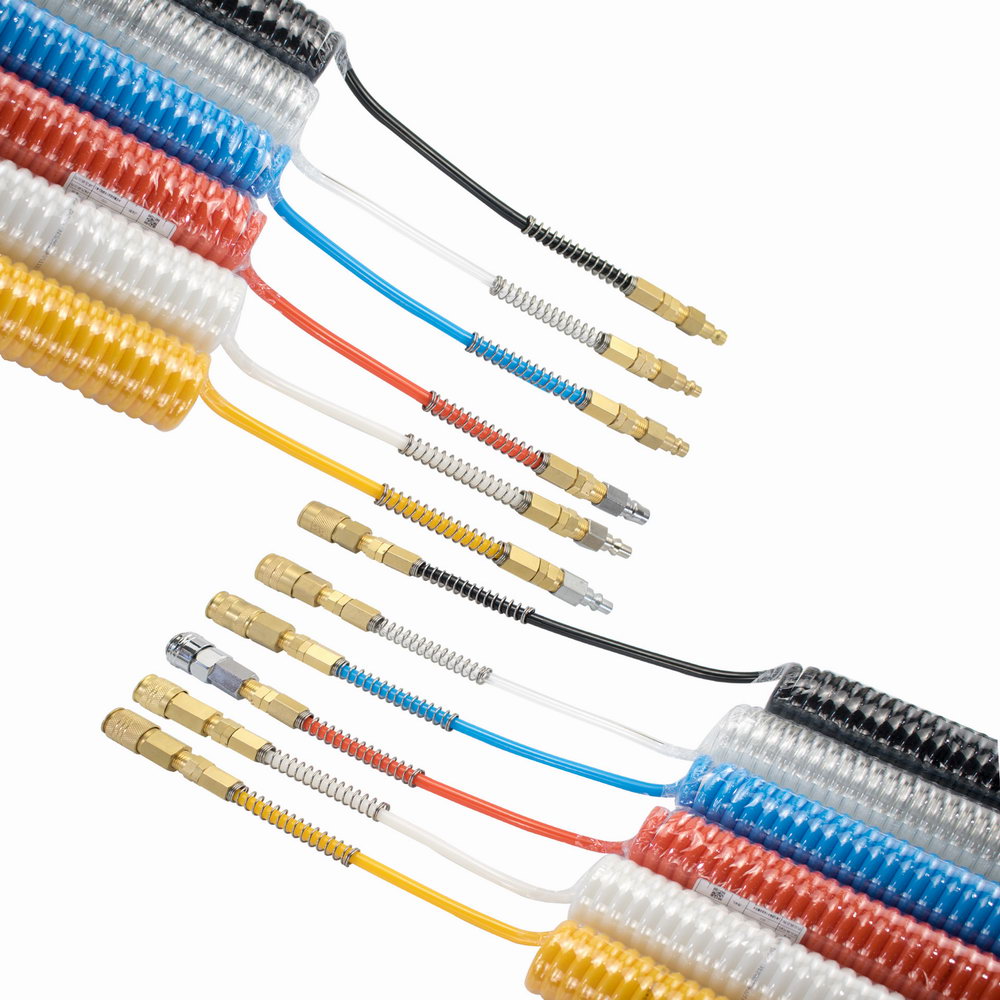
Coiled PU Hose
Coiled PU hose is made of obtained straight PU tube. The hose could be straighten out when the operator move in the certain space which is determined by the length of the tube. And return to their compact, coiled shape afterwards.It’s easier to carry than most other types of air hoses, they take up less space when stored. Like any hose, a coiled hose is only as good as the materials that go into it.
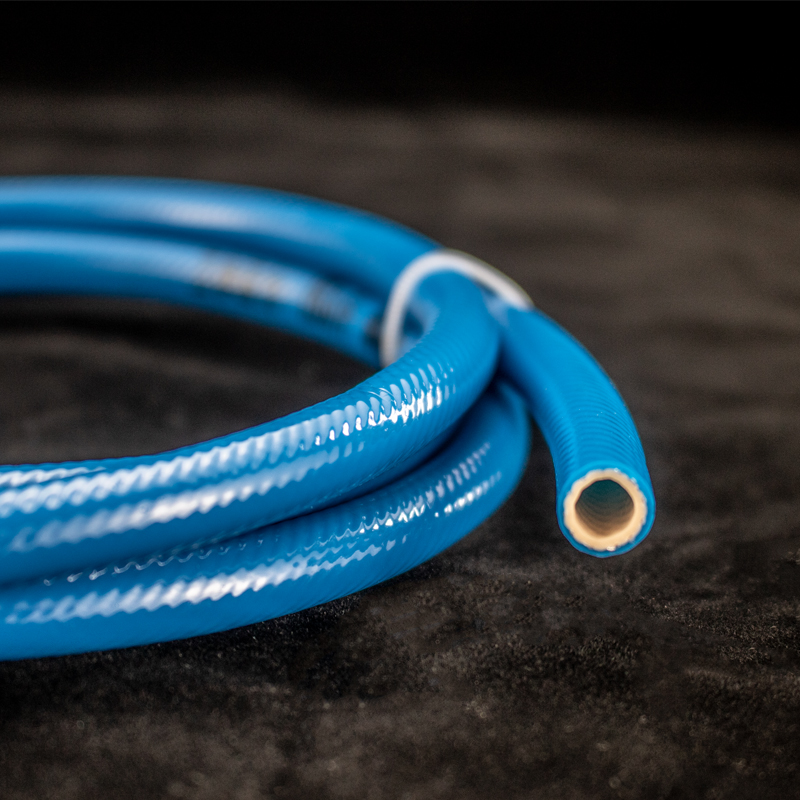
Reinforced PU Hose
The reinforced PU hose is made of two PU layers with one layer terylene wire braided network stuck in the middle. Beside offering outstanding flexibility, they also could hold max 420 Psi pressure. And the new technics increase the abrasion resistance ability that’s expected with common PU hose.
High Pressure Air Hose Max 30Mpa
Lorem ipsum dolor sit amet, consectetur adipiscing elit. Ut elit tellus, luctus nec ullamcorper mattis, pulvinar dapibus leo.
Rubber Compressor air hose
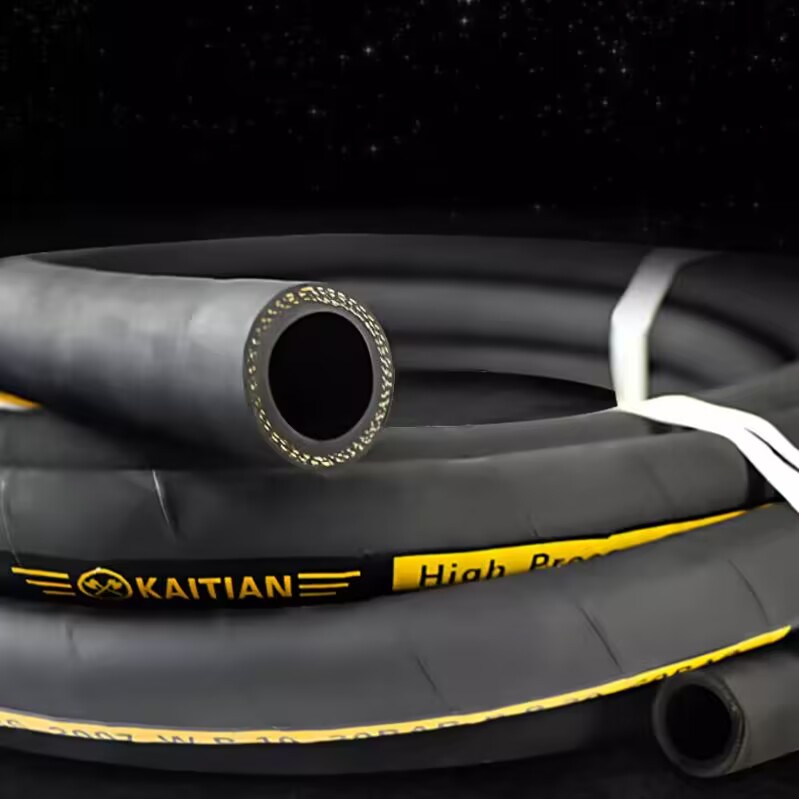
These compressed air hose are made of durable rubber material, and one or two Nylon fiber wire braided network mixed in the hose wall. That makes them resistant to abrasion and weather conditions. They have a high tensile strength and can withstand high-pressure environments. They are commonly used in industrial settings where heavy-duty applications are required. Such as the tasks in construction, roadwork.
Normally 200-800 psi pressure rated. Work temperature: -30°C to 70°C.
Polyethylene (PE) Hose
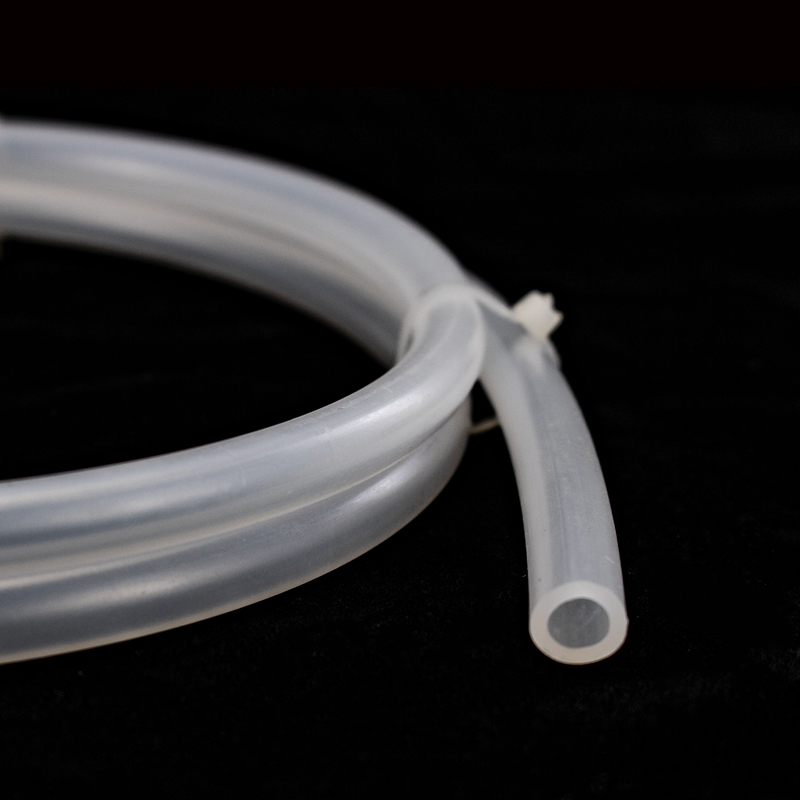
Polyethylene air hose is available in two different types: Low Density Polyethylene (LDPE) and High Density Polyethylene (HDPE). LDPE is the most commonly used type. PE materials are generally resistant to most ordinary chemicals. It’s an ideal piping material for a broad variety of applications such as potable water service or natural gas distribution.
Temperature range: -10°C to +60°C. Working pressures 100, 125, 160 and 200 P.S.I. see the thickness of the tube wall.
Polyamide (PA) – Robust, resistant to low temperatures and light
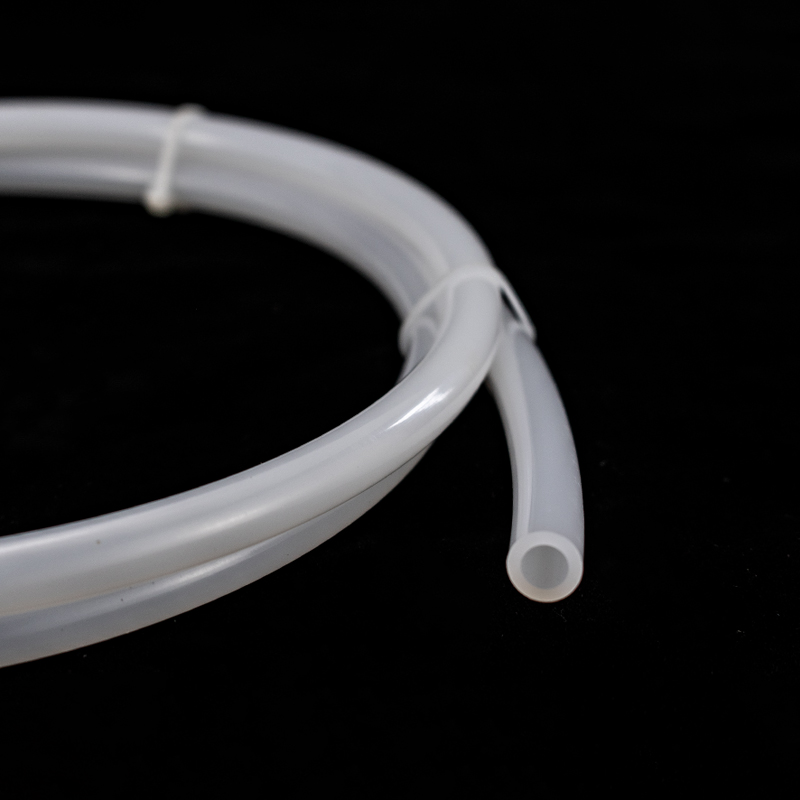
PA compressed air hose is available in different variants, PA 11, PA 12 and PA 6 are the most common polyamide. Due to the cost performance and be suitable for most of the general application, PA11 hose occupy the majority of the market shares.
Well, PA 12 hose is available in an antistatic, fire-resistant or extra flex version. This hose is resistant to low temperatures and with excellent properties against ageing. It’s dimensionally stable at high temperatures and contains no plasticisers.
Temperature range: -60°C to +100°C. Working pressure : Max 420 Psi.
Hybrid Hoses
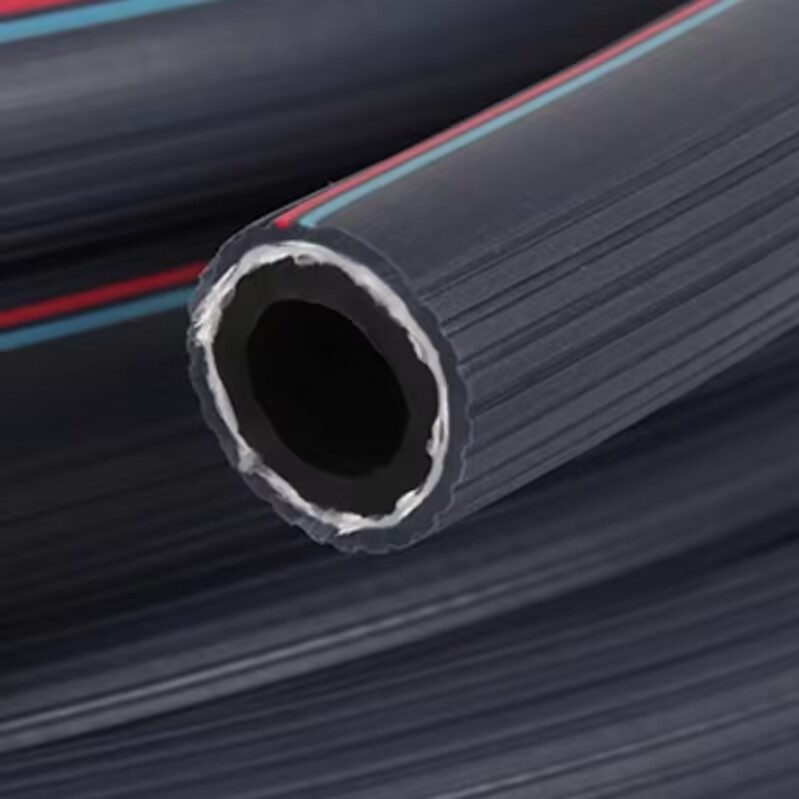
Hybrid compressed air hose – The hybrid blend of polyurethane, Polyester layer, PVC or rubber has several types combinations! For instance, some hybrid hose are made of one layer of PVC, one Polyester wire network layer and one layer inner rubber hose. Almost all of the combinations allows hybrid hose to be extremely flexible and durable, even in frigid temperatures.
The different combination has different resistance to pressure and tempreature!
But this kind of hose obviously have more excellent performance compared with the single layer hose.
PTFE (polytetrafluoroethylene) hose
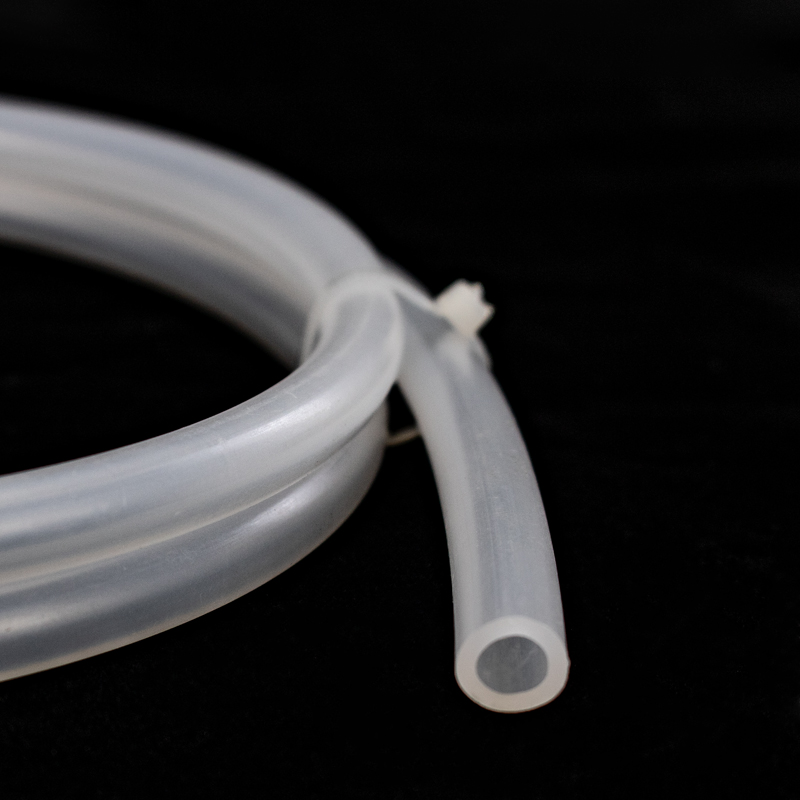
PTFE (polytetrafluoroethylene) hose
PTFE also be called as Teflon. It’s a synthetic polymer, which is containing carbon and fluorineis. Specific characteristics & high chemical/temperature tolerances make this a popular choice in critical applications. Such as the usage in the Medical, Aerospace, Oil & Gas, Petrochemical, Semiconductor, Packaging & Food industries and other demanding industries. The FDA has stated that cooking and eating food on Teflon products is perfectly safe.
The single layer PTFE hose normall could hold 420Psi pressure. PTFE hoses can withstand temperaturesas low as -65°F (-54°C) and as high as +400°F (+204.4°C).
PFA Hose-Very high/low temperature resistant
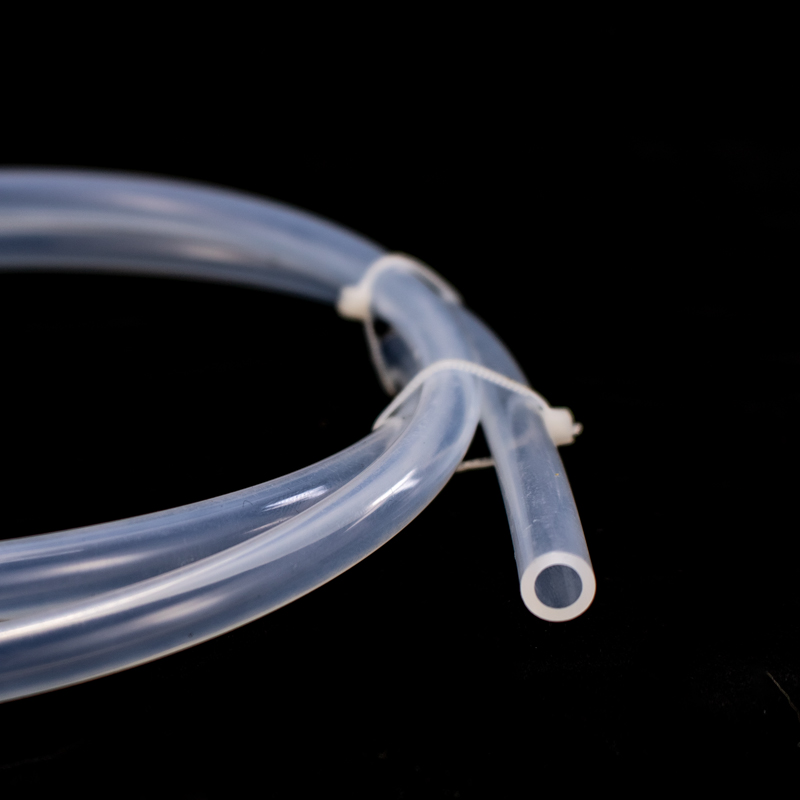
PFA Hose- Food, very high/low temperature resistant.
PFA: perfluoroalkoxy, it is clear transparent with a light blue glow. PFA is often used when clarity, flexibility and a higher continuous working temperature are required. In the Semiconductor and Pharmaceutical industries, PFA HP (High Purity) hoses are used for fluid handling applications that require an extremely low absorption level. FDA approved.
Has a wide temperature range of -328°F (-200°C) to 500°F (260°C).
Flow shart
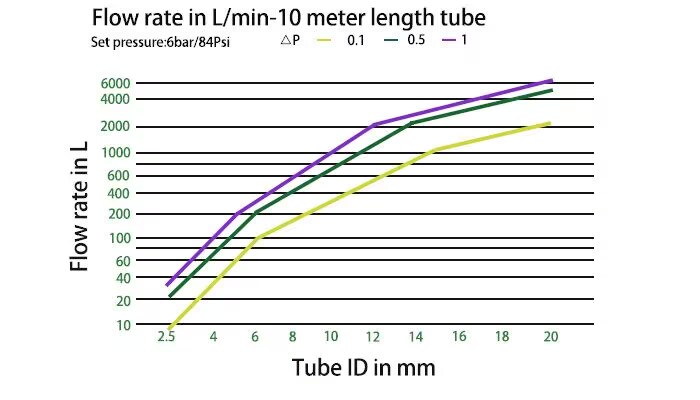
Attention:
On a compressed air distribution system, pressure losses greater than 3% are considered excessive, and a well-designed system having a steady rate of air flow is usually designed for not more than a 1% loss or 1 PSI for a 100 PSI system. The pipe size depends not only on the volume of air flow but how far it must be carried. To hold the distribution loss to 1 PSI, pipes of larger diameter must be used on longer runs to carry the same flow that can be handled by smaller pipes on shorter runs.
Working Pressure VS WorkingTemperature Chart
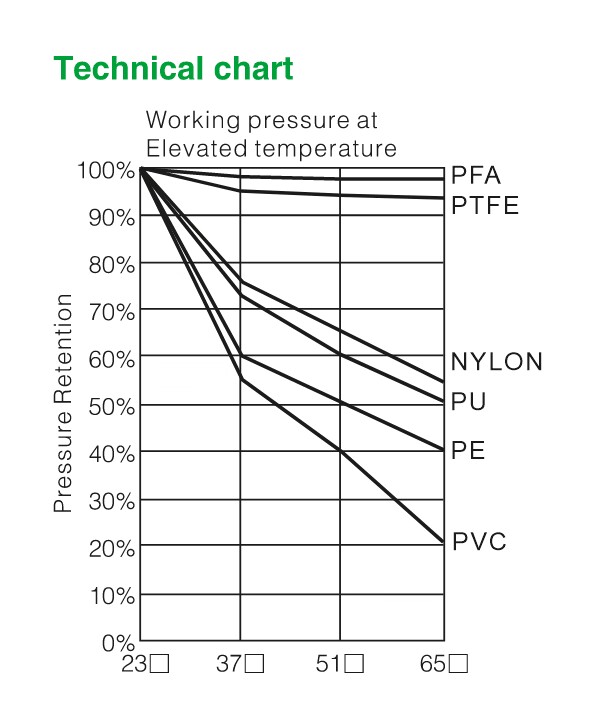
How temperature affects a hose?
The operating temperature of the medium and environment directly influences the properties and performance of a hose.
So how is a hose affected by temperature?
Pressure resistance: Pressure resistance: The ability of the hose to withstand pressure is affected by temperature. For example, a hose operating at high temperature will have its pressure resistance reduced.
Hardness: At high temperatures, the hose often becomes softer, which typically increases its flexibility. However, at lower temperatures, it can become more rigid, which can make it vulnerable to damage, especially when bending or moving.
Abrasion resistance: Temperature does not affect the abrasion resistance of the hose.
Chemical resistance: High temperature can change the chemical resistance of the hose, making it more vulnerable to certain chemicals or gases in the system. Low temperatures can have the opposite effect.
How To Choose Air Compressor Hose
Application requirements: Determine the specific application requirements, including the temperature, whether corrosive gases or liquids contained in the atmosphere and so on!
Working pressure: Determine the maximum pressure that your air compressor can deliver and choose a hose with a working pressure rating that exceeds this value.
Hose length: Consider the distance between your air compressor and the tools or equipment that will be connected. The longer the line, the greater the transmission resistance, and at the same time, the pressure drop of the entire system is very large!
Hose diameter: Determine the airflow requirements of your tools and equipment and choose a hose with an appropriate diameter to ensure proper airflow.
Material: Consider the environment in which the hose will be used and choose a material that offers the necessary durability and resistance to abrasion, weather conditions, and chemicals.