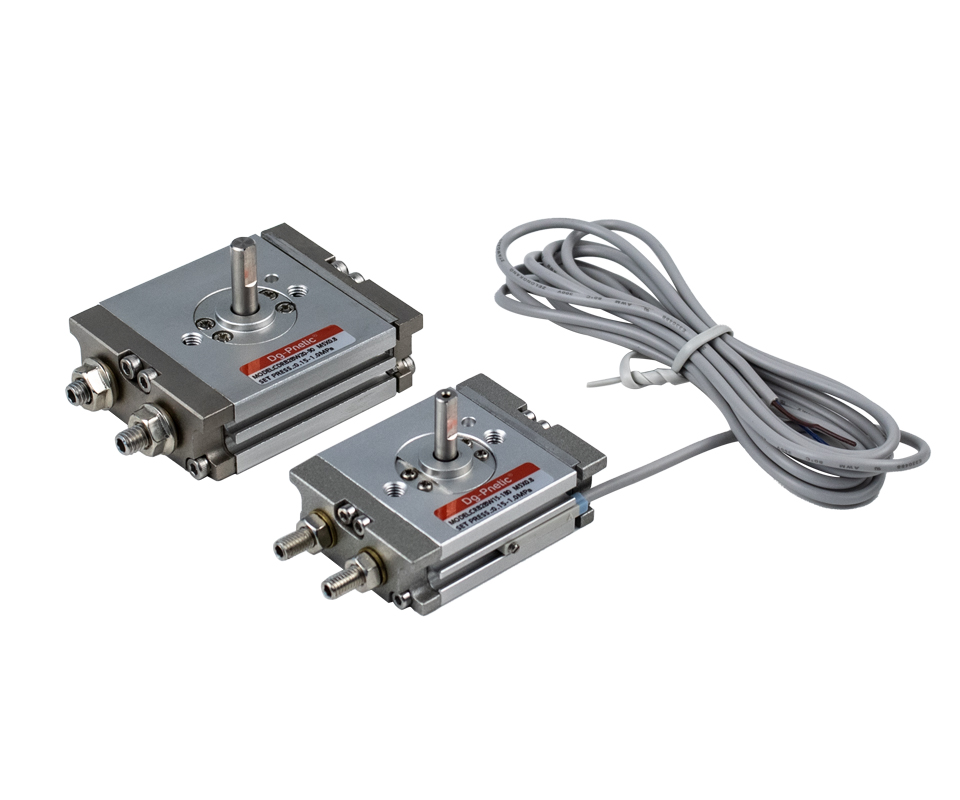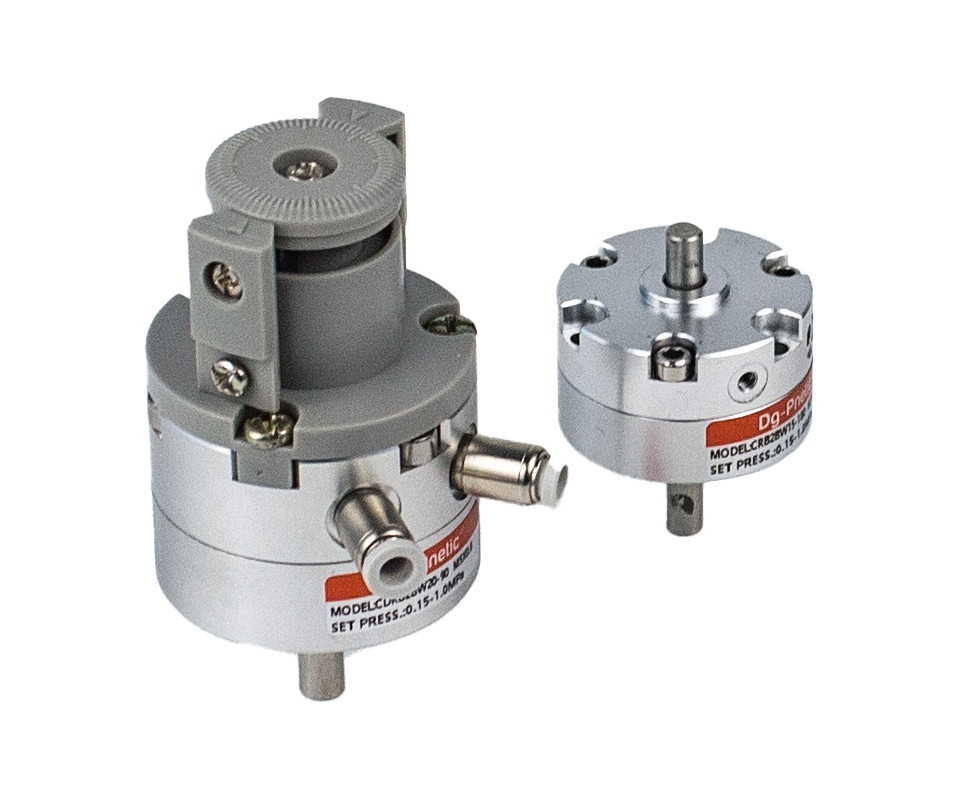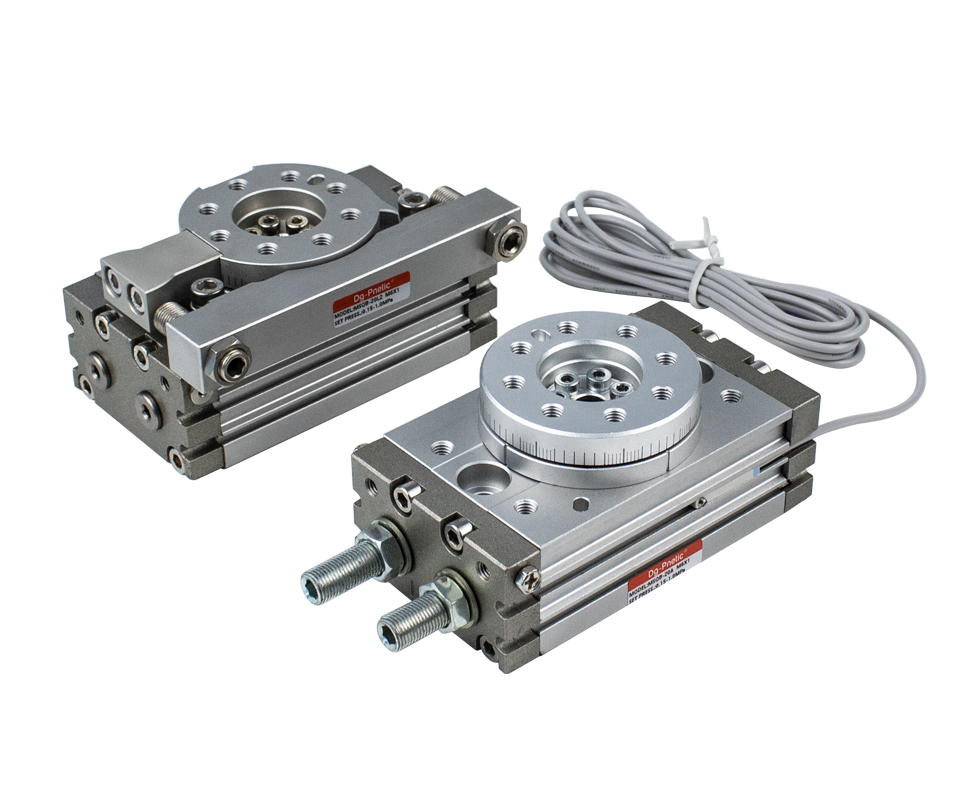
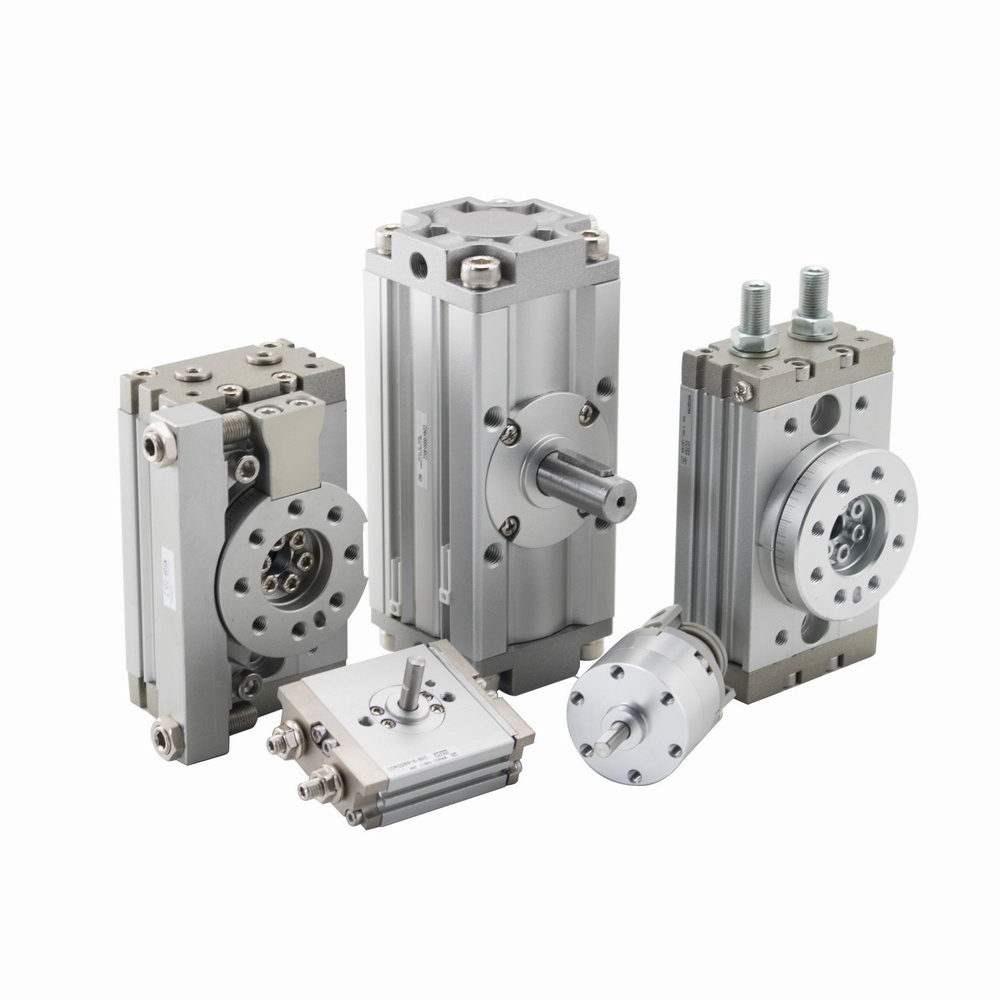
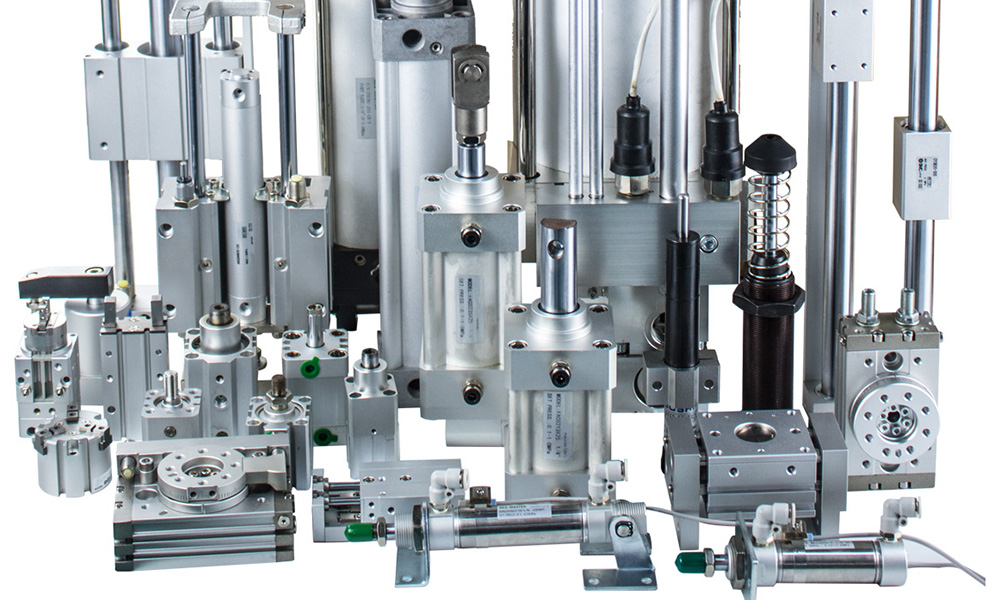
A pneumatic rotary actuator (commonly known as a rotary cylinder) is a high-precision motion control device that converts the linear force of pressurized air into a powerful rotary motion. Designed for both single-acting and double-acting operations, these components are essential for automated systems requiring controlled angular displacement.
In industrial automation, they are the standard solution for the repeated 90-degree (quarter-turn) opening and closing of ball valves and butterfly valves. Beyond valve actuation, they are widely used in material handling, part indexing, and automated assembly lines.
Industry Aliases:
To ensure optimal performance for specific applications, pneumatic rotary actuators are categorized into four primary mechanical designs:
Heavy-Duty Dual Piston Design
Known for its robustness and high torque output, this design uses double pistons to drive a central gear, ensuring balanced motion and long-term durability.
Select Series:
Ultra-Compact Swivel Design
The most compact and lightweight solution for rotary motion. It uses a single or double vane inside a chamber to convert air pressure directly into swivel motion.
Select Series:
Engineering Choice: If your application requires high stability and heavy loads, Rack & Pinion is the industry standard. For high-speed, lightweight tasks where space is at a premium, Vane actuators offer the best efficiency.
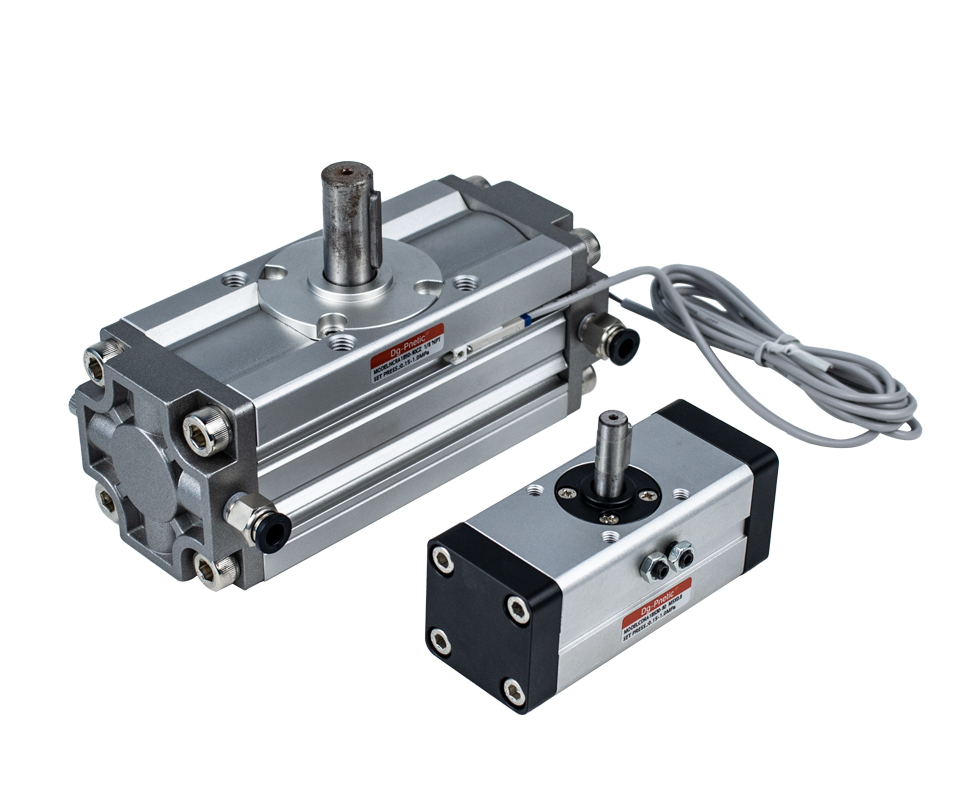
Actuating Fluid: Compressed Air (to be filtered by 40um filter element)
Bore Size(mm): 30 50 63 80 100.
Working Pressure:
Double Acting Model: 0.1~1.0Mpa (15~145Psi) (1.0~10Bar)
Proof Pressure: 1.50Mpa(213Psi)(15.0Bar)
Working Temperature ℃: 0~60℃. (No Freezing)
Cushion Type: Air Cushion
Magnetic switch : Available
Rotating Angle: 90°, 180°
Actuating Fluid: Compressed Air (to be filtered by 40um filter element)
Bore Size(mm): 10 15 20 30 40
Working Pressure:
Double Acting Model: 0.1~1.0Mpa (15~145Psi) (1.0~10Bar)
Proof Pressure: 1.50Mpa(213Psi)(15.0Bar)
Working Temperature ℃: 0~60℃. (No Freezing)
Cushion Type: Air Cushion/Rubber bumper
Magnetic switch : Available
Rotating Angle: 90°, 180°
Actuating Fluid: Compressed Air (to be filtered by 40um filter element)
Bore Size(mm): 10 15 20 30 40
Working Pressure:
Max Working Pressure: Bore size: 10 15 20 : 0.7Mpa; Bore size 30 40: 1.0Mpa
Minimum Working Pressure: Bore size: 10 : 0.2Mpa; Bore size 15 20 30 40: 0.15 Mpa
Working Temperature ℃: 5~60℃.
Cushion Type: Air Cushion
Magnetic switch : Available
Rotating Angle:
Double vane: 0~90°; Single valve: 0-240°
Actuating Fluid: Compressed Air (to be filtered by 40um filter element)
Bore Size(mm): 15 18 21 25 28 32 40
Working Pressure:
With adjustment bolt: 0.1~1.0Mpa
Internal Shock absorber: 0.1~0.6Mpa
Proof Pressure: 1.50Mpa(213Psi)(15.0Bar)
Working Temperature ℃: 0~60℃. (No Freezing)
Cushion Type: Shock absorber/Rubber bumper
Magnetic switch : Available
Rotating Angle: 190°
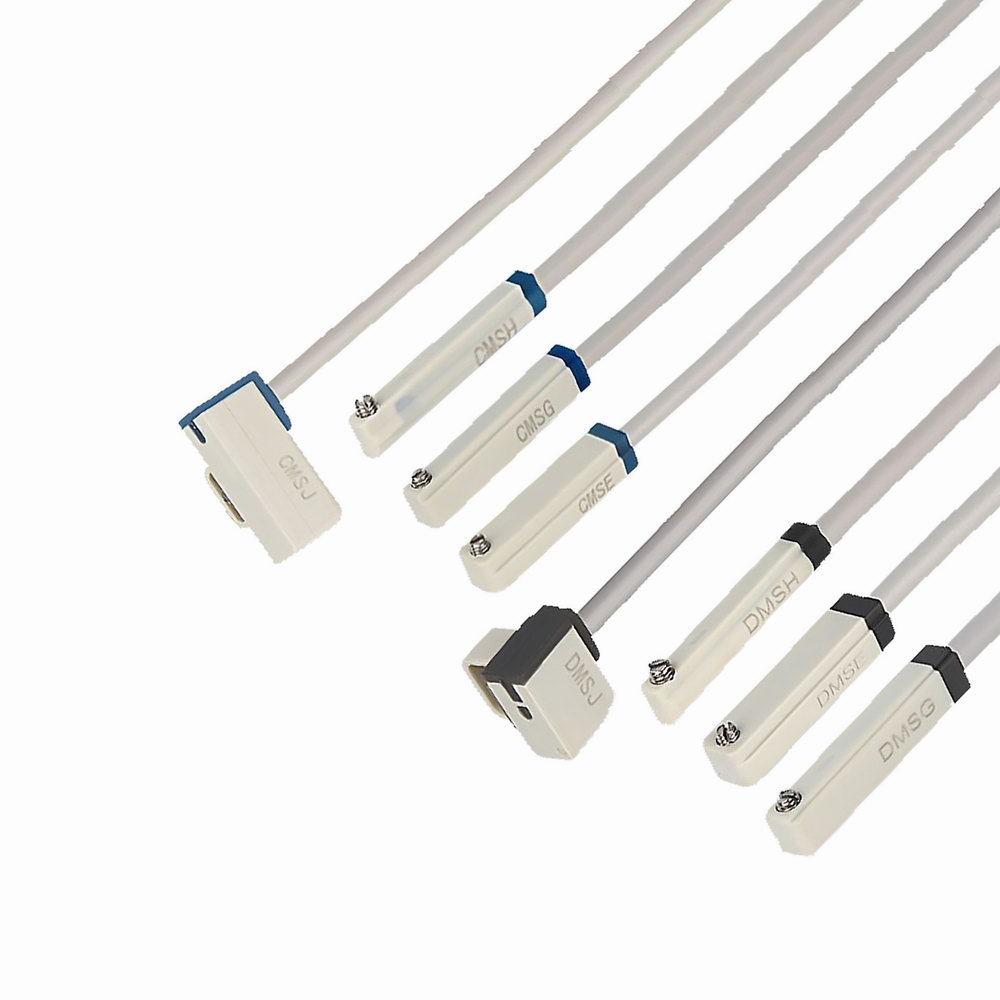
Many rotary actuators can be equipped with magnet switches to monitor and control their rotation angle. This is particularly valuable in automated equipment, where precise and repeatable rotation is critical.
Rotary actuators typically include an internal magnet attached to the piston or vane. When the actuator rotates, the magnet’s position changes, and this movement can be detected by external magnet (reed) switches installed along the actuator body.
These switches:
Detect specific rotation angles (e.g., 90°, 180°, 270°, or 360°)
Send a signal to the controller when the actuator reaches the preset position
Allow non-contact sensing, improving durability and reliability
In rotary cylinders capable of 360-degree rotation, engineers can precisely control the rotation angle by adjusting the installation position of the magnet switches (inductive or reed sensors). This allows:
Flexible angle configuration without modifying the actuator
Custom motion profiles tailored to the equipment’s needs
Enhanced automation feedback for multi-position or multi-step rotary tasks
Rotary actuators are used in a wide range of industries and applications where controlled rotary motion is needed. These devices convert compressed air into angular movement, making them ideal for tasks requiring rotation, positioning, or indexing.