
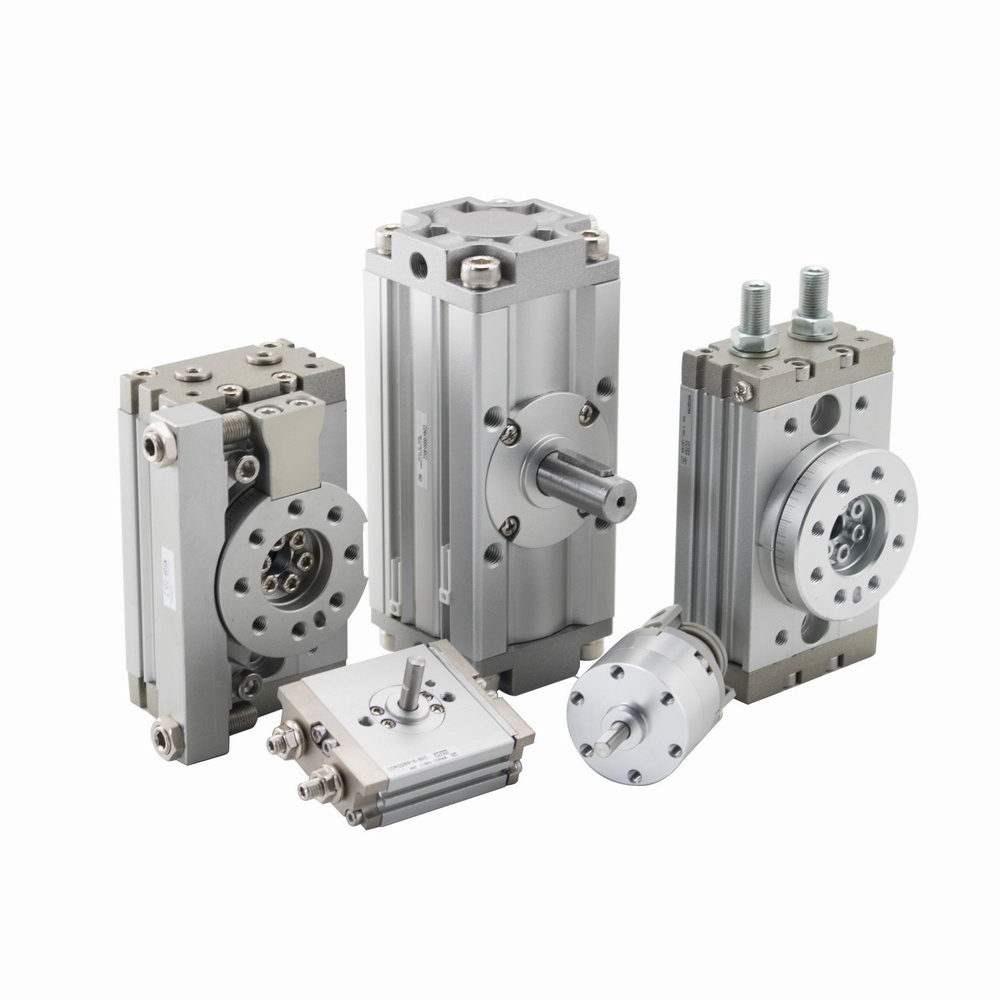
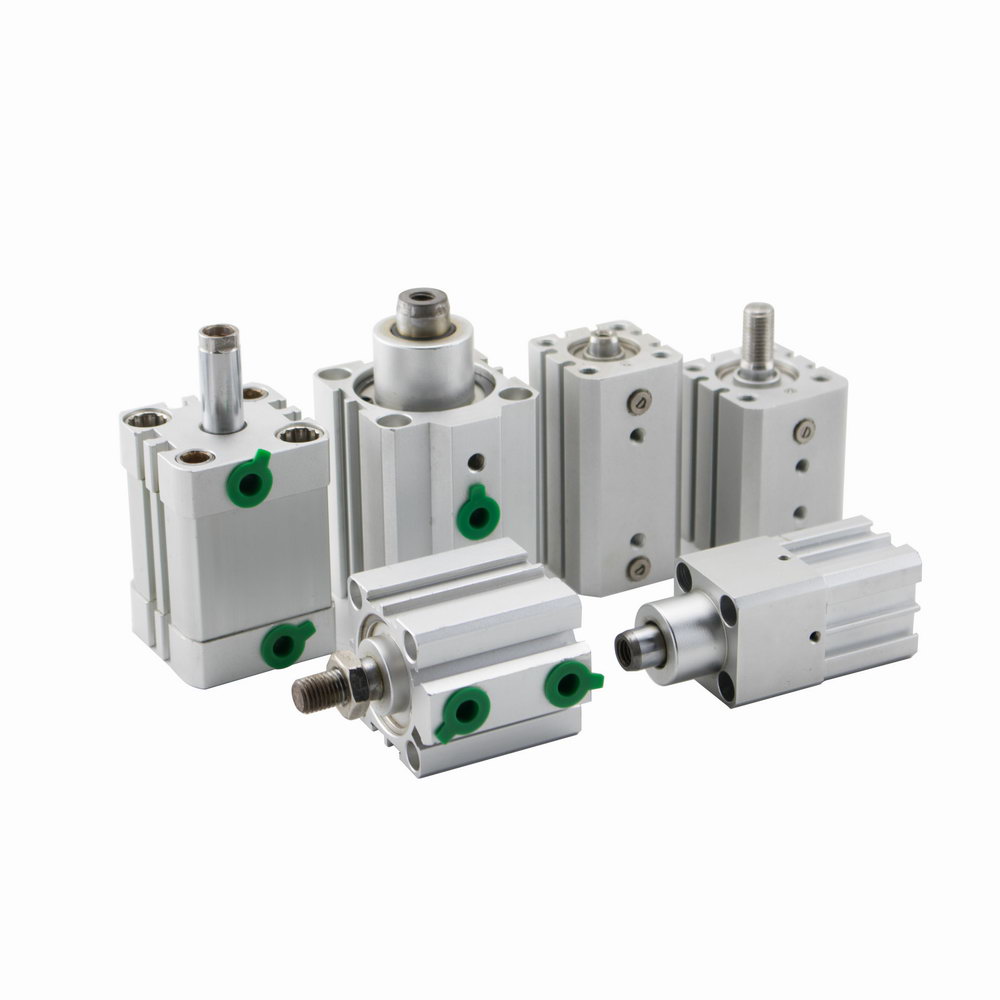
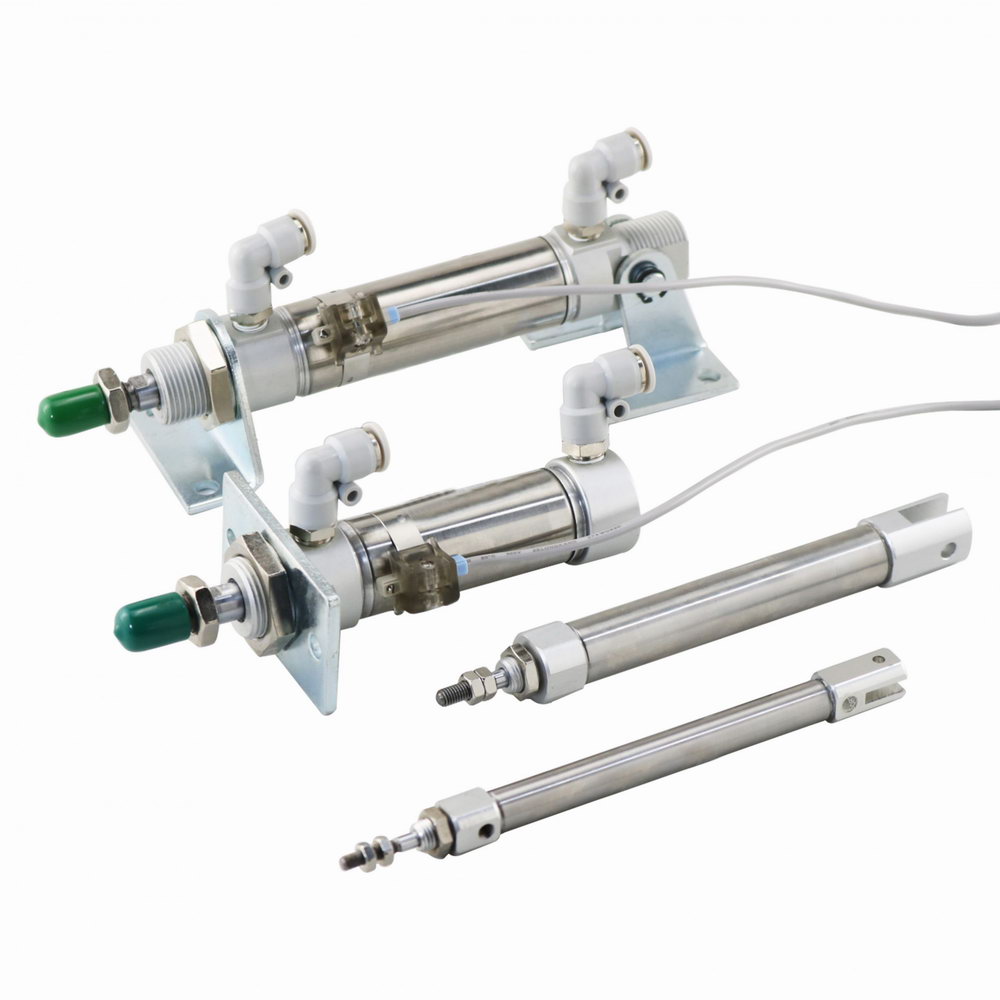
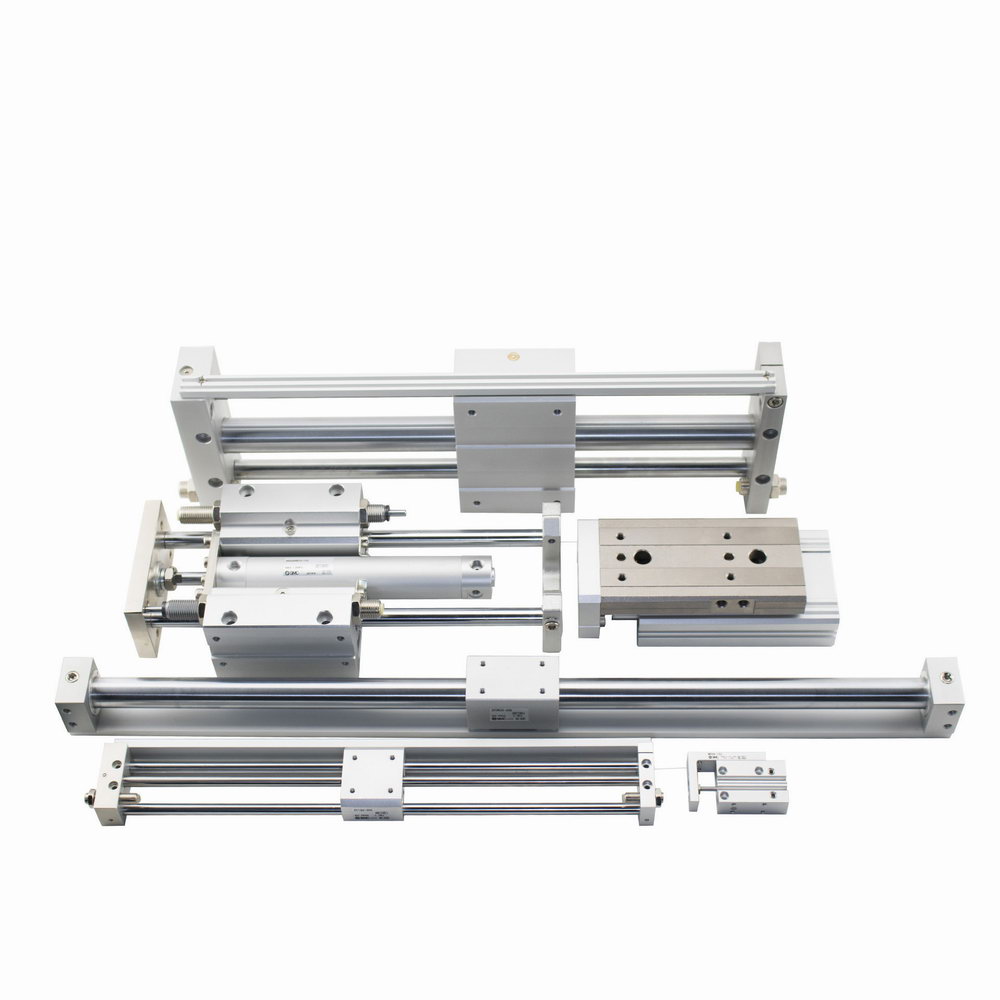
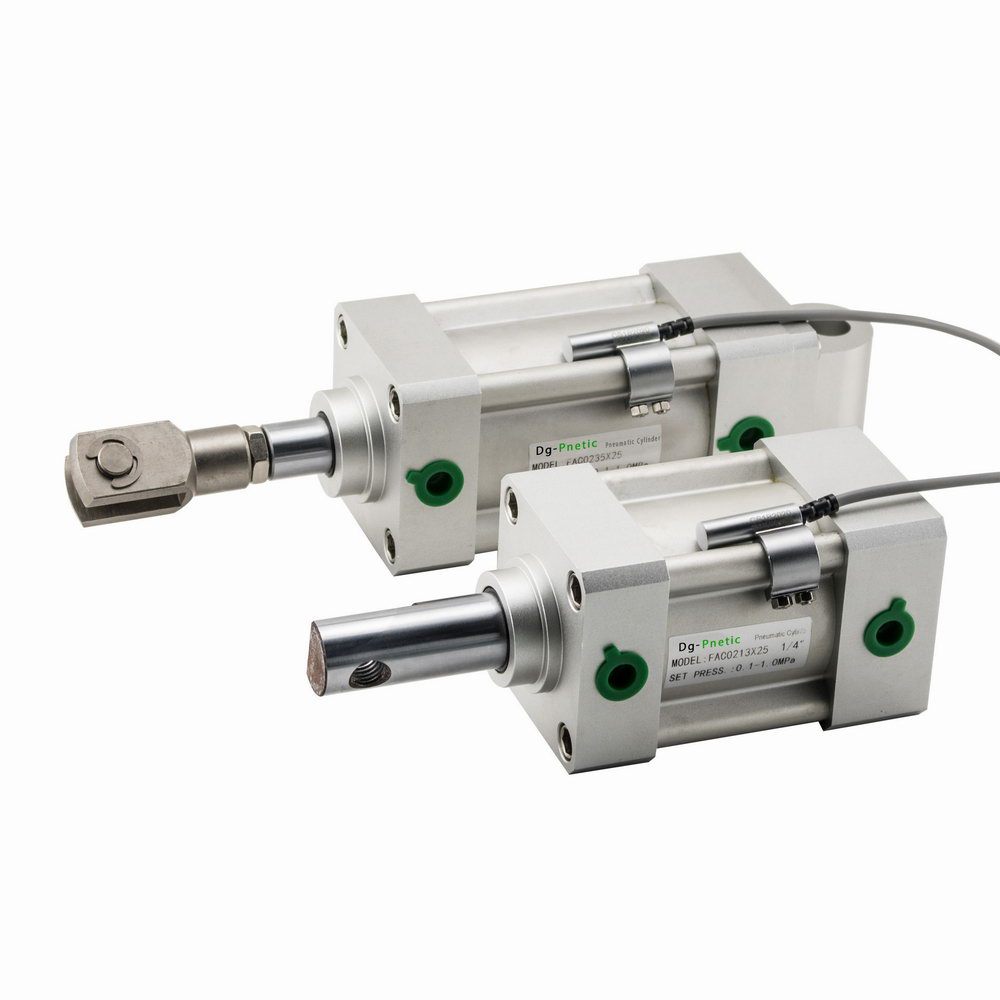
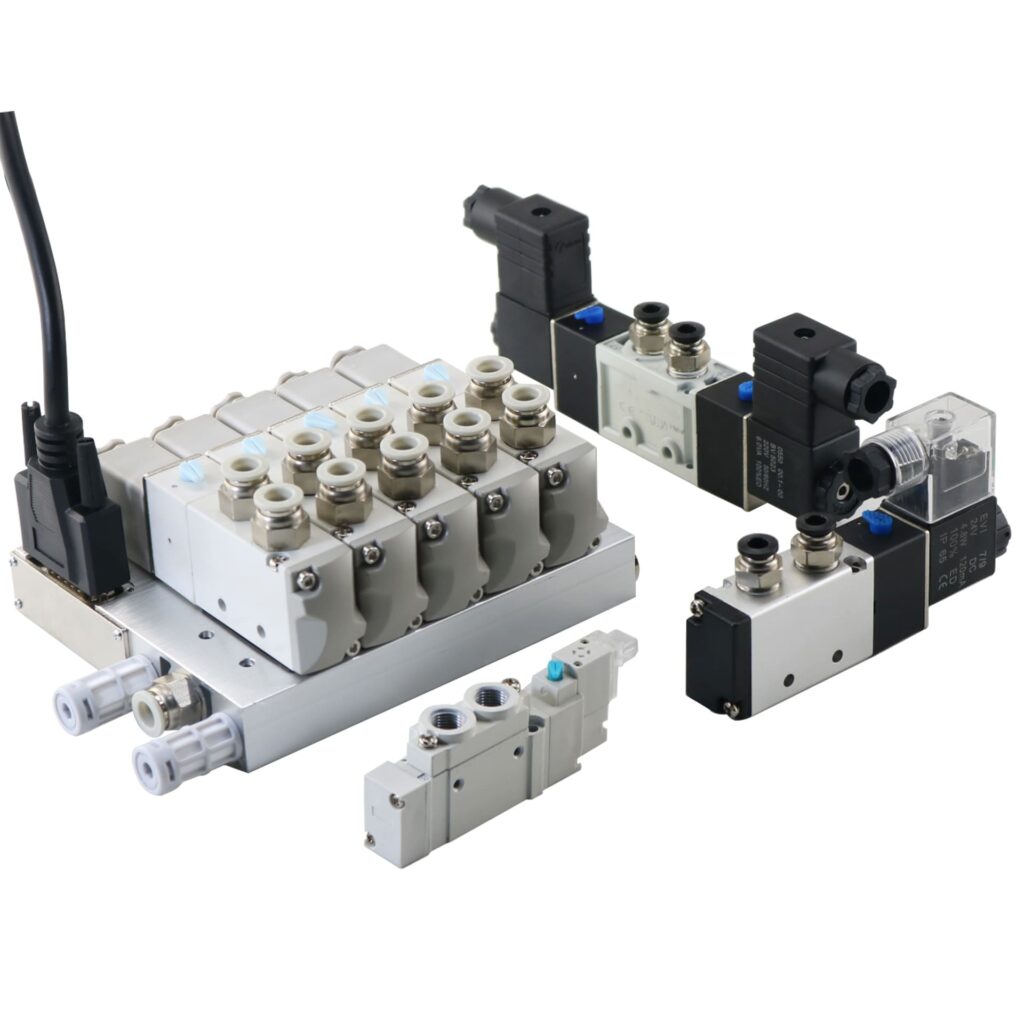
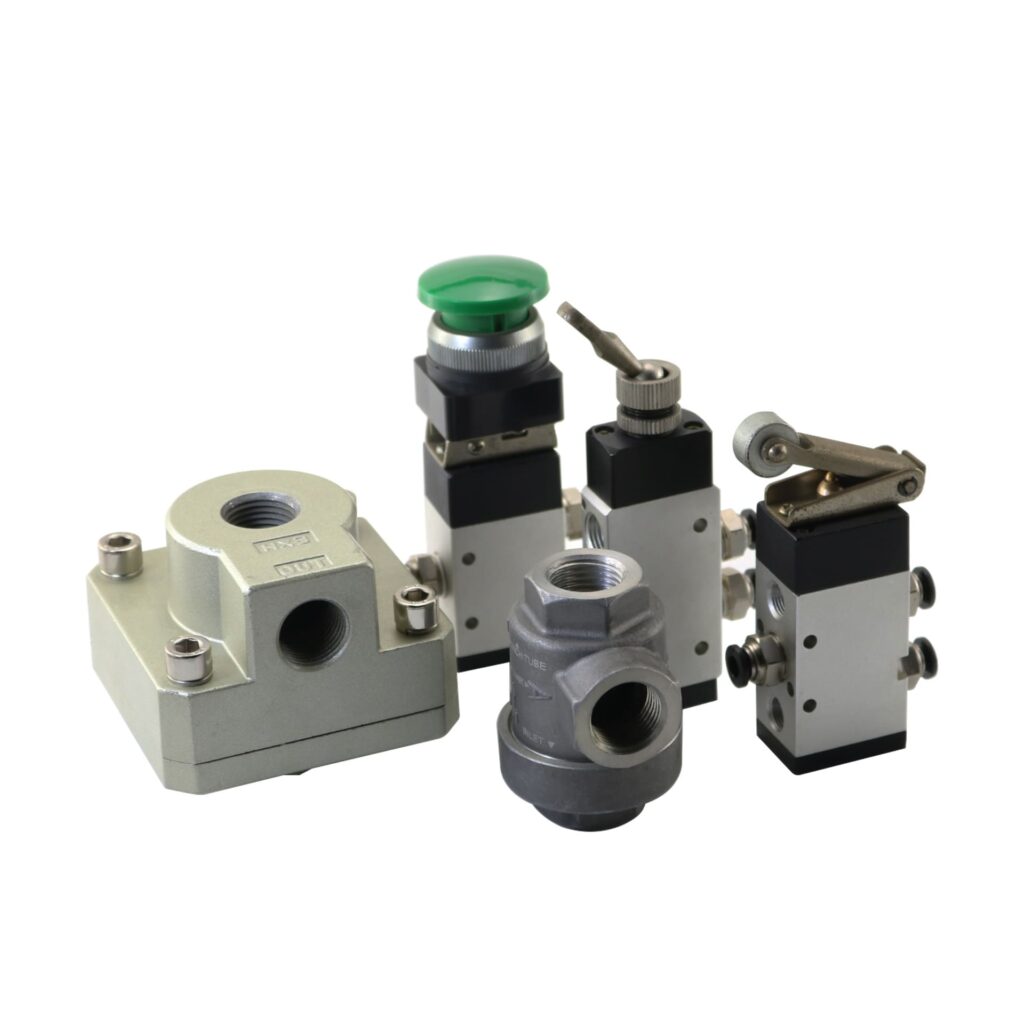
A pneumatic gripper is an end-effector that uses compressed air to actuate jaws or fingers, allowing it to grasp and release objects. It operates through a pneumatic cylinder—consisting of a piston and rod that move linearly inside a closed barrel.
The jaws (fingers) are connected to the piston rod via mechanical linkages such as levers or gears. When compressed air drives the piston to extend or retract, it causes the fingers to open or close, enabling the gripper to securely hold or release objects.
 Where Are Pneumatic Grippers Used?
Pneumatic grippers are commonly integrated with:
Collaborative robotic arms
Industrial robots
Pick-and-place automation systems
They are essential for automating tasks such as:
 Assembly
Inspection
Pick & place operations
Packaging and sorting
Mounted at the end of a robotic arm, pneumatic grippers combine the strength of mechanical movement with the dexterity of human-like gripping, allowing robots to handle everything from large boxes to fragile micro-components.
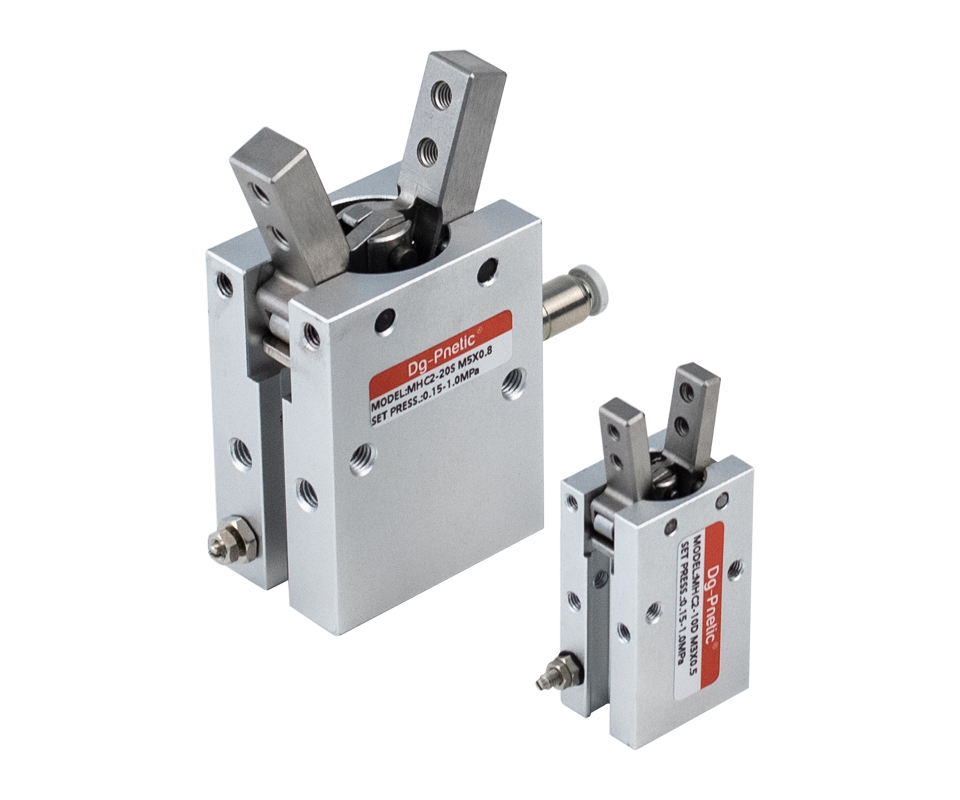
Fluid: Compressed Air (FIltered by 40um filter element)
Bore Size(mm): 6 7 10 16 20 25
Working Pressure:
 Double Acting Model: 0.15~0.6Mpa (21~85Psi) (1.5~6Bar)
Single Acting Model: 0.3~0.6Mpa(42~82Psi)(3.0~6.0Bar)
Working Temperature ℃: -10~60℃. (No Freezing)
Opening/Closing Angle: 30°~10°
Max Operating Frenquency: 180 c.p.m
Magnet Switch: available.
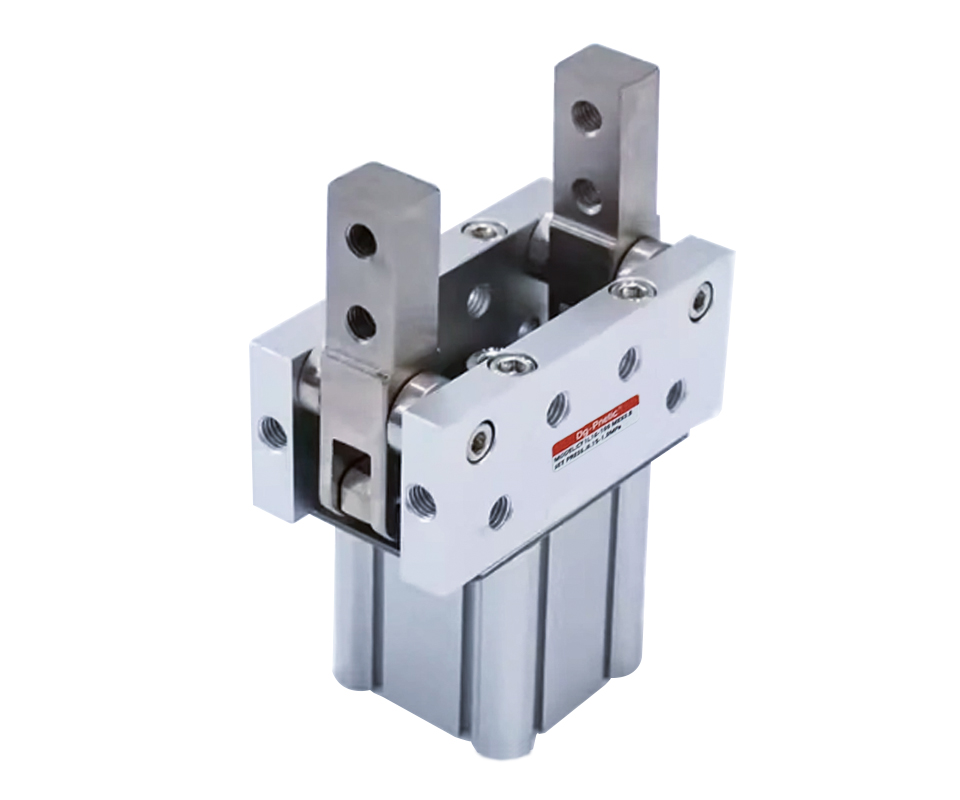
Fluid: Compressed Air (FIltered by 40um filter element)
Bore Size(mm): 32 40 50 60
Working Pressure:
Double Acting Model: 0.10~0.6Mpa (14~85Psi) (1~6Bar)
Working Temperature ℃: -10~60℃. (No Freezing)
Opening/Closing Angle: -3°~28°
Max Operating Frenquency: 180 c.p.m
Magnet Switch: available.
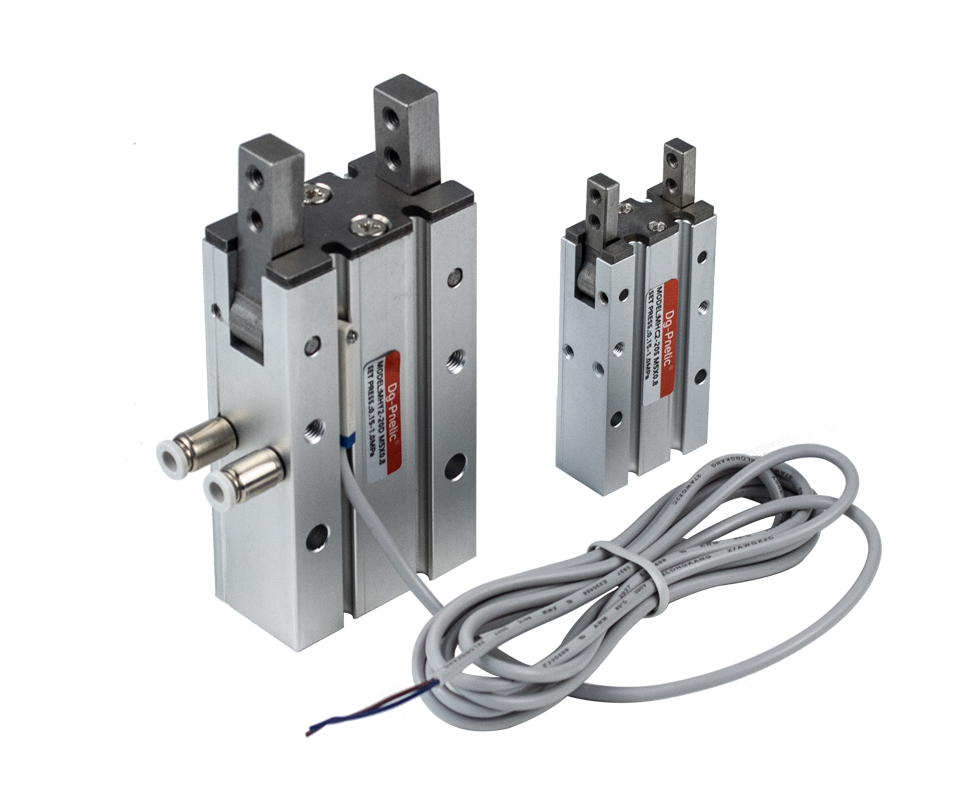
Fluid: Compressed Air (FIltered by 40um filter element)
Bore Size(mm): 10 16 20 25
Working Pressure:
Double Acting Model: 0.15~0.6Mpa (21~85Psi) (1.5~6Bar)
Working Temperature ℃: -10~60℃. (No Freezing)
Opening/Closing Angle: 90°-180°
Max Operating Frenquency: 60 c.p.m
Magnet Switch: available.
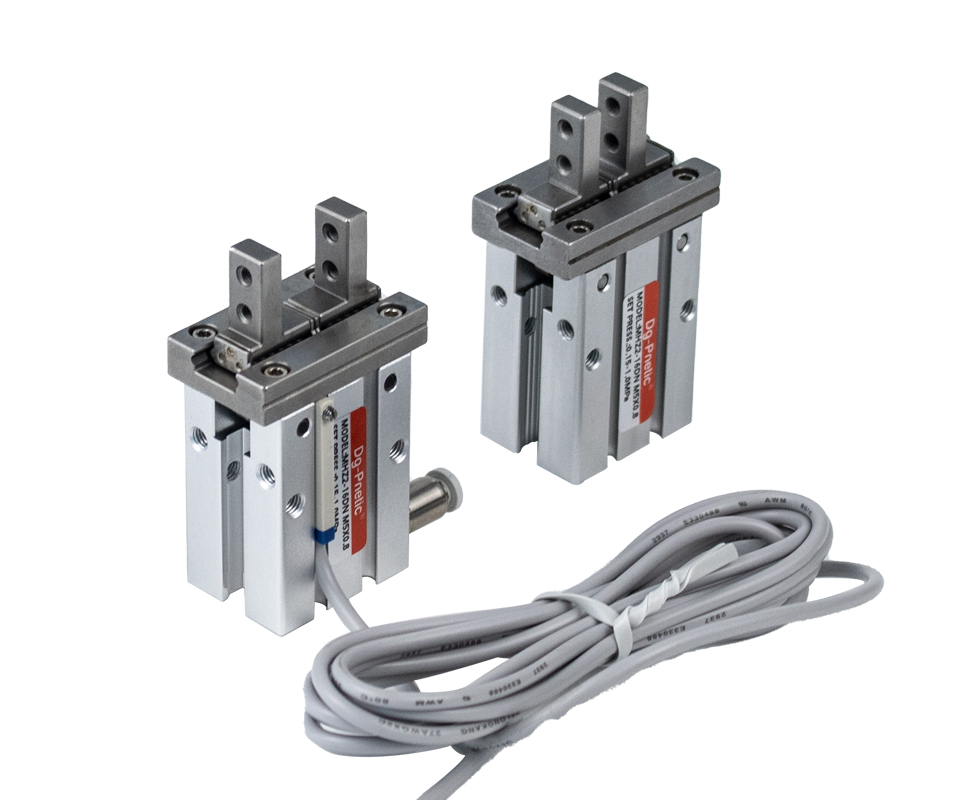
Fluid: Compressed Air (FIltered by 40um filter element)
Bore Size(mm): 6 10 16 20 25 32 40
Working Pressure:
Double Acting Model: 0.15~0.7Mpa (21~98Psi) (1.5~7.0Bar)
Single Acting Model: 0.3~0.7Mpa(42~98Psi)(3.0~6.0Bar)
Working Temperature ℃: -10~60℃. (No Freezing)
Opening/Closing Angle: Parallel
Max Operating Frenquency: 60 c.p.m
Magnet Switch: available.
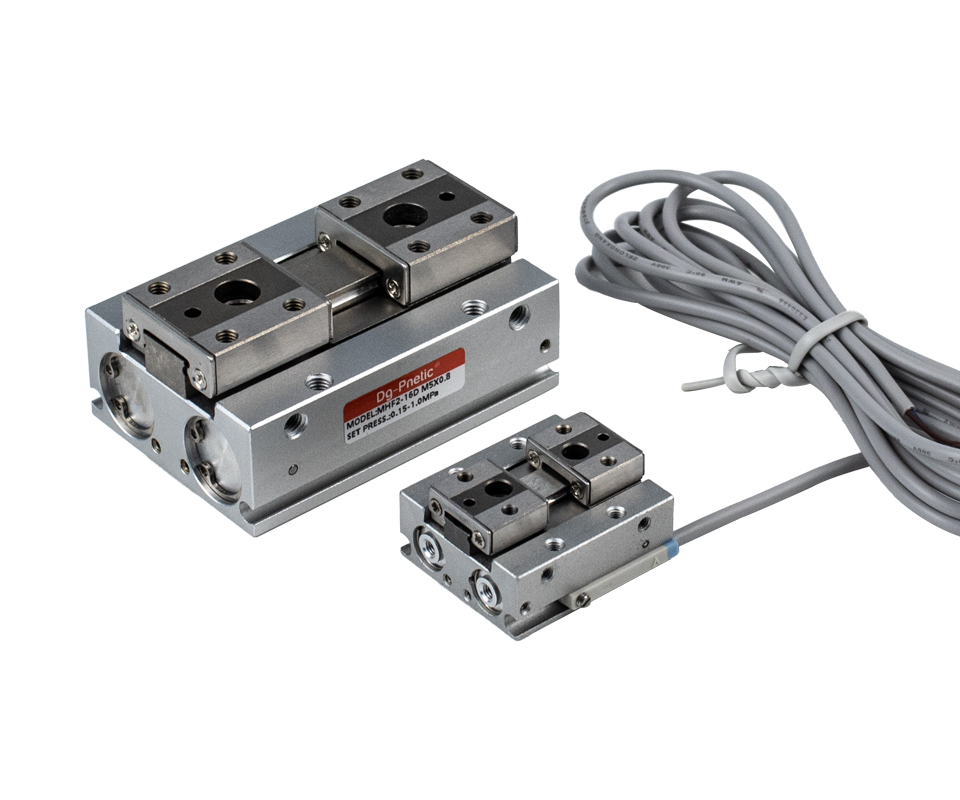
Fluid: Compressed Air (FIltered by 40um filter element)
Bore Size(mm): 8 12 16 20
Working Pressure:
Bore size 8mm: 0.15~0.7Mpa (21~98Psi) (1.5~7.0Bar)
Bore size 12 16 20: 0.1~0.7Mpa(14~98Psi)(1.0~6.0Bar)
Working Temperature ℃: -10℃~60℃. (No Freezing)
Opening/Closing Angle: Parallel
Max Operating Frenquency:
Short /medium stroke:120 c.p.m;
Long Stroke: 60 c.p.m.
Magnet Switch: available.
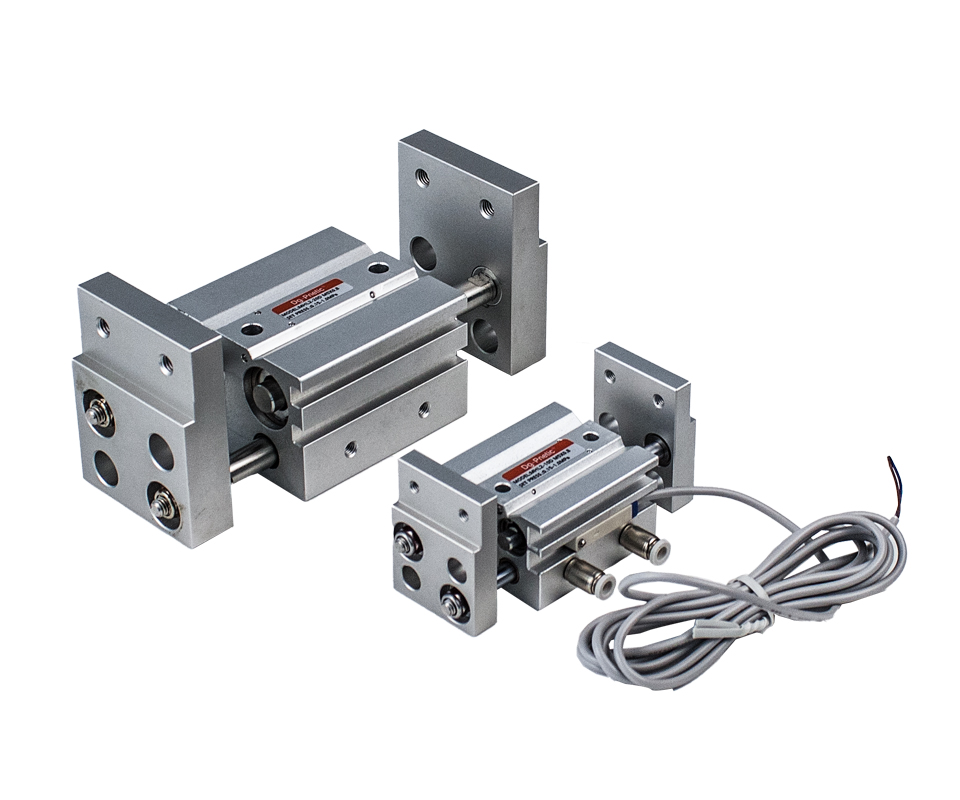
Fluid: Compressed Air (FIltered by 40um filter element)
Bore Size(mm): 8 12 16 20
Working Pressure:
Bore size 8mm: 0.15~0.7Mpa (21~98Psi) (1.5~7.0Bar)
Bore size 12 16 20: 0.1~0.7Mpa(14~98Psi)(1.0~6.0Bar)
Working Temperature ℃: -10℃~60℃. (No Freezing)
Opening/Closing Angle: Parallel
Max Operating Frenquency:
Short /medium stroke:120 c.p.m;
Long Stroke: 60 c.p.m.
Magnet Switch: available.
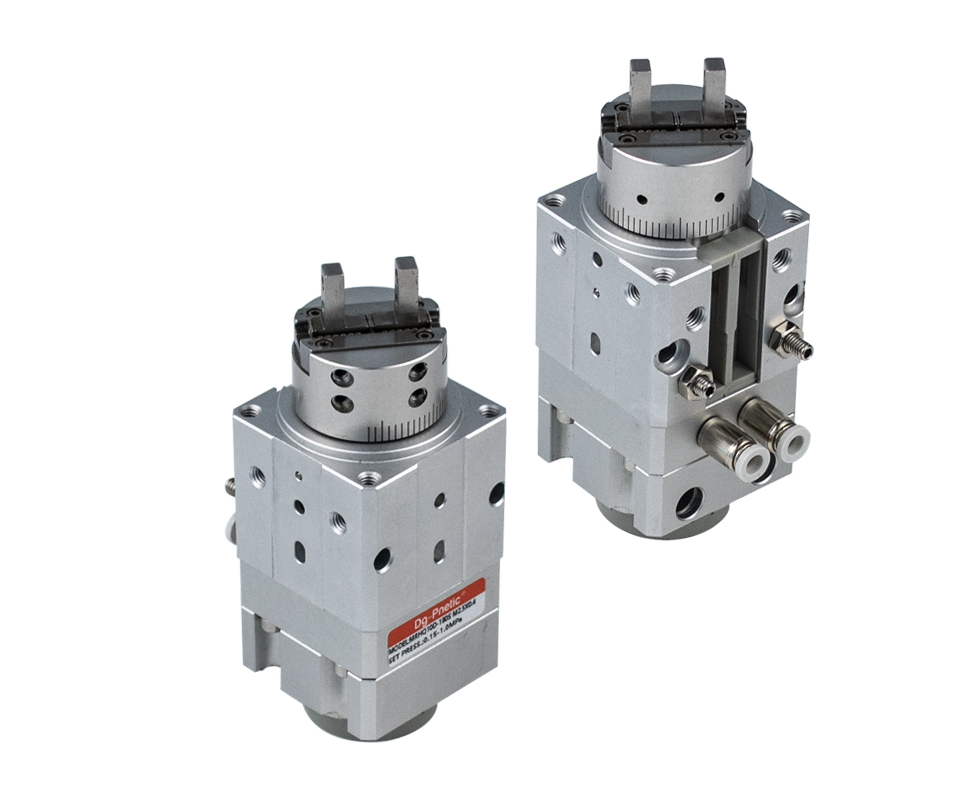
Fluid: Compressed Air (FIltered by 40um filter element)
Bore Size(mm): 10 16 20 25
Working Pressure:
Rotary unit:
Bore size 10, 16mm: 0.25~0.7Mpa ;
bore size: 20,25 : 0.25~1.0Mpa
Gripper unit:
Bore size 10mm: double acting :0.25~0.7Mpa; single acting:0.1~0.7Mpa
Bore size 16 20 25: double acting :0.35~0.7Mpa; single acting:0.25~0.7Mpa
Working Temperature ℃: 5℃~60℃.
Max Operating Frenquency: 180 c.p.m
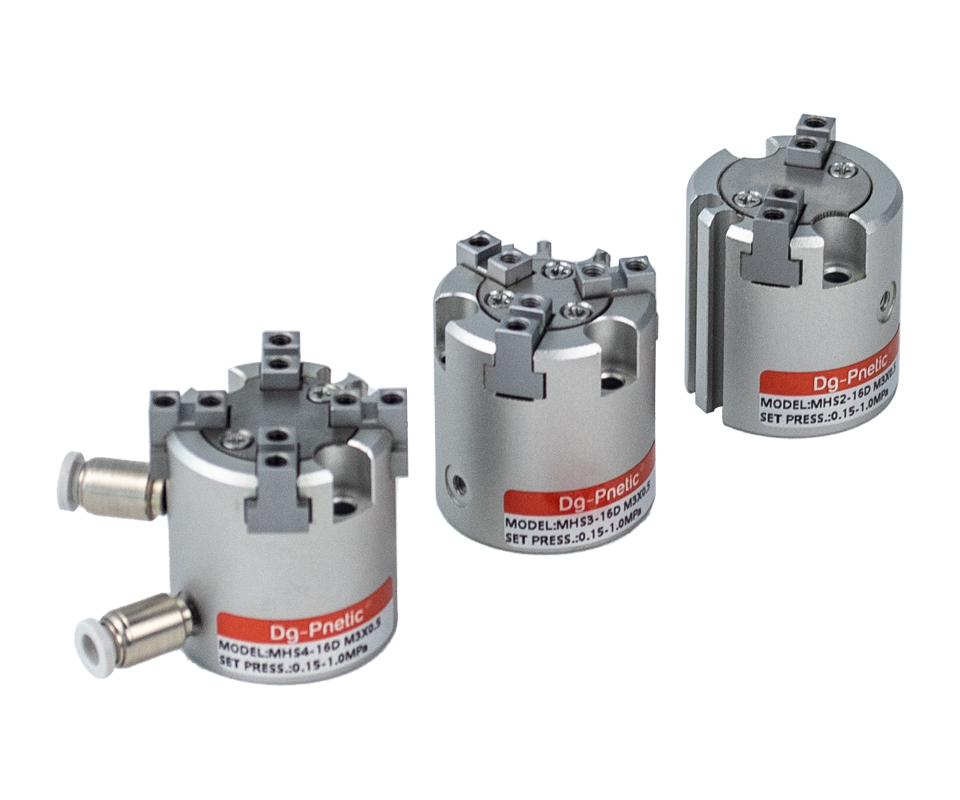
Fluid: Compressed Air (FIltered by 40um filter element)
Bore Size(mm): 16 20 25 32 40 50 63
Working Pressure:
Bore size 16 20 25: 0.2~0.6Mpa
Bore size 32 40 50 63: 0.1~0.6Mpa
Working Temperature ℃: -10℃~60℃. (No Freezing)
Max Operating Frenquency:120c.p.m, 60 c.p.m.
Magnet Switch: available.
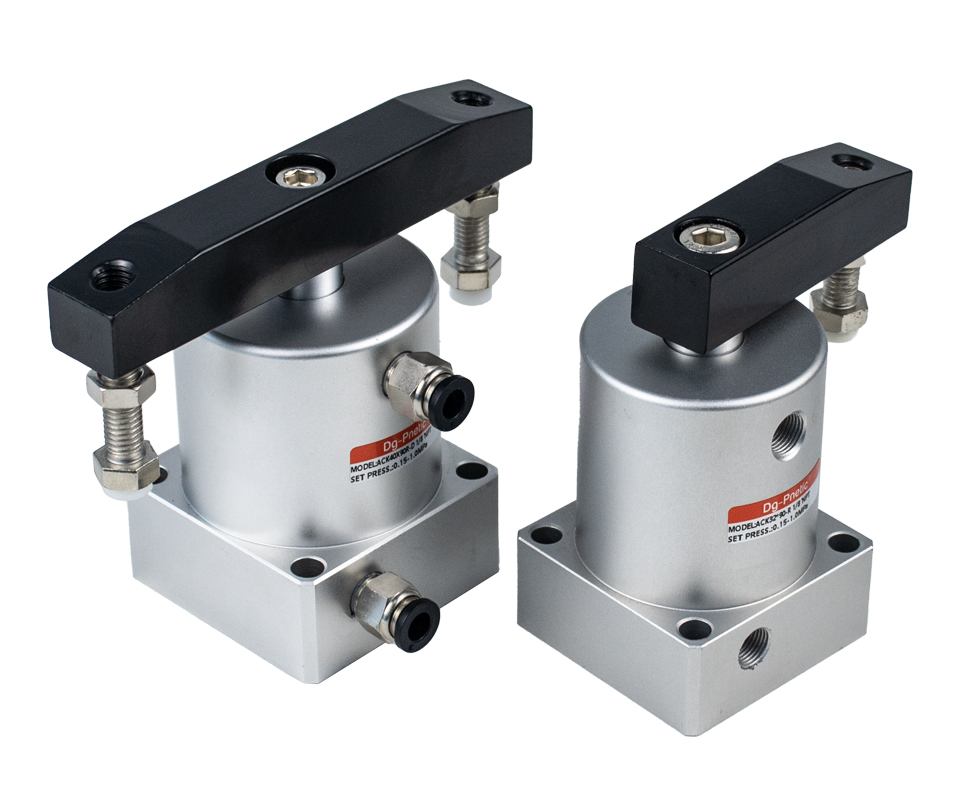
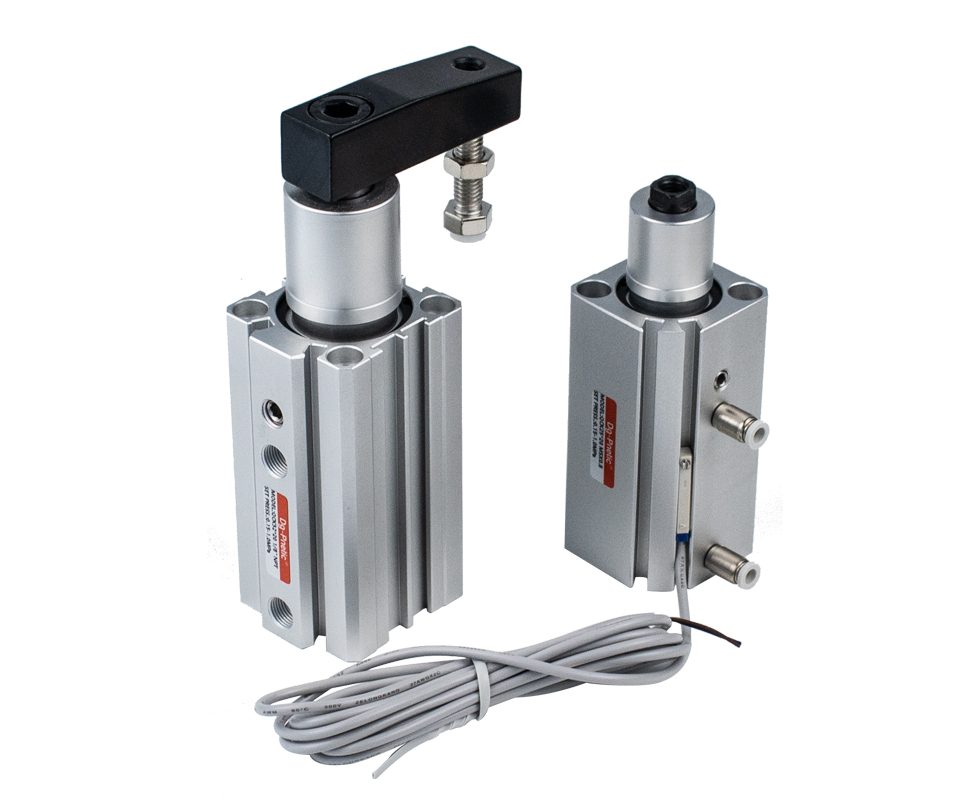
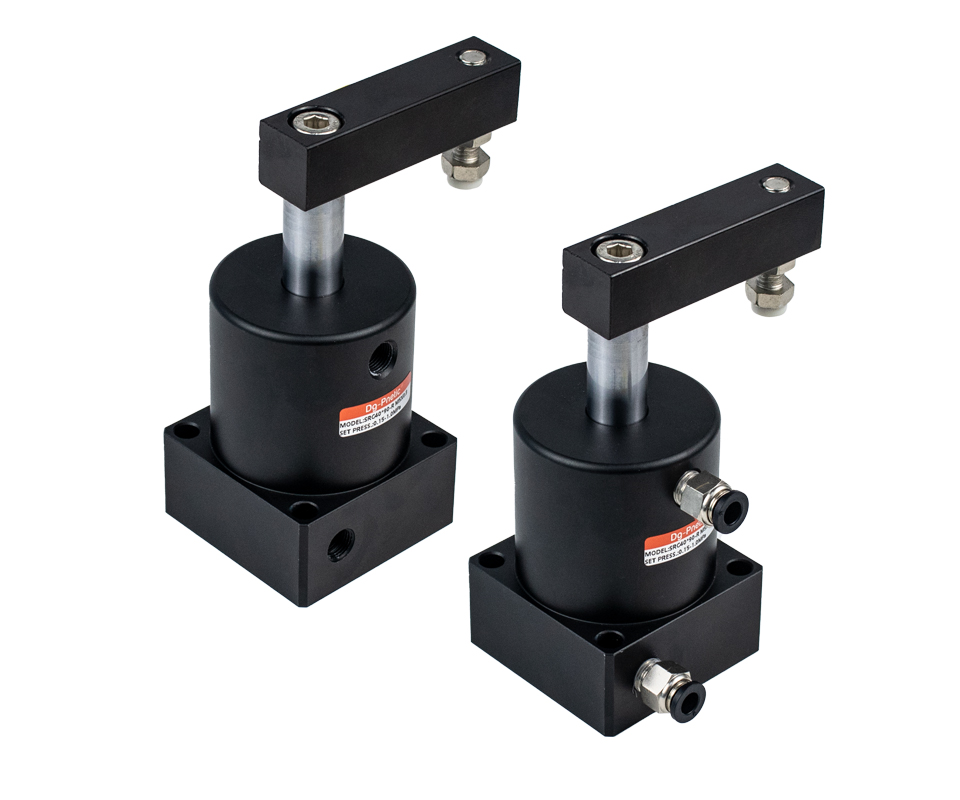
Pneumatic swing clamps provide a fast and reliable clamping solution using a piston cylinder with an integrated screw rod mechanism. In these actuators, the piston rod itself is machined into a screw, enabling a linear-to-rotary motion as the piston moves. As a result, the clamp arm swings into position and then clamps downward in a single, fluid motion.
Key FeaturesDouble-acting operation ensures powerful and repeatable swing-and-clamp motion
Available in multiple bore sizes and mounting styles
Standard versions are non-locking, with clamping force proportional to air pressure and bore size
Designed for high-speed cycles and compact installations
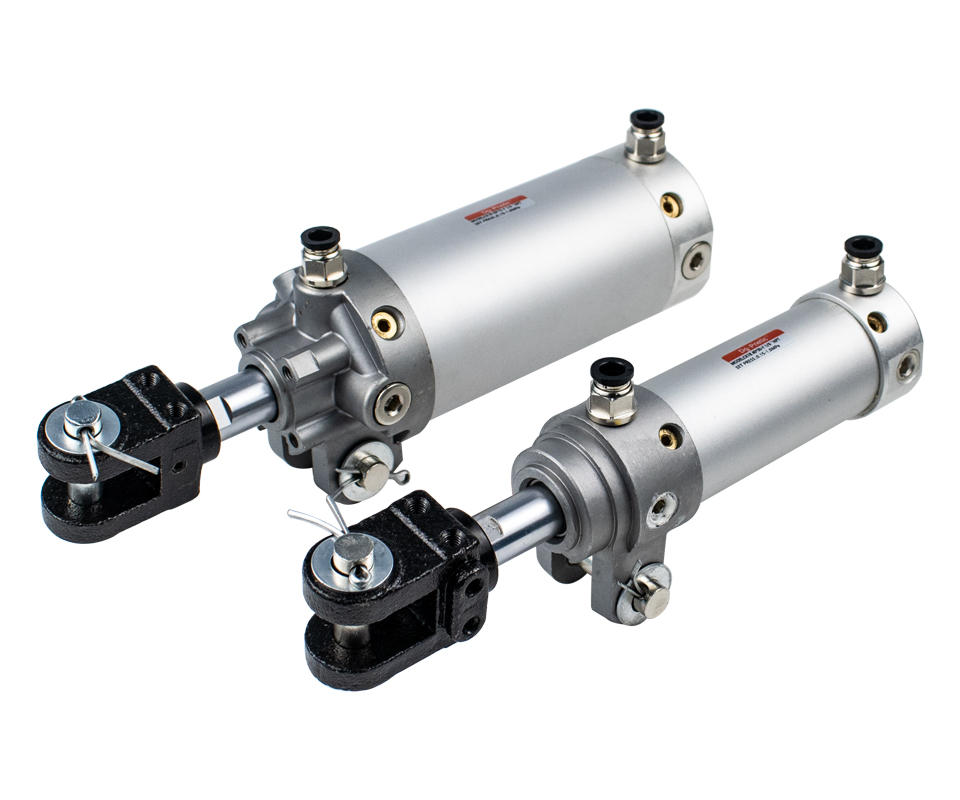
Fluid: Compressed Air (FIltered by 40um filter element)
Bore Size(mm): 40 50 63
Acting Type: Double acting
Working Pressure:
0.05~1.0Mpa (7~140Psi) (0.5~10Bar)
Working Temperature ℃: -10℃~60℃. (No Freezing)
Piston speed (mm/s): 50 to 500
Speed Controller: On both end
Magnet Switch: available.
Mounting: double clevis
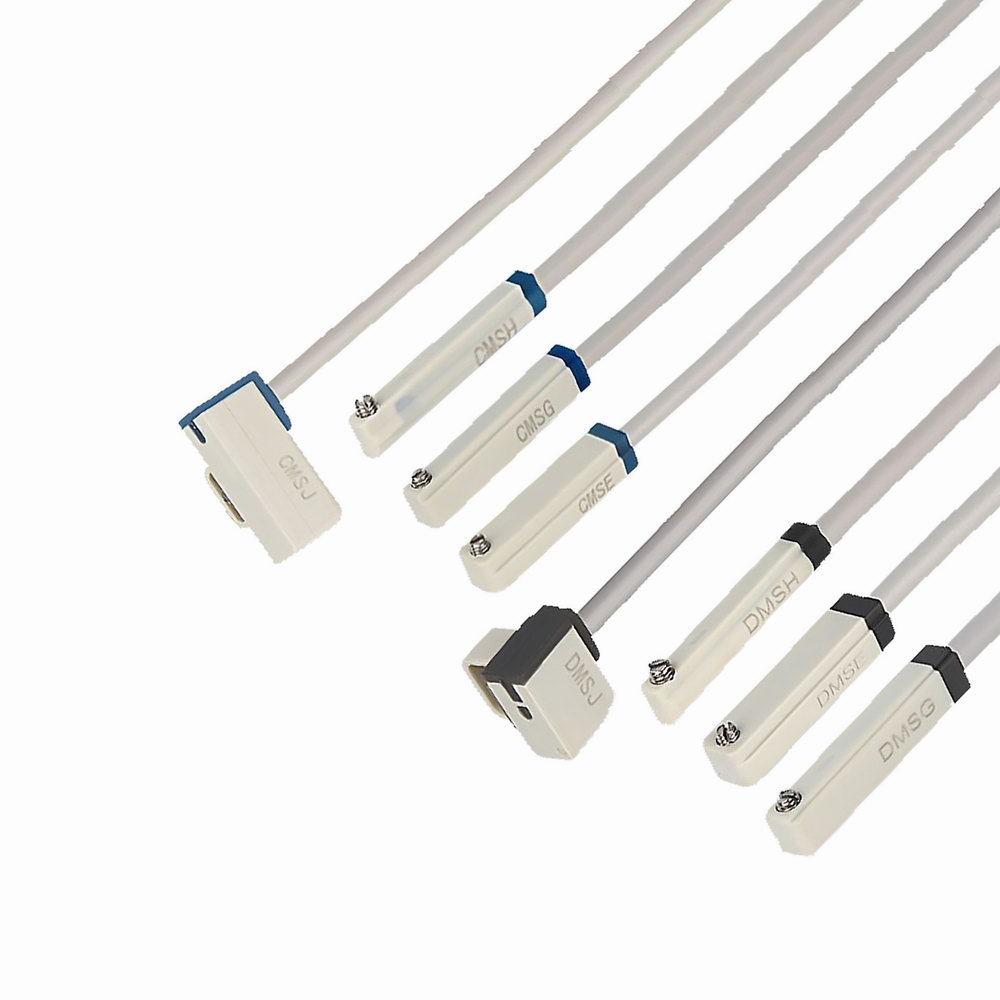
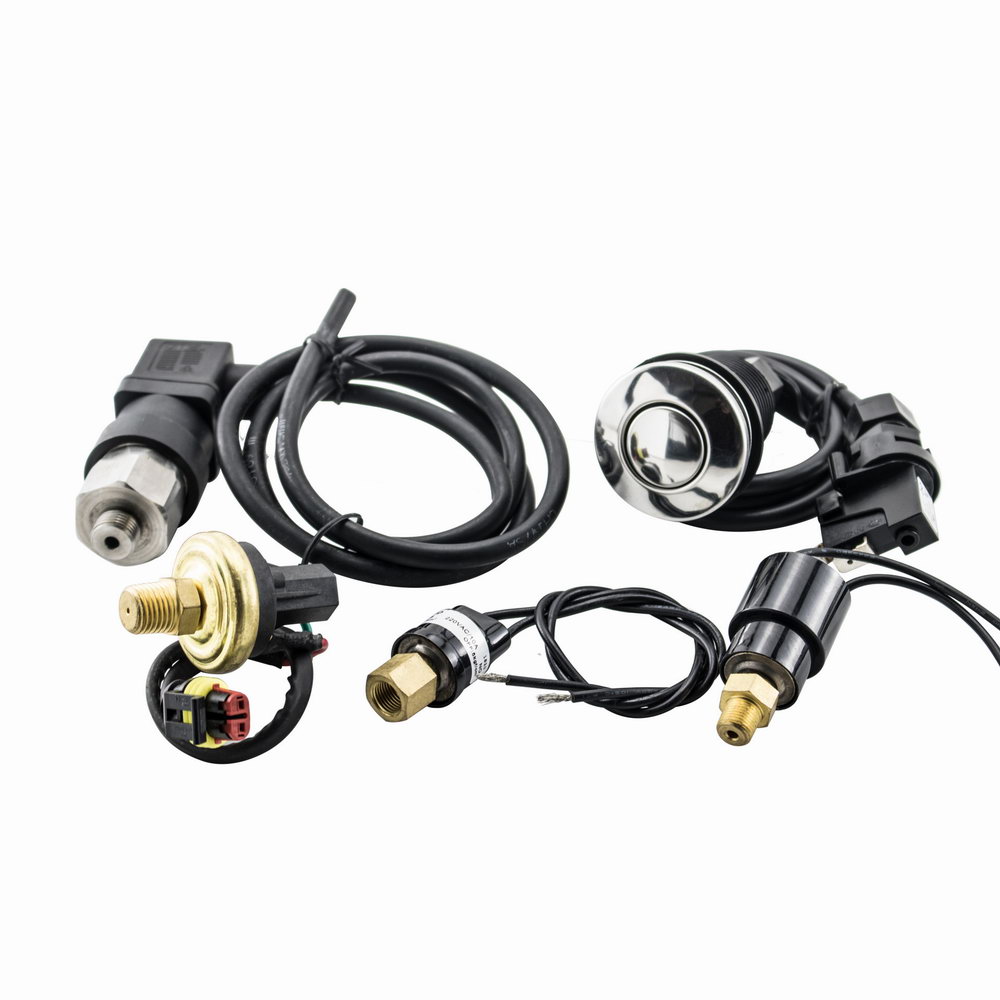
To enhance precision, automation, and safety, sensors are commonly integrated with pneumatic grippers to monitor and control the finger positions or object presence during operation. The two most common types are magnet switches and proximity sensors.
 Summary of Benefits
| Sensor Type | Detects | Mounting Location | Best For |
|---|---|---|---|
| Magnet Switch | Finger position (open/close) | Gripper body grooves | Stroke end detection |
| Proximity Sensor | Object presence | Near jaws or target area | Object verification / pre-grip check |